















By Jackie Musiimenta
According to Bank of Uganda (BOU), SACCOs, none of which are currently regulated prudentially, remain a major potential source of financial services and inclusion for large segments of Uganda’s population, thus if their operations can be regulated to deliver results.
The Central Bank in partnership with the Ministry of Finance Planning and Economic Development has developed a five-year National Financial Inclusion Strategy that aims at bringing more Ugandans into the country’s financial system, which among others wants to regulate the SACCOs that government has sunk in billions of shillings.

Bank of Uganda further notes that there is a trust deficit with these institutions. “The SACCO sector in general faces several challenges, including a serious lack of oversight and capacity, poor bookkeeping, and inadequately skilled staff and boards,” it notes, adding that weaknesses in the SACCO sector could have a significant adverse socio-economic impact if left unaddressed.
Further loss of SACCO members’ savings could possibly have negative knock-on effects by causing a loss of confidence in the financial sector and hinder financial inclusion, it notes.
Curbing SACCOs
In the new strategy, BOU intends to regulate and supervise a small number of the largest SACCOs under the Tier IV Act. Meanwhile, Medium-sized SACCOs, all non-deposit-taking MFIs and moneylenders will come under the supervision of a newly established Uganda Microfinance Regulatory Authority (UMRA). Smaller SACCOs will be subject to periodic monitoring by the Department of Cooperatives. It is expected that this will provide sufficient oversight of the sector.
The Bank notes that other non-bank financial institutions such as insurance and private pension funds are not currently sufficiently developed in Uganda. “It is essential to stimulate the development of both pension and insurance sectors which will play a key role in expanding access to investments in Uganda, increasing the availability of long-term financing and protecting individual’s assets from risks,” it says.
Savings overview
Over the past seven years, the share of adults that are engaged in some form of savings has continued to increase from 42 per cent in 2006 to 68 per cent in 2013, according to FinScope findings. However, the percentage of adult savings in formal channels did not change much between 2009 and 2013 as only 16 per cent of adults were saving in banks, MDIs or SACCOs which can intermediate funds. Men were 40 per cent more likely to save at banks compared to women.
The most cited reason for not saving was the lack of information on savings – which indicates latent potential. According to the Bank, the limited uptake of savings at formal financial institutions affects not only the safety of consumers’ funds, but also the ability of formal institutions to intermediate funds and provide credit to MSMEs in the broad economy to aid economic growth.
The savings products available to consumers include current accounts, savings accounts and time deposits. Savings products that are offered by banks, credit institutions and microfinance deposit taking institutions are covered by the Uganda Deposit Protection Fund which provides up to Shs3 million to depositors if their financial institution is liquidated.
Savings in SACCOs and in mobile money service providers that are not banks, do not have such deposit protection. The most common place for adults to save is in their house, followed by the village savings and loan associations (VSLAs) and rotating savings and credit associations (ROSCAs).
Many institutions have relayed concerns regarding the financial health and lack of confidence in SACCOs. This lack of trust has grown out of programmes that established a SACCO in every sub-county but oftentimes without grassroots support from members, sufficient skills, control of the staff and board and a lack of necessary oversight by government. The setup of UMRA is intended to remedy this.
Financial inclusion targets vulnerable groups
Analysts note that if large increases in financial inclusion are to be made, the demographic and geographic make-up of the country suggests there should be a focus on particular groups of people such as women, residents of rural areas, and youth above 15 years old.
In Uganda, women are less likely to own a mobile phone, be active users of mobile money (38 per cent of men use mobile money versus 25 per cent of women), have an account at a financial institution, save or borrow money and understand financial services.
Women do use informal financial services more than men in Uganda (34 per cent usage for women versus 27 per cent for men) so, levels of exclusion from any form of financial services is similar for men and women, but formal usage of financial services and financial capability among women are lower than for men.
Cultural issues, especially among households with low levels of education, make it difficult for women to own property and have independence in their decision-making.
Yet, studies from many countries cite the important role that women play in managing household finances. Specific interventions by policy makers and/or private sector outreach towards women to remove these cultural barriers could yield big dividends to improve the financial security of families.
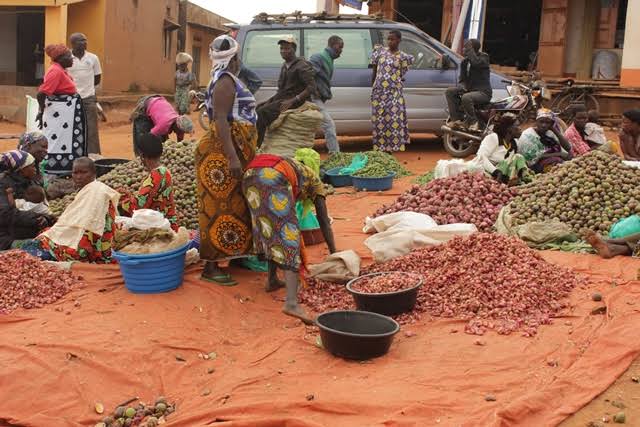
In Uganda, like most countries, rural residents have less access to and use financial services less than their urban counterparts. However, because a large percentage of residents live in rural areas (71.5 per cent), the relative impact for Uganda on financial inclusion is greater than other countries.
In addition, rural adults are twice as likely as their urban counterparts to utilise informal groups for financial services and are 1.7 times more likely to be completely excluded from financial services. The costs of delivery and lower population density in rural areas makes traditional outreach of brick and mortar branches more costly.
The same demographic circumstances are at play in terms of youth who generally have less access to financial services. While many advanced economies are struggling with shrinking and aging populations, Uganda has one of the fastest growing populations globally and has the second most youthful population in the world with a median age of just 15.7 years old. This compares to a median age of 19.5 in Kenya and 31.6 in Brazil both of which are reference countries for improving financial inclusion.
While this young demographic may bode well for future growth of the economy, it currently manifests itself as a strain on the infrastructure of the country. Many of the gaps and initiatives in this strategy focus on reducing barriers and creating new opportunities for people from these priority groups.
The identification of financial inclusion gaps is critical to determining the initiatives which the public and private sector should work towards in the coming five years to improve inclusion. To the extent that future research includes disaggregated data, there will be more evidence to determine what is and is not working.
Expert views on the strategy
Nobert Mumba, Deputy Director of Alliance for Financial Inclusion, says Uganda is the 44th country in the world to adopt the financial inclusion strategy. He said inclusive sustainable growth is important for the integration of Uganda’s unbanked adults into the formal sector.
The BOU Governor Emmanuel Tumussime-Mutebile confirms that the strategy will in the long run lead to quality and affordable financial services for Ugandans. He adds it will increase formal financial institutions to 50 per cent in 2022, up from 20 per cent in 2013.
According to Mutebile, financial exclusion for adults is expected to reduce to 5 percent in 2022 from the current 15 percent as the elimination of barriers to access continues.
Also, he says, usage of emergency savings would increase from 41 per cent to 60 per cent, formal savings from 19 per cent to 50 per cent as a result of better savings infrastructure. Insurance penetration would also go up from 2 per cent to 7 per cent.
Getrude Wamala Karugaba, the Financial Sector Deepening Uganda Chairperson says that the strategy will boost financial markets and reduce the vulnerability of the poor to financial shock due to occurrence off natural calamities like prolonged drought and floods.