










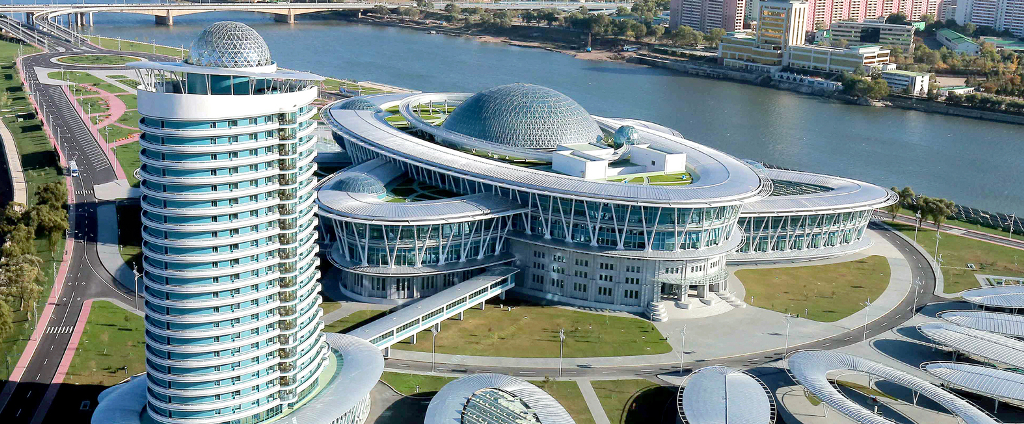
Sci-Tech Complex
Ryugyong General Ophthalmic Hospital
Western media spend much time and energy in describing the Democratic People’s Republic of Korea as a “closed country” and its people as “demons.” But not a few people who have been to the country describe the country and its people in another way.

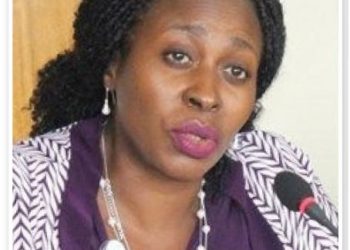
The following is an extract from the travelogue by Carla Stea, an American correspondent for Global Research to the UN, who had been to Pyongyang.
I had a talk with a Korean on a plane of Air Koryo flying from Beijing to Pyongyang. Unlike the Western propaganda that Koreans are all bilious and scary, he was very kind and interesting.
During the talk, I felt that the Korean people are interesting and attractive.
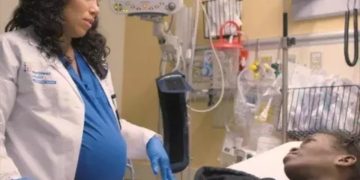
I visited the Okryu Children’s Hospital.
Built as a present to the children by the state, it is so designed that everything in it is for children’s convenience, and the whole building is conducive to medical care. Children suffering from disease or wounded receive medical treatment under the care of specially-educated doctors and nurses and with the help of cutting-edge medical apparatuses.
There are similar hospitals across the country, whose doctors can consult with their counterparts at the Okryu Children’s Hospital through telemedicine.
In the front yard of the hospital is a heliport.
All medical services are provided free of charge, and all children of the country can have access to these services.
I have never seen before a hospital that takes care of the physical and mental health of their parents as well as the children on such a high level anywhere in the world.
I had read documents about the Korean women before. Surprisingly the women whom I saw in the hospital were in elegant and refined clothes.
These facts shattered the outside world’s view that the Korean people get dressed in dark and monotonous colours due to starvation and degenerated life.
As the days of my visiting passed by, I realized that the DPRK had already made surprising progress in a matter of gender equality, one of the sustainable development goals until the year 2030 set by the UN.
I also visited the Ryugyong General Ophthalmic Hospital which provides the highest level of medical service with modern facilities.
Here I had the contact lenses that I am using tested, and its result was coincident with that of a prominent ophthalmologist in New York. Through this I confirmed the standards of the hospital’s facilities in person. The hospital was crowded with patients of different ages, and its medical service was also free.
According to my guide, as the doctors and their family members are on the payroll of the state, they can devote themselves to medical service.
I paid a visit to Pyongyang Secondary School No.1. I looked round the lecture rooms for biology, chemistry and physics at my request. I had a talk with the students who were attending a lecture of physics, and they expressed their dream and plan of becoming physicists in the future. In the DPRK schooling is free and compulsory.
I visited the Sci-Tech Complex, too.
The complex showcases the brilliant scientific successes achieved in the DPRK, ranging from space science to clean energy technology. I looked round many exhibition halls, which show the scientific apparatuses for persons with disabilities including ones with poor eye-sight, and bioengineering, ocean and space technology, sci-tech formulas and agricultural trends, and magic rooms which lead the children to the world of science.
I approached the Korean people freely at any place, making it clear that I am an American, and saying hello. National and linguistic barriers and prejudice disappeared, and intimacy between humans overcame those artificial obstacles.
During these days, I clearly forgot the past and all that had been infused until then, and was assimilated to the country’s rich and humanitarian culture.
I walked around Mirae Scientists Street.
It is the residential district for scientists and their families, and its residents use all facilities including medical ones free of charge. Scientists can focus on their research work without worries about their families’ life. This is one of the key factors of the rapid sci-tech development in the DPRK.
That day passing by a rural village on my way back to my lodgings in a suburbia of Pyongyang, I witnessed an unforgettable sight. A girl who looked to be six or seven years old was dancing. She seemed to be practising a dance to show her parents while waiting for them. I felt regretful for my failure to stop my car and take a photograph of the cute girl dancing in colourful skirt, adorning the golden evening sky.