
















Uganda’s Oil and Gas Sector: A Beacon of Economic Hope
By The public Lens
Uganda’s oil and gas sector has emerged as a significant contributor to the country’s economy, creating over 47,000 jobs and training thousands in key disciplines.

As of June 2024, the Ministry of Energy reported that 47,682 Ugandans are employed in the oil, gas, and related industries, comprising 13,389 direct jobs and 34,293 indirect jobs.
The sector’s impact extends beyond employment, with over 14,000 Ugandans trained and certified in critical skills such as welding, health safety, and environment protocols.
Ministry Permanent Secretary Eng. Irene Batebe highlighted the success of initiatives like the Micro, Small, and Medium-sized Enterprises (MSMEs) Business Linkages Project, which has trained 280 businesses in districts along the East African Crude Oil Pipeline (EACOP) route.
More than 4,000 small and medium enterprises have been equipped with skills to meet the demands of the oil and gas sector, while over 100 women-led businesses in EACOP districts have benefited from training and support.
The ministry reported that $7.135 billion has been approved for oil and gas projects in Uganda, with $1.9 billion (about 26%) going to Ugandan companies.
In the past six years, $4.9 billion has been spent, with 40% of that figure directed to Ugandan firms. Notably, 73% of the 624 companies involved in supplying the sector are Ugandan-owned.
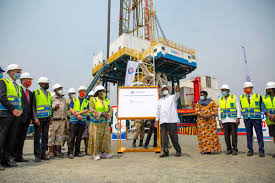
The EACOP project has reached 43.5% completion, with engineering work at 85.6%, procurement at 60.7%, and construction and commissioning at 17.3%.
On September 30, 2024, the first batch of 21 kilometers of EACOP line pipes arrived in Uganda, marking significant progress.
Kabalega International Airport has completed its first phase, with funding secured from Denmark’s EKF fund for $120 million to further its development.
The government is working with partners to secure funding for common infrastructure at Kabaale Industrial Park, a key facility for Uganda’s oil ambitions.
Coordination with agencies like the Uganda National Roads Authority (UNRA) and the Ministry of Water and Environment is underway to provide utilities and roads to support oil-related operations.
The government, through the Uganda National Oil Company (UNOC), has raised $308 million to cover its 15% shareholding in EACOP.
Efforts to finalize financing agreements for the pipeline project are ongoing.
This progress underscores Uganda’s commitment to harnessing its oil and gas resources for economic growth and development.