
















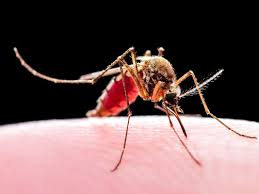
In a groundbreaking study, researchers from Leiden University Medical Center and Radboud University in the Netherlands have engineered mosquitoes to deliver vaccines that could potentially provide significantly enhanced immunity against malaria.
The World Health Organization’s most recent World Malaria Report revealed that an estimated 597,000 people died of malaria globally in 2023, with African countries bearing the brunt of the death toll.
Scientists estimated that more than 240 million malaria cases occur annually worldwide, with children and expectant mothers being the most vulnerable to the disease.

The vaccine employs a weakened strain of Plasmodium falciparum, the parasite that causes the deadliest form of malaria in humans.
“We have removed an important gene in the malaria parasite, still allowing the parasite to infect people but not making them sick,” explained vaccinologist Meta Roestenberg.
In the clinical trial, the research team used mosquitoes carrying the modified parasite to deliver the vaccine via bites, mirroring the natural transmission of malaria.
The goal was to create a strong immune response in the liver and protection from a malaria infection.
“Because the gene [is] turned off, this parasite cannot complete its development in the liver, cannot enter the bloodstream and thus cannot cause disease symptoms,” Roestenberg said.
The first trial tested an injectable malaria vaccine derived from a genetically modified parasite, while the second trial used mosquito-delivered versions of two vaccines.
The results of the study showed that 13 percent of the GA1-infected group and 89 percent of the GA2-infected group developed immunity from malaria.
While the results are promising, further research is needed to determine the long-term effectiveness of the vaccine and its ability to protect against different strains of the malaria parasite.
“Using the mosquito as a vector is an easier and quicker way of delivering malaria sporozoites,” Roestenberg explained.
However, she noted that using mosquitoes to deliver vaccines on a large scale is not sustainable and that the vaccine will need to be developed as a vialled vaccine to be rolled out in Africa.
While this is not the first time insects have been used to deliver vaccines, it is a significant step forward in the fight against malaria.