














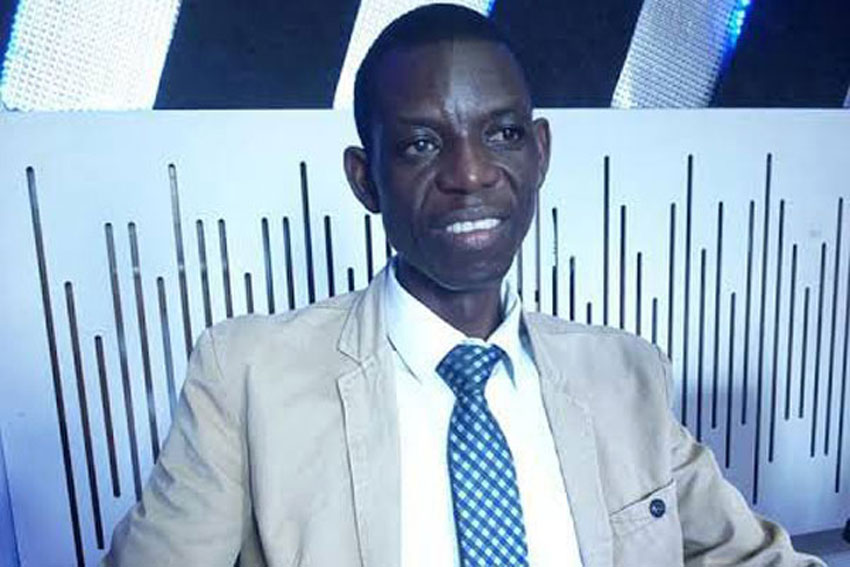
The embattled Resident District Commissioner of Jinja, Eric Sakwa has lost a civil suit he lodged against his interdiction at the Jinja High Court.
A ruling made by Judge Jeanne Rwakakookoo on Monday quashed all the three pertinent grounds fronted by the Sakwa lawyers against the administrative action taken on their client on May 4 2020.
The applicant’s (Sakwa) lawyers; Mr. Caleb Alaka, Mr. Evans Ochieng and Mr. Nyote David Innocent challenged the interdiction on 9 grounds stating that his appointment by President Yoweri Museveni is political and not subject to Public Service Guidelines.

That interdiction letter was authored by the 2nd Respondent (Secretary to the Office of the President, Haji Yunus Kakande didn’t indicate written authorization from the appointing authority (President) and Sakwa was never given any hearing flouting rules of natural justice.
Sakwa lawyers also argued that the case of manslaughter against their client shouldn’t tantamount to interdiction because it is not included in the terms of service. Sakwa is accused of commanding the arrest and torture of Mr. Charles Isanga of Jinja who later died of injuries.
Meanwhile the Respondents’ (Attorney General and Haji Kakande) lawyers contended that Sakwa is incompetent, devoid of merit and an abuse of court process. They maintained that Sakwa is a senior civil servant whose emoluments are payable directly from the Consolidated Fund or directly out of monies provided by Parliament and is answerable and accounts to Katende as the Responsible Officer in the Office of the.
They also stated that once a civil servant is subject to court proceedings or any kind of investigation, the Responsible officer ought to interdict him until such proceedings are terminated against the public officer.
Ruling
JUDGE: I agree with the submission of Counsel for the Respondents on this and find that the Applicant, though appointed by the President in accordance with the Constitution of the Republic of Uganda, is a Public Officer and bound by the Public Service Standing Orders.
Under Article 172(3) of the Constitution, the President may delegate any of his or her powers under this Article by directions in writing, to any service commission or to any other authority or public officer as may be prescribed by Parliament and may, in like manner, revoke the delegation.
I am inclined to agree with Counsel for the Respondents that by virtue of Regulation 38 of the Public Service Commission Regulations, SI No. 1 of 2009, the 2nd Respondent, being the “Responsible Officer” in the President’s Office, had the legal capacity to interdict the Applicant who is a “Public Officer”, stopping him from exercising his powers and performing the functions of the office of the Resident District Commissioner, JInja, until the Applicant is cleared of the charge of manslaughter against him.
I agree with the above position as laid out in the above case, that the decision to interdict is not subject to the right to be heard first since interdiction is but a first step towards disciplinary proceedings. Therefore, there was no need for the Applicant to be heard before he was interdicted.
In the instant case there is a rational decision to interdict, and that decision is that the Applicant was arrested, charged for manslaughter and remanded to prison. I therefore find that the decision to interdict was rational.
Conclusion:
For reasons I have given in the Ruling, this Application fails and is hereby dismissed with costs to the Respondents.
Credit: kampalatimes.co.ug