











By Daniel Kakuru
I belong to a tribe which every Ugandan calls arrogant and I don’t know why. Maybe I’m so busy counting our blessings, I don’t seem to notice our flaws – the reason we’re labelled as arrogant.
Last year, the country was up in arms. Remember when someone from my tribe was shot dead by an askari at Quality Supermarket in July last year? Remember what the Red Pepper – a reputable newspaper in the country – said of what had brought him down? Remember what their bold italicized headline was that morning? Well this was it: “The Price of Arrogance.”

Why?
Because his is an arrogant tribe. Or at least, that is what everyone else thinks. It appeared like he deserved to die. Because he was proud. Because he was arrogant.
I attended a certain higher institution of learning and chaired the association that was supposed to unite everyone from my tribe. I could be bragging, but during our time, we had it all: the overflowing self esteem; the influence on sociopolitical affairs; the wisdom. In fact, we called ourselves “Abanyabwengye (Wise Men). And in one of my public addresses I, in jest, pointed out that the Bible was wrong about the direction from which the Wise Men had come to pay homage to a newborn Jesus. I said they had come not from the East but the West. I continued that the East has Basoga, Bagwere, Bagisu and neither of those is wise. In jest, I said.
And you know what? It rubbed people the wrong way. The born-agains – the then self-confessed custodians of the Bible – accused me of blasphemy and demanded an apology. I laughed it off and reminded them that the Bible isn’t their mothers’.
The Baganda students said to us, No, you’re not Abanyabwengye. You people are Abanywa-mwenge. I won’t tell you why, but we were what both of the above homophones represent. But so the hell what?
I grew up under a roof where our mother always warned us: imwe boojo mwe, orishweera omuganda aryakareeba. (If any of you boys gets married to a Muganda, do it at your own peril). She could be wrong about what she believes the Baganda represent, but this is just a symptom of the problem. Or it could be a creed founded on a solitary experience. But once, she told me something I still doubt is true. She said, a Muganda woman is like a nestling. It will open its mouth for its mother to feed it all the time. In this case, the husband is the mother bird. A woman from Buganda, she said, will want to be fed and pampered all the time. She won’t raise her finger to do a thing.
I grew up in a community where when someone is getting married, the first question they ask about the prospective spouse is, “N’omuki?” (Which tribe are they from?). And when you mention a tribe other than our own, a few faces will always contort into snarls. It’s as if you’ve drunk from a forbidden cup or trodden a cursed land. It’s something unwelcome – a marriage involving someone from my tribe and another from elsewhere.
Growing up, I always knew there was something wrong with us; something about the way we treat people from other tribes that is not proper. For instance, need I tell you that we (used to) refer to the people of Northern Uganda as Bakooko? (Animals). Of course they do always appear to us like they aren’t in God’s image. Largely, because of the more than enough amount of melanin buried in their skins. Because their teeth are a struggling white, and because the said teeth always sit on the wrong side of their lips. Need I tell you that I grew up thinking Luganda was a language spoken only by pickpockets and other idlers in town? Need I tell you that I had the shock of my life when at the age of seven or thereabouts, I attended a funeral where a woman the age of my great grandmother delivered her speech in Luganda and I thought she was a ‘muyaye’?
Look here; it’s a natural thing. Humans have a tendency to regard others as different, and it’d be absolutely fine only if the differences did not inspire oppression or anything along that line. The way you’re greeted by someone of the opposite sex is different from how you’d be greeted by someone of your own orientation. You will be asked what your first name means whenever you meet strangers. The last time I visited the District Health Inspector at his office, he asked me, What does Kakuru mean? Are you from Bunyoro? and I have never decided on whether it was (or not) in bad faith. What if it was supposed to determine how he would respond to my concerns? Once, I was asked by an Atheist friend of mine, What does Daniel mean? and this too was most likely in bad faith. I suspect he was using that as a yardstick to determine how wise I am. According to him, any Christian is brainwashed and therefore not wise.
When we discuss racism, tribalism and any form of discrimination, we behave like someone peeping through the window. We pretend we lack the gory details. We pretend we’re not first-hand witnesses or perpetrators of discrimination regardless of its foundation. Do we not continue to throng the same churches that scold their flock against marrying from other denominations?
A black George Floyd is dead at the hands of a ruthless white supremacist in police uniform and the world’s most powerful country is on fire. Elsewhere, we are shouting, “Black Lives Matter.”
My argument is that when all the dust has settled, the debate should be widened. There’s more to this discrimination than just skin colour and we are all guilty of fanning the flames of this evil. If you’re eating at the same table with a Christian man who disowned his daughter for getting married to a Muslim man; if you’re friends with someone who dives into a conclusion that I’m arrogant depending on which tribe I belong to; if you find it okay to associate with someone who believes that a certain group of people are not wise until they are well over the age of forty years; you have not done enough.
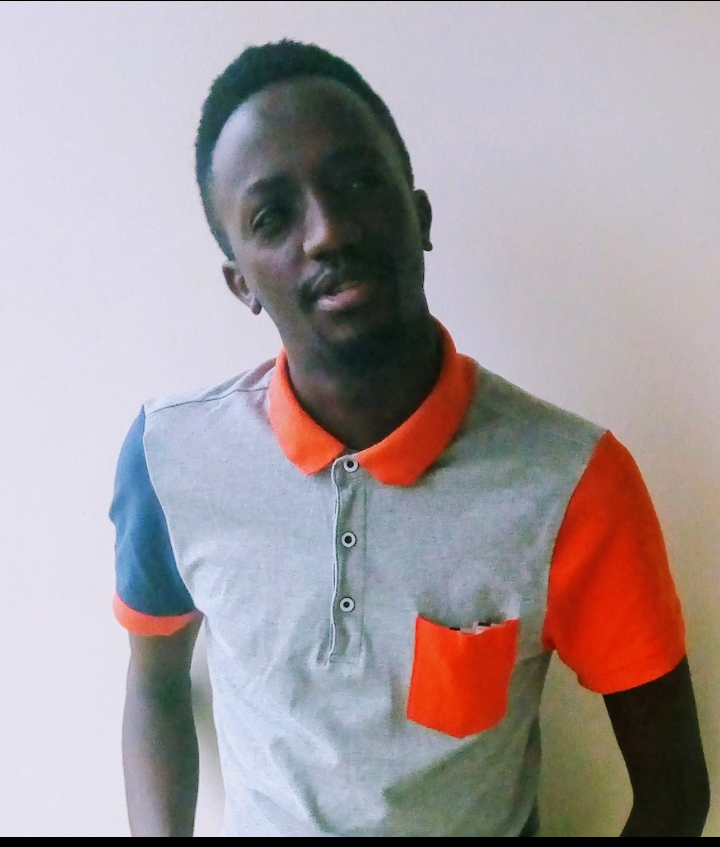
About the Author: Daniel Kakuru is a lover of stories and social commentary. He writes under a Facebook hashtag #MugOfPorridge and blogs at danielkakuru.wordpress.com