









By Stephen Bwire
The NRM Secretary General Justine Kasule Lumumba has tasked the Attorney General and the Independent Electoral Commission to explain to the public the fundamental reasons as to why the Government cannot declare a State of Emergency amidst mounting calls by various stakeholders including some Opposition political parties and civil society organisations in light of the raging COVID-19 pandemic.

A state of emergency is a situation in which a government is empowered to perform actions or impose policies that it would normally not be permitted to undertake. A government can declare such a state during a natural disaster, civil unrest, armed conflict, medical pandemic or epidemic or other biosecurity risk.
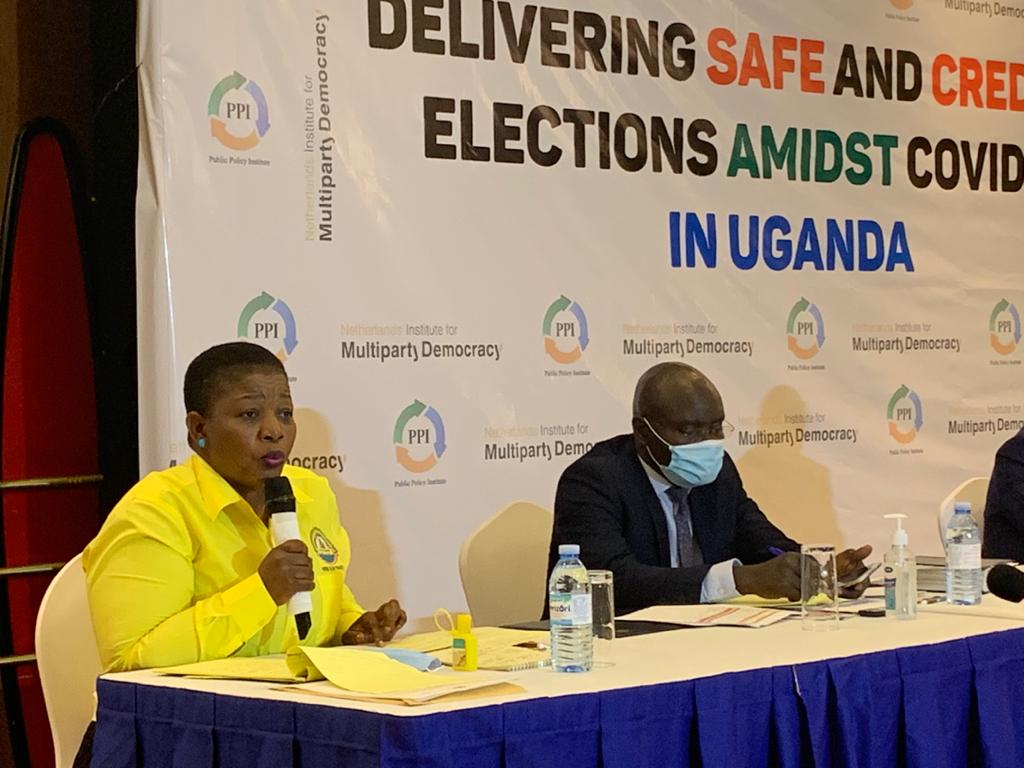
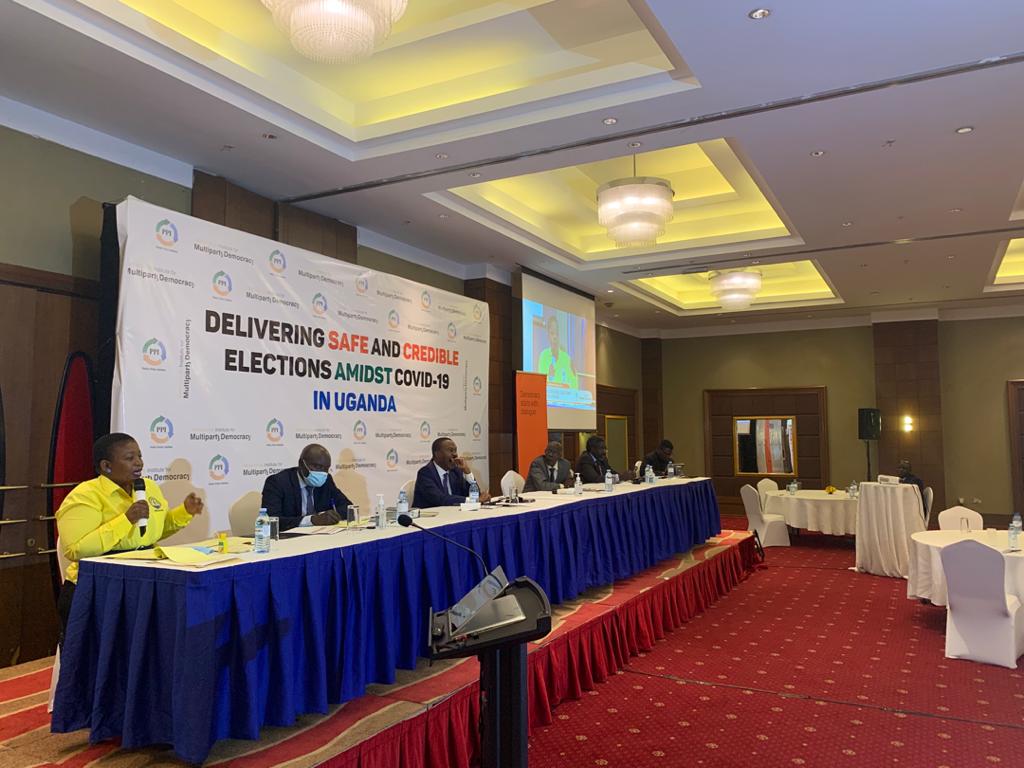
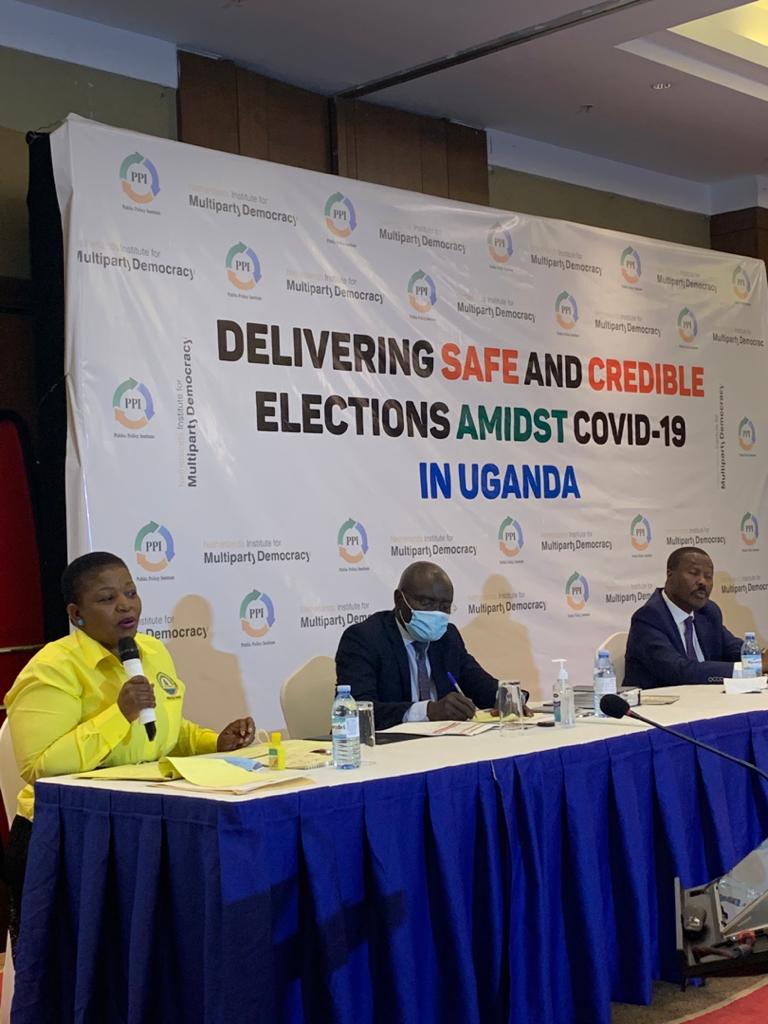
The NRM secretary general was speaking during the IPOD panel discussion organised by the Netherlands Institute for Multiparty Democracy (NIMD) in collaboration with the Public Policy Institute (PPI) under the theme, “Delivering safe and credible elections amidst COVID-19 in Uganda” at Sheraton Hotel Kampala on Thursday this week.
She said: “There are so many calls for the declaration of the state of emergency that would necessitate postponing the elections. But there should be a justification for this [state of emergency], and this is where the Attorney General and the Electoral Commission need to come out clearly to explain to Ugandans.”
Lumumba also challenged the EC which was represented by the chairperson Justice Simon Byabakama why they didn’t consult political parties before releasing the revised electoral roadmap for the 2021 general elections.
“The EC should have done due diligence before announcing the revised roadmap. Parties go through a process to generate candidates, and the EC is fully aware of this; this is what they should have consulted with the scientists,” she said quickly adding: “How do you expect us [NRM] to convene a meeting of 15,000 delegates at Namboole to elect our party leaders, and yet this is a requirement which the Party must fulfill.”
Lumumba further took issue with Government for having not recognised the political parties as “essential” in the allocation of money for emergency response amidst the COVID-19 pandemic, and yet the parties have got enormous logistical and administrative challenges including facilitating staff at party headquarters.
The NRM top bureaucrat called on the EC to engage political parties in voter and civic education so as to increase the voter turn-up during elections, contending that the electoral body has traditionally relied on non-governmental organisations and civil society to do voter education. “Political parties should have a discussion with the EC on voter education, parties must mobilise people to vote amidst the COVID-19 scare,” she said also calling on the scientists through ministry of health to bring political leaders on board so that they in turn sensitize the masses on COVID-19 preventive measures including wearing masks.
Others speak out
The national coordinator for Alliance for National Transformation (ANT) Maj Gen Mugisha Muntu called on government not to ban mass rallies but instead continuously test populations to determine the extent of infections and strain of the coronavirus prevalent in Uganda. “When you allow people to crowd in Kikuubo but can’t allow gatherings at rallies, I don’t see the logic because it’s much easier to effect social distancing at rallies than markets. When you have, say, 50,000 people operating in Kikuubo and you test and find that 10,000 are infected, and none of them falls sick or dies, it could mean that Uganda has a different strain of the virus from other places. This would then mean that people could still gather at rallies without any problem,” he explained.
The Democratic Party leader Nobert Mao made a passionate appeal for the postponement of the elections until the country is safe from CIVID-19 saying that elections shouldn’t be considered a do-or-die affair. “The mind of the government is already made up that we must have elections; that is why we have proposals such as scientific or digital campaigns. Digital media can be manipulated to provide “fake news” and social media can be deceptive because you can’t determine the reality of your mass support. You might find that you have many followers on social media but not actual supporters and voters,” he said, further calling on the Electoral Commission to procure airtime on Radio and TV for all the candidates since there is a possibility of some media houses hiking rates.
Hussein Kyanjo, who represented JEEMA, the current chair of IPOD, tasked government through the Electoral Commission to borrow a leaf from countries including Burundi, Malawi and USA where mass campaign rallies are going on now. He also wondered how candidates would meet their campaign agents under a scientific election.
On his part, the Uganda People’s Congress (UPC) president Jimmy Akena said that the EC needs to organise a meeting with political parties and security agencies and the health ministry on how parties could conduct their internal electoral processes without encumbrance.
In response to the above queries, the EC chairperson Simon Byabakama said that the revised electoral roadmap is not cast in stone, and thus it’s subject to amendment through consensus by the different political actors and stakeholders.
He also dismissed allegations that the proposed scientific campaigns and elections are orchestrated by the EC to deny other contesting parties and candidates free and fair electoral process. “When we launched the revised roadmap, we stated that mass campaign rallies can’t be sustainable due to the abnormal situation of COVID-19. So we opened the door to other stakeholders interested in this electoral process to come up with other alternatives apart from media engagements,” he said.
Justice Byabakama emphasised that the EC must comply with the law and organise elections within the stipulated timeframe to avoid plunging the country in a constitutional crisis.