















National Counter-Terrorism Centre, Uganda Receives Boost to Counter Violent Extremism
By The Public Lens
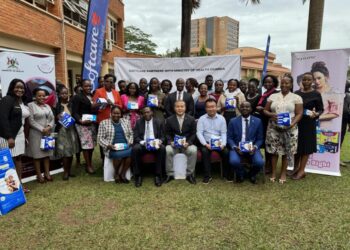
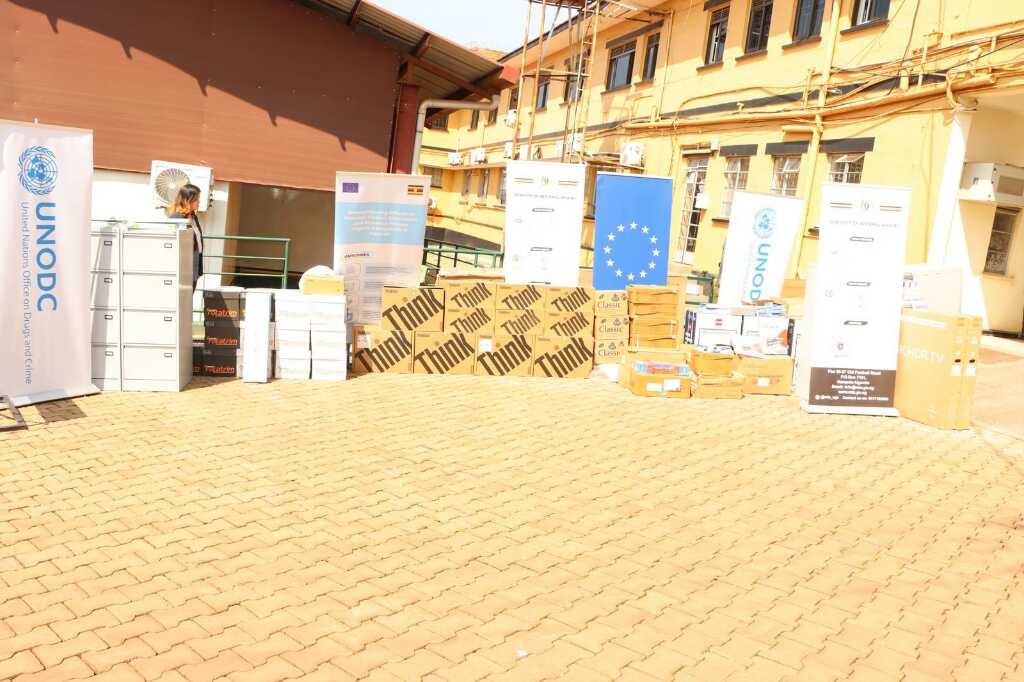
The National Counter-Terrorism Centre, Uganda has received a consignment from the United Nations Office on Drugs and Crime to aid in the fight against violent extremism.

The items received will enhance the centre’s operations and public outreach programs.
The United Nations Office on Drugs and Crime has been collaborating with stakeholders on a project to prevent and counter violent extremism while safeguarding human rights.
Lt Gen Joseph Musanyufu, the Permanent Secretary of the Ministry of Internal Affairs, expressed his gratitude for the collaboration with the UNODC.
He acknowledged the support from partners, including the European Union.
Lt Gen Musanyufu emphasized that the fight against transnational threats is a global effort, requiring collective action saying, “This fight is not an individual country fight. It’s an international fight, and we do appreciate that support.”
Ms. Sharon Lesa Nyambe, the Head of Office, UNODC in Uganda highlighted the organization’s collaborative efforts with member states to promote peace and security and said, “In Uganda, we are privileged, through the Ministry of Internal Affairs and the National Counterterrorism Centre to have worked collectively on a project entitled strengthening efforts to prevent and counter violent extremism while safeguarding human rights standards.”
She observed that the items that will facilitate and enhance coordination, spearheaded by the National Counter-Terrorism Centre and ensure the dissemination of information, training, and building capacity in having a basic understanding of what are some of the key drivers and pull factors that are associated with violent extremism.
The Commandant of, the National Counter-Terrorism Centre, Uganda Brig Gen Dominic Twesigomwe said the counterterrorism centre composed of ministries, departments and agencies, civil society organizations, and non-governmental organizations, coordinates counterterrorism activities at the national level, regional and international levels.
He observed that “as National Counter-Terrorism, we are majorly trying to balance the kinetic means and the soft approach. But our strategy for National Counter-Terrorism and violent extremism, we normally put their human rights that as we are fighting terrorism, we hinge on human rights.”
The National Counter-Terrorism Centre, Uganda has over the past four weeks, led various initiatives to combat terrorism.
Their efforts focused on four key areas: enhancing coordination, strategic communication, preventing and countering violent extremism (PCVE), and collaboration with key stakeholders.
This included training 400 prison staff on managing violent extremist prisoners, and training 50 ministry participants from ministries, departments, and agencies, together with civil society on PCVE