














Senior Four Students Pioneer Uganda’s Revised Education System
By The Public Lens
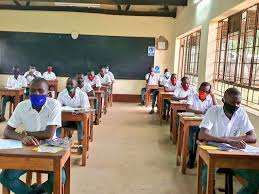
Uganda’s education system has entered a new era as the first batch of Senior Four students under the new Lower Secondary Curriculum begins their Uganda Certificate of Education exams.

The transition to this competence-based learning system has garnered significant attention from educators, students and stakeholders nationwide.
A total of 379,620 candidates are registered for the exams, which will run until November 15, according to the Uganda National Examination Board.
This year’s cohort has faced unprecedented challenges, having started Senior One in 2020 only to be disrupted by the Covid-19 pandemic a month into their first term.
As a result, these students have spent nearly five years preparing for exams that typically take four years to complete.
The Uganda National Examination Board has adopted a new assessment approach, allocating 80% of final marks, while schools contribute 20% through continuous assessment and project work.
This shift from rote learning to competence-based education aims to create a holistic learning environment where students apply knowledge in real-world scenarios.
Lumuza High School in Mpigi District has fully complied with the new curriculum requirements, submitting project marks through UNEB’s portal.
The school has 103 candidates, 68 of whom are girls, with the head teacher expressing confidence in their readiness.
Madinah Islamic Secondary School in Nsangi, Wakiso District, has also worked hard to prepare, despite initial challenges adapting to the new system.
This year, they have registered 399 candidates, their highest number since 2011.
However, not all schools are equally prepared, with some struggling due to limited resources.
Dzaipi Secondary School in Adjumani District still relies on outdated textbooks, while 45 students resit exams under the old curriculum.
In Moyo District, some schools continue to implement the old curriculum, although many have adopted the new one.
The new curriculum’s hands-on approach has proven effective, but its impact is hindered by inadequate materials and teacher shortages.
Private schools in Kaberamaido District have invested in new materials, but government-aided schools face financial constraints.
The district’s 450-teacher shortage exacerbates these challenges.
Despite these hurdles, many schools remain optimistic, reassuring students that the new exams are not drastically different.
In Kigezi Sub-region, all schools have successfully implemented the new curriculum, with officials confident in the candidates’ preparedness.
The shift to the new curriculum has been challenging, but educators remain hopeful about its long-term benefits.
Rural schools still lag behind due to material shortages, but progress is being made.
This year, 138,502 candidates benefit from the government’s Universal Secondary Education program, up from 114,200 in 2023.