















Uganda Rescues Nationals Stranded in Gulf States
By The Public Lens
Fifty-seven Ugandans detained in Saudi Arabian prisons have been repatriated after receiving pardons from the Saudi government.

These individuals were arrested for various offenses while working as migrant laborers in the Gulf.
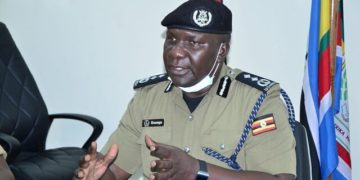
Abbey Walusimbi, senior presidential advisor on diaspora affairs, confirmed the repatriation, which occurred in early November.
This is part of a larger initiative to bring back over 800 Ugandan nationals stranded in the Gulf states by January 2025.
Many Ugandans in the region face exploitation, including charges of illegal stay and prostitution, according to Walusimbi.
Over 580 Ugandans are currently stranded in Saudi Arabia, while another 100 are in the United Arab Emirates. Some others face life sentences in Jordan.
The Ugandan government has established a task force, following President Yoweri Museveni’s directive, to help nationals in the Gulf.
Minister of State for Labour, Esther Anyakun, is working in the UAE to improve conditions for Ugandans.
A recent conference on combating drug and human trafficking discussed strategies to curb trafficking, a concern for many Ugandans in the diaspora.
Anyakun revealed that Saudi Arabia agreed to pardon Ugandan migrant workers stranded in deportation centers and prisons.
Among the repatriated individuals is Aisha, who reflects the uncertainty many repatriates feel. While relieved to be home, Aisha and others face the challenge of starting over.
Reintegration Efforts
– The Ministry of Gender, Labour, and Social Development has plans to rehabilitate and reintegrate repatriates into Ugandan society.
– Minister Anyakun emphasized the government’s responsibility to ensure successful reintegration.
– International partners like the International Organization for Migration (IOM) support these efforts.
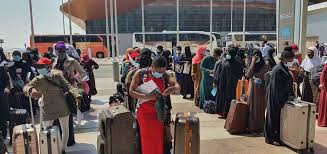
On November 5, another group of 20 Ugandans returned home, greeted by government officials at Entebbe International Airport.
Uganda’s Minister of Gender, Betty Amongi, and Minister Anyakun played key roles in negotiations leading to the repatriation.