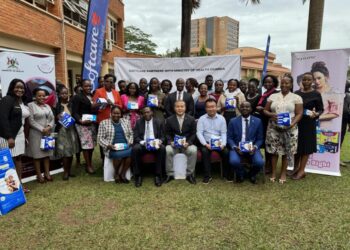

















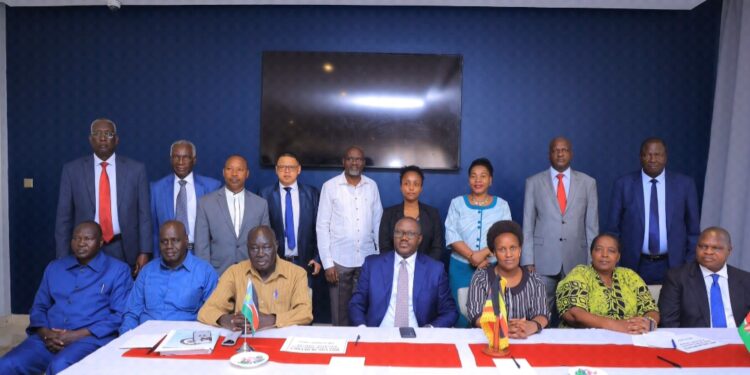
The recent 4th Tripartite Technical Boundary Committee (TTBC) meeting, held from December 19 to 21, 2024, in Kampala, marked a significant milestone in East Africa’s journey toward peace and cooperation.
Uganda, Kenya, and South Sudan have taken a major step toward resolving one of the region’s most sensitive boundary issues, paving the way for regional stability, security, and sustainable development.
For decades, the undefined borders between the three countries have been a source of tension and conflict, exacerbated by historical disputes and local tensions over land and resources.

However, through a series of tripartite meetings, the three nations have moved closer to resolving these issues through diplomacy and collaboration.
The primary goal of the three-day meeting was to review progress, finalize work plans, budgets, and timelines for the formal demarcation and reaffirmation of the tri-junction boundary.
According to Uganda’s Permanent Secretary of the Ministry of Foreign Affairs, Bagiire Vincent Waiswa, “The establishment of this boundary is not merely a technical matter. It’s about securing the peace, stability, and prosperity of the entire region.”
Bagiire emphasized that a resolved boundary will create a strong foundation for deeper cooperation among Uganda, Kenya, and South Sudan, and ultimately, the entire East African Community (EAC).
The meeting also showcased a renewed commitment to cooperation among the three countries. Ms. Jacqueline W. Banana, Uganda’s Acting Head of the Department of Regional Peace and Security, expressed appreciation for the collaborative spirit that has characterized the negotiations so far.
Ms. Banana noted that the previous three tripartite meetings, all funded by the African Union, have laid a solid foundation for the current discussions, ensuring that the process remains on track.
“It is through continuous dialogue and cooperation that we will ensure lasting peace and stability in our region,” Ms. Banana said.
Kenya’s head of delegation, Ms. Juster Nkoroi, added that the country has fully embraced the process and is committed to fulfilling its obligations under the memoranda of understanding (MOUs) signed with Uganda and South Sudan.
Ms. Nkoroi noted that Kenya’s participation in several sensitization efforts has been pivotal in creating awareness and garnering local support for the boundary resolution.
“We are confident that this boundary demarcation will not only resolve past conflicts but will also lay the groundwork for deeper economic and political integration among our countries,” Ms. Nkoroi said.
South Sudan, the youngest member of the tripartite group, has been particularly vocal about the importance of the boundary demarcation in promoting peace and stability.
Hon. Dr. David Nailo Mayo, the Chairperson of South Sudan’s Transboundary Committee, underscored the significant role the African Union Border Programme (AUBP) has played in supporting the country’s participation in the negotiations.
“The work of the African Union and our partners has been instrumental in ensuring that our voices are heard in these discussions,” Hon. Mayo said.
“By resolving these boundary issues, we are not just demarcating lines on a map; we are building bridges for future generations.”
As the three countries prepare for the re-affirmation and demarcation of the tri-junction boundary, the future of East African cooperation looks brighter than ever.