
















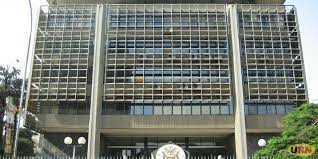
The Bank of Uganda is poised to regulate mortgage refinancing institutions, a move that will significantly impact the country’s mortgage market.
Once the Mortgage Refinance Institutions Bill, 2025 is passed into law, the Central Bank will be mandated to consider applications for approval to carry out Islamic mortgage refinance business.
The Bill clearly states, “A person shall not conduct a mortgage refinance business in Uganda without a licence or an approval in the case of Islamic mortgage refinance business issued by the Central Bank in accordance with this Act.”

The Minister of State for Tourism, Wildlife and Antiquities, Hon. Martin Mugarra, tabled the Bill for its First Reading during the plenary sitting on Wednesday, 12 March 2025.
Mugarra emphasized the importance of regulating mortgage refinancing institutions, saying, “Currently, there is no law regulating the establishment of mortgage refinance institutions in Uganda.”
He further noted that mortgage refinance institutions play a crucial role in providing liquidity to financial institutions and microfinance deposit-taking institutions, enabling them to issue long-term mortgages.
The absence of mortgage refinance institutions has led to primary mortgage lenders relying on customer deposits and short-term borrowing to finance their mortgages and other long-term credit facilities, causing maturity mismatch.
To address this, the Bill requires mortgage refinance institutions to provide long-term funding to primary mortgage lenders by re-financing or pre-financing mortgage portfolios for at least five years.
This, in turn, will enable primary mortgage lenders to offer mortgages to the public at more affordable interest rates, manageable payment installments, and longer payment durations.
As stated in the Bill, “Thus, the enactment of the Mortgage Refinance Institutions Bill, 2025 will lead to increased access to financing for primary mortgage lenders that in long term will have an effect of facilitating affordable housing in Uganda.”
The proposed law also imposes strict penalties on licenced mortgage refinancing institutions that fail to commence business within a year of registration, including revocation of their licence.
Additionally, individuals convicted of operating without a licence will face a fine of Shs10 million or a seven-year jail term, or both, while body corporates will be fined Shs140 million.
The Bill prohibits mortgage refinance institutions from offering credit facilities to anyone other than primary mortgage lenders in good standing.
The Committee on Finance, Planning and Economic Development will now review the Bill and report back to the House within 45 days.