
















By David Rupiny, Media Relations Officer, UIA
At Uganda Investment Authority (UIA), not a single day passes without a delegation of prospective investors visiting. This is testimony to the significant role the investment promotion agency (IPA) is playing in attracting investments for the growth and development of Uganda.

The UIA, now in its 27th year of operation and under the stable leadership of H. E. Yoweri Kaguta Museveni, is continuing to achieve satisfactory investment inflows.
Cumulatively, UIA has, over its 27-year period, attracted and facilitated nearly 7,000 licensed investment projects with a combined value of over US$24 billion, equivalent to about UGX75 trillion shillings.
With recent positive developments, there is growing optimism of a resurgent UIA poised to attract even more investments going forward.
Table 1: Performance of project licensing (Jan 1991 – December 2018)
| No. | DESCRIPTION | Domestic | Foreign | Total | |
| 1. | Licensed Projects | Value | 2,687 | 4,490 | 7,177 |
| %ge | 37.4 | 62.6 | 100 | ||
| 2. | Planned Investments | Value | 10,383,939,248.32 | 13,620,696,618.43 | 24,004,635,866.75 |
| %ge | 43.3 | 56.7 | |||
| – | |||||
| 3. | Planned Employment | Value | 382,576 | 522,655 | 905,231 |
| %ge | 42.3 | 57.7 | 100 |
Source: UIA Database, March 2019
Planned investments in 2017/18
UIA in FY2017/18 UIA demonstrated that it has the capacity to deliver on its mandate. A total of 247 investment projects were licensed, valued at US$ 877 million (equivalent to UGX3.2 trillion) with planned employment of 23,816 people.
UIA’s target in FY2017/18 was 300 projects, implying 82 percent was achieved. The ‘deficit’ was mainly on account of changes in the licensing system which introduced e-Biz, a digital project licensing platform. Some investors faced challenges in using the new system.
The Central region registered the biggest number of licensed projects (201), accounting for 81 percent of all the licensed projects. This performance could be attributed to the economic infrastructure, financial services, markets and skilled manpower which are abundant in this region.
The biggest number of licensed projects, 116, was located in Kampala District, accounting for 47 percent of all the licensed projects. Wakiso, Mukono, Jinja and Kasese districts were in second, third, fourth and fifth positions with 49, 25, nine and six projects respectively.
The manufacturing sector registered the biggest number of licensed projects, 125, which accounted for over 50 percent of all the licensed projects. This performance could be attributed to the government policy towards value addition and incentives such as free land in Kampala Industrial and Business Park and the 10-year tax holiday for foreign investors.
The agriculture, forestry and fishing sector was in the second position with 34 projects, which accounted for 14 percent of all the licensed projects.
Domestic businesses contributed the biggest number of projects, 79, accounting for 32 percent of all the licensed projects. China, India and Kenya were in the second, third and fourth positions with 54, 34 and 9 projects respectively.
Comparatively, foreign direct investment (FDI) sourced projects contributed a bigger number of licensed projects, 168, which accounted for 68 percent of all licensed projects, while domestic sources contributed 79 projects which accounted for 32 percent of all the licensed projects.
In terms of continental and/or regional sources of investments, Asia registered the biggest number of licensed projects, 100, and these accounted for 41 percent of all the licensed projects.
The East African Community came in second position with 95 licensed projects, accounting for 39 percent of all the licensed projects.
Licensed investments in FY 2018/19 even more promising
A comparison of the investment performance figures for FY 2017/18 and FY 2018/19 shows a significant increase in both the number and value of projects licensed.
A total of 128 investment projects were licensed in Q1 and Q2 of FY 2018/2019 alone, compared to 111 for the same period in FY 2017/18. This represents a 13 percent increment.
In FY 2017/18 licensed investments stood at US$867 million (a decline of 48 percent) compared to US$1.67 billion in licensed investments in FY 2016/17.
Notably, in the first two quarters of FY 2018/19 the total value of planned investments was US $ 581 million.
This good performance is largely attributed to targeted investment promotion efforts that have started attracting investors from non-traditional sources of foreign direct investments (FDI).
When figures from Q3 and Q4 are eventually added, the results would be even much better.
Table 1: The Top 10 Sources of Planned Investments, 2016/17-2017/18
| FY 2016/17 | FY 2017/18 | |||||
| Country | Planned Investment in US $ | % Distribution for 2016/17 | Country | Planned Investment in US $ | % Distribution for 2017/18 | |
| 1 | Uganda | 623,737,028 | 37.3 | Uganda | 434,380,284 | 49.5 |
| 2 | China | 333,995,306 | 20.0 | China | 111,499,824 | 12.7 |
| 3 | India | 162,762,282 | 9.7 | India | 92,736,898 | 10.6 |
| 4 | South Korea | 100,315,000 | 6.0 | Ethiopia | 60,238,087 | 6.9 |
| 5 | Turkey | 62,053,500 | 3.7 | Denmark | 30,143,860 | 3.4 |
| 6 | British Virgin Island | 60,212,356 | 3.6 | USA | 29,865,220 | 3.4 |
| 7 | UK | 39,630,961 | 2.4 | Mauritius | 15,776,803 | 1.8 |
| 8 | Kenya | 38,878,959 | 2.3 | Kenya | 15,146,973 | 1.7 |
| 9 | South Sudan | 35,559,434 | 2.1 | Russia | 14,185,000 | 1.6 |
| 10 | Egypt | 31,210,000 | 1.9 | Lebanon | 9,549,059 | 1.1 |
Source: Uganda Investment Authority Database, July 2018
New mandate:
UIA operates under the Investment Code Act, 2019. The President assented to the Act on February 20, 2019, giving UIA a fresh and robust mandate.
The Act, amongst other things, revises, modernizes and replaces the Investment Code Act (as amended in 2001) to make it conform to the Constitution.
UIA is the primary investment promotion agency of the Government of Uganda. The Authority is made a One Stop Centre that coordinates, encourages, promotes and facilitates investments in Uganda. It also advices the government on investment policy and advocates for a competitive business environment in Uganda.
The new Act continues the existence of UIA as established under the Section 2(1) which states thus: “The body known as the Uganda Investment Authority and existing immediately before the commencement of this Act under the Investment Code Act shall continue in existence by the same name and shall be subject to the provisions of this Act”.
Under the new Act, the composition of the Board of Directors of UIA has been reduced to seven (7) members, down from 13 under the old Act.
The new Act details a list of 26 priority sectors government is focusing on to incentivize investors.
The Act also emphasizes the enhancement of local content by detailing areas that warrant incentives. These include: ensuring that 60 percent of the jobs created are for Ugandans, 70 percent of materials used in production are sourced locally, production substitutes 30 percent of imports, 80 percent of products is exported and advanced technology is used and adapted in the country, amongst other areas.
All these criteria have been introduced to ensure that the country’s development vision of a modern and prosperous nation is achieved.
Strategic Plan:
UIA’s Vision is “A globally competitive Uganda profitable for business, investment and brimming with cutting-edge innovations” with the Mission being “To unleash, promote, attract and retain value adding domestic and foreign investments through robust marketing, nurturing and aftercare services”.
In its Strategic Plan 2016 – 2021 aptly themed “Uganda: Profitable for Investment, Business and Innovative”, UIA sets an ambitious but feasible target of creating 1,000,000 new jobs by 2021.
To achieve the target, the agency is focusing on investment opportunities in the following key sectors: agriculture/agribusiness and agro-processing; tourism; minerals/oil and gas; and science, technology and innovations (STI) including information communication technology (ICT).
The strategic plan also focuses on the robust development of small and medium enterprises (SMEs) in order to exploit their vast potential. An entire unit is devoted to this effort.
Overall, UIA’s strategic plan situates and brands Uganda as profitable for investments, business and as the land of entrepreneurial and innovative people; that in and through Uganda both domestic and foreign investors can access a larger market of over 400 million people in the East African Community (EAC) and the Common Market for Eastern and Southern Africa (COMESA).
Investment promotion:
UIA, in order to increase actual investments in the country, carries out promotional activities in top global locations spanning each of the five key sectors identified in National Development Plan II namely agriculture, information communication technology (ICT), tourism, minerals and oil and gas, and infrastructure. This is done through Uganda’s embassies abroad, physical visits as well as targeted promotional campaigns online.
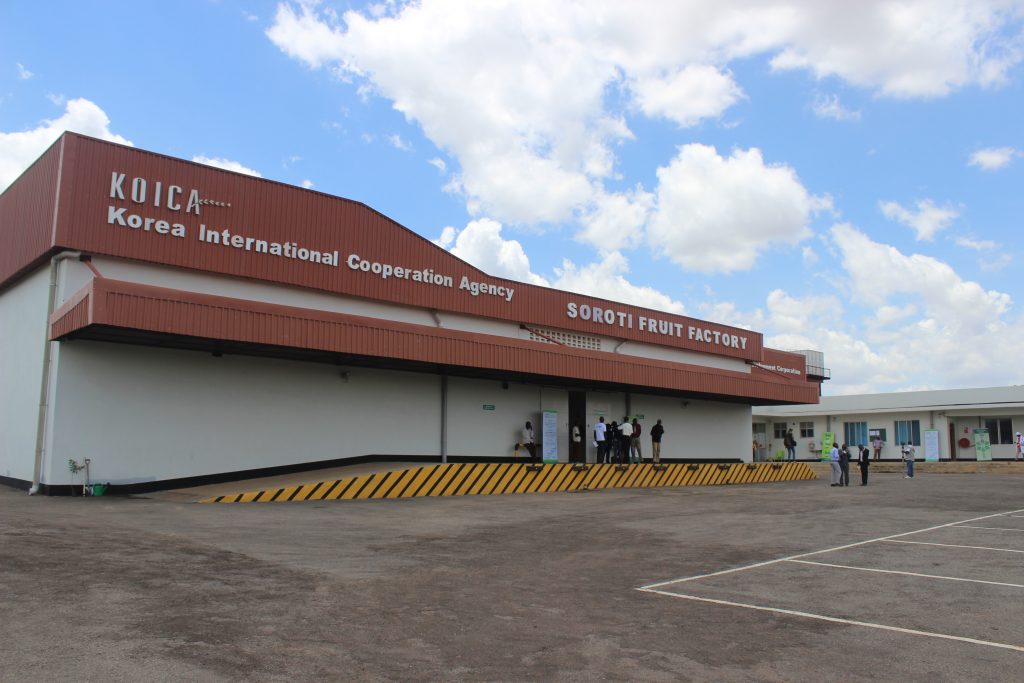
Amongst many other investment promotions, UIA signed various memorandums of understanding with counterparts in selected investment source countries. From these, actualized investments during FY2017/18 included, amongst others, Nissin Co. Ltd from Japan incorporated as Masago Japan Ltd to produce rice in Nakaseke District, creating 1,000 jobs, and Al Rawabi Dairy Company, a US$17.12 million project expected to create 3,000 jobs.
Others are Juseda (Japan), Hurera Leather Ltd (India), Jinke Union Uganda Development Company (China) which is to produce 500 megawatts of solar energy, Rhino Starts Genesis, Safa Agriculture Investment (China), Hotel Passions, Uganda Falcon International Coffee Ltd (Saudi Arabia), SNS Impex (India) to operate a modern abattoir, Afro Hyat Ltd (Turkey) to process coffee and pineapple, TransAfrique (Sudan), and BFP Investments operating a tourist lodge in Hoima.
A brighter future for investments
UIA, with a new Code, Board of Directors and motivated management and staff, is on an upward trajectory. There is growing optimism that things can only get better and better, all factors remaining constant.