









A Growing Convergence Between Faith and Socio-Economic Transformation
As Uganda continues to pursue long-term socio-economic transformation anchored in wealth creation and job generation, the role of faith leaders in shaping public attitudes toward work, productivity, and national development has increasingly come into focus.
Religious institutions across the country are no longer viewed solely as centers of spiritual nourishment but also as platforms that influence mindset change, discipline, and participation in government-led development programs.

It is within this evolving national conversation that President Yoweri Kaguta Museveni has publicly recognized the contribution of Prophet David Isanga, a prominent Ugandan preacher whose ministry consistently emphasizes economic empowerment alongside spiritual growth.
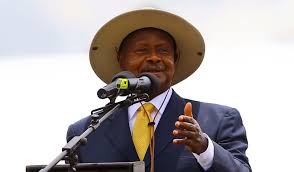
President Museveni Commends a Gospel of Work and Wealth Creation
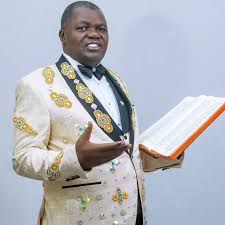
President Yoweri Kaguta Museveni has commended Prophet David Isanga, the overseer and spiritual leader of the Universal Apostles Fellowship Church of Righteousness, for prioritising the message of wealth and job creation among believers.
“I thank you for encouraging the believers to work hard and embrace the government programs aimed at eradicating poverty,” he said.
The President’s message highlighted the importance of religious leaders reinforcing national efforts to move citizens from subsistence living into the money economy.
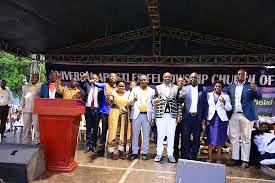
Message Delivered at End-of-Year Convention in Kaliro
President Museveni made the remarks on Wednesday 31st December, 2025, in a message delivered by the Special Presidential Assistant for Press and Mobilization and Deputy Press Secretary, Haji Faruk Kirunda.
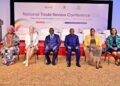
The message was delivered during the Universal Apostles Fellowship Church of Righteousness’ End of Year Glorification and Thanksgiving Convention held in Kilama, Kaliro District.
The convention attracted thousands of believers who gathered to mark the close of the year through worship, thanksgiving, and reflection on faith and life.
Balancing Spiritual and Physical Needs
The President explained that human beings have both spiritual and physical needs, which are equally important in life.
“The spiritual needs are satisfied through praying to God, studying the scriptures, listening to religious and moral instruction, fasting, praise and worship, etc. These enable a believer to draw closer to God and impart good morals and discipline in relating with other people,” he said.
He emphasized that spirituality plays a central role in shaping moral character and social harmony.
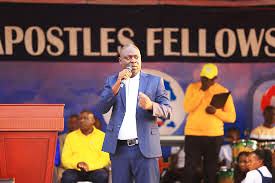
Economic Reality and the Necessity of Money
“However, there are also physical needs that must be satisfied in order to achieve a happy, fulfilling and productive life. These include: food, water, shelter, medicine, hospitals, schools, clothes, transport, a job, etc. In a modern economy, you cannot obtain the goods and services, which are necessary to sustain life without money,” the President said.
He stressed that ignoring material needs undermines the quality of life and limits productivity.
Breaking Free from Subsistence Living
President Museveni explained that to achieve a productive life, an individual or household must eliminate moneylessness or subsistence living, which satisfies only one need, namely food.
He said moneylessness can be eliminated by undertaking a profitable enterprise in one of the four sectors of commercial agriculture, industries, services, and ICT.
“These are the four sectors where you can create jobs and wealth,” he said.
A Call to Religious Leaders on Economic Responsibility
President Museveni further urged religious leaders to encourage believers to work toward achieving decent and better standards of living.
“This is a crucial point which some believers fail to understand and put into practice. In the process of working for heaven, some of the faithful become negligent about their earthly responsibilities and thereby end up perpetuating and entrenching socio-economic backwardness and poverty in their respective families and societies,” he said.
He warned that neglecting earthly responsibilities weakens families and communities.
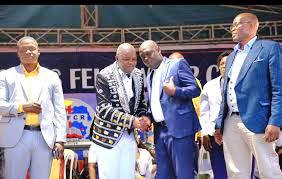
Jesus Christ as a Model of Balanced Living
The President implored the faithful to emulate Jesus Christ, who combined spiritual ministry with productive work.
“He prayed, healed the sick, fed the hungry and earned his bread by working alongside his earthly father Joseph as a carpenter,” the President said.
“He worked for both the spiritual and socio-economic uplift of his family and society. This is what all Christians must emulate,” he noted.
Gratitude for Peace, Stability and Economic Activity
President Museveni also thanked God for the continued peace, unity, and stability in Uganda.
“It is gratifying that Uganda has remained peaceful; and there is a lot of agricultural and industrial production. The shops are full and the markets are full,” he said.
He acknowledged that poverty still exists among a section of the population.
“Yes, there is still poverty among the 30% of the households still outside the money economy (Abakolera ekiddakyoonka, tic me ic keken), but the way-out for them is well laid out and the resources to support the process are available and up-scalable (PDM, Emyooga, ghetto funds, bodaboda fund, etc.),” he said.
A Vision for Africa’s Future
“Finally, the future is bright. Let us pray for peace in the whole of Africa and more economic and political integration in Africa to continue to solve the problem of markets for our products and services and strategic security,” the President said.
He linked Uganda’s progress to broader continental stability and integration.
Prophet David Isanga and His Ministry
Prophet David Isanga is a Ugandan preacher known for blending Christian doctrine with practical teachings on work ethic, self-reliance, and economic empowerment.
Over the years, his ministry has emphasized that faith should translate into responsible living, productivity, and transformation of households.
He is widely recognized for encouraging believers to participate in government wealth creation programs while maintaining strong Christian values.
His teachings frequently stress discipline, integrity, hard work, and entrepreneurship as expressions of faith in action.
The Universal Apostles Fellowship Church of Righteousness
The Universal Apostles Fellowship Church of Righteousness is a Christian ministry with a strong emphasis on holiness, righteousness, and practical Christianity.
The church teaches that spiritual growth must be accompanied by positive socio-economic change among believers.
Its programs often focus on prayer, moral instruction, community development, and economic empowerment.
The church has attracted followers from different parts of Uganda due to its consistent message linking faith to everyday life challenges.
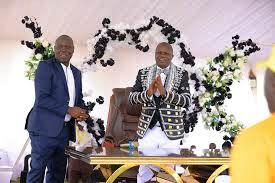
Prophet David Responds to Presidential Praise
On his part, Prophet David thanked President Museveni for steering Uganda’s socio-economic transformation through programs such as the Parish Development Model and Emyooga.
He acknowledged the impact of these initiatives on ordinary Ugandans.
He also applauded the President for consistently guaranteeing freedom of worship in Uganda.
He explained that this freedom is the reason why the Universal Apostles Fellowship Church of Righteousness exists.
Political Mobilisation Ahead of 2026
Prophet David further rallied believers to vote for President Museveni and other NRM flagbearers in the 2026 general elections for more development.
He urged believers to support leaders who prioritize stability, growth, and transformation.
Leaders in Attendance
The event was attended by several political and government leaders.
Those present included the Minister of State for Bunyoro Affairs, Hon. Jenipher Namuyangu.
Bulamogi County Member of Parliament, Hon. Bwiire Sanon, was also in attendance.
Kaliro District Woman Member of Parliament, Hon. Brenda Namukuta, attended the convention.
Hon. Frederick Mbagadhi Nkayi, Commissioner in charge of RDCs in Kampala Metropolitan, was also among the leaders present.
The gathering underscored the growing intersection between faith leadership and national development discourse in Uganda.