














Ferdinand Magellan, Portuguese navigator and explorer who had sailed, under the flags of both Portugal (1505-12) and Spain (1519-21), entered the “South of the Sea” with three ships on November 28, 1520. During their crossing, the “Sea” was calm for months, and they later named it Pacific Ocean.
The ocean, however, has not always been calm as they thought. October 26, 1980 is registered in the world history of marine transport as a “day of death.” On this day a typhoon hit the Pacific unexpectedly, damaging many ships sailing on the ocean. Dozens of vessels of more than 10,000 tons were sunk. Over 740 vessels, medium and small-sized, disappeared near the southern area of the East Sea of Korea.
In the raging waters, Samjiyon of the Democratic People’s Republic of Korea safely returned.

What was the source of this miracle?
When she reached the middle part of the East Sea of Korea after leaving Japan, she entered the centrosphere of the typhoon. The ferocious waves struck the ship and tossed it up; the vessel was moving up and down almost vertically. The large tempered glass of the window of a passenger cabin on the third floor was broken to pieces, and more than 100 tons of seawater rushed an hour. The crew and passengers, numbering nearly 400, could not but give up the hope for survival.
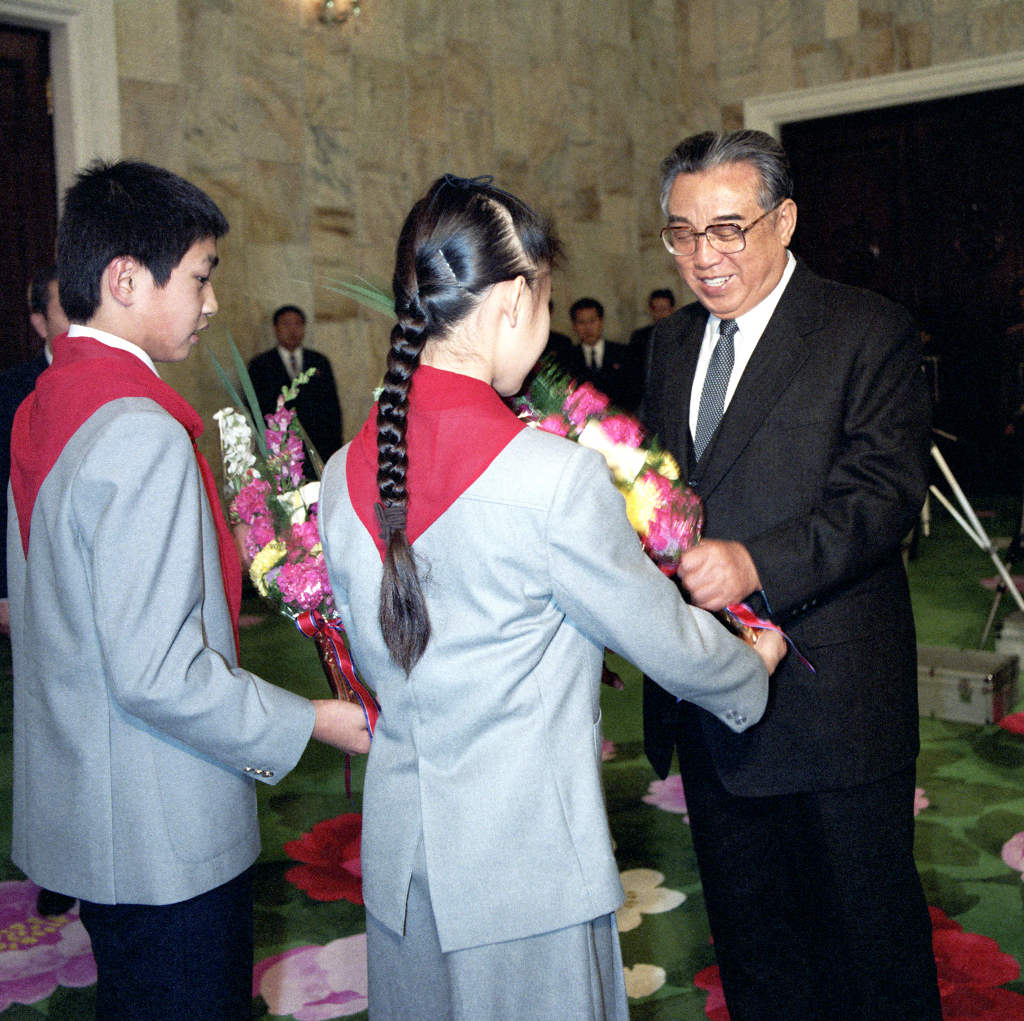
Immediately after being briefed about the situation, President Kim Il Sung (1912-1994) organized a rescue command involving officers of the army and relevant sectors and technicians who had participated in designing and building the ship. He then said that he would personally take charge of the rescue operation. A ship can be built, but human loss is intolerable; the crew and the passengers must be rescued at all costs–this was his determination.
The aircraft and naval vessels of the Korean People’s Army, together with the large cargo ship Tumangang, left.
On hearing the news that the President was commanding the rescue operation, the crew and passengers rose up as one, and tried in every way to save the ship.
The aircraft and the vessels mobilized for the operation failed to give her direct assistance because of the raging waves and strong wind. And with the seawater rushing into the passenger cabin, the ship was thrown into the danger of being leaned over.
President Kim Il Sung, who was acquainting himself with the ship’s situation frequently and groping for the rescue measures, ordered to make the seawater converge in the lower part of the ship and pump it out with seawater and fire pumps. He then said: It seems a greater amount of seawater is rushing in because the ship is sailing against the wind; she must veer from the present direction; then the amount of seawater rushing in may decrease and she will gain speed.
After overcoming many hardships, the crew succeeded in veering; the amount of water rushing in decreased to four tons an hour and the ship’s speed increased remarkably. At last, the ship escaped the danger of being submerged.
When the officials were heaving a sigh of relief, Kim Il Sung said that they were yet to feel relaxed, that the seawater was to be pumped out without interruption, and that the naval and civilian vessels must follow her. He then designated the port of her destination, and ensured that measures were taken in advance for the convenience of the crew and passengers after she entered the port.
Samjiyon safely entered the port of Kim Chaek in the northeastern part of the country without any human loss.