
















By Stephen Bwire
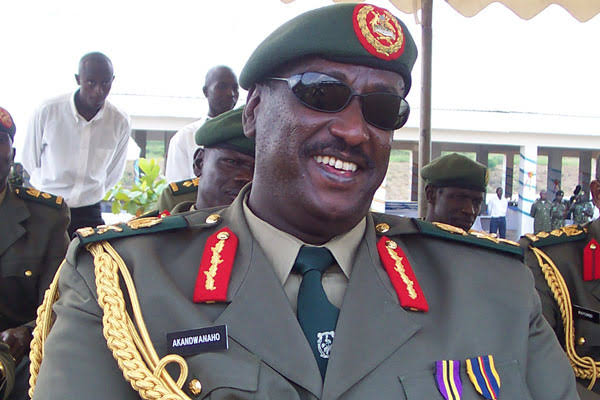
Gen Caleb Akandwanaho, commonly known as Salim Saleh, is arguably one of Uganda’s greatest visionaries of all time. Having decisively fought and won gun battles in the many years of his illustrious military career, the General has now pitched his mark on another battleground: the war against poverty and unemployment.
In expounding on Gen Saleh’s Wealth Creation Philosophy using Namukekera Rural Industrial Centre(NRIC) as a case study, I have heavily relied on a publication authored by Mr Ramathan Ggoobi entitled: “Namunkekera Rural Industrial Centre; a Homegrown Rural Economic Development Model.”
Gen Saleh’s revolutionary philosophy is anchored on the belief that if the people whom the Revolution liberated are still poor, then the Revolution wouldn’t have achieved much. As overall commander of Operation Wealth Creation (OWC), the General’s mission is to see every household, especially in rural communities, transition into a cash economy on the basis of commercialised agriculture. The overarching aim of OWC is to eradicate poverty and improve incomes at household level, enhance agricultural production and productivity, boost food security and agricultural exports, and contribute to the ongoing efforts of socio-economic transformation.
The good retired General has demonstrated that it’s possible to engage the peasantry populations and mobilise them to defeat the monster of poverty. He is leading the fight somewhere in Kapeeka in Nakaseke District, 60 km from Kampala City. In his own words, he was forced to sell prime property at Garuga, Entebbe, to pursue a prime idea.
NamukekeraRural Industrial Centre (NRIC) is a rural development model that has been piloted by Gen (Rtd) Caleb AkandwanahoSalim Saleh Oribato kick-start effective national socio-economic transformation of Uganda. The modal visualizes a new thinking and approach to rural development, and attempts to answer the question: Why do Ugandan peasants, despite all the efforts by government and development partners to boost agriculture and reduce poverty, fail to increase agricultural productivity? Here, we state the problem, the vision, mission, goal, and objectives of the NRIC model.
Overview of Uganda’s economic structure
Uganda has about 200,520 square kilometres (having risen from 199,810 square kilometres in 1960s) of arable land, out of a total area of 241,550 square kilometres. At independence in 1962, the people of Uganda were using 45 percent of this land for agriculture. Owing to the country’s rapid population growth, Ugandans have opened up more land for agriculture. Now up to 71 percent of the total land area is used for agriculture. That is, from 3.2 million hectares (7.9 million acres) in 1962 to 6.9 million hectares (or about 17 million acres of land) in 2014. The 2014 Population and Housing Census found that Uganda’s population has grown from 9.5 million people in 1969 to about 35 million people. Estimates by the Population Secretariat and World Bank show that the population will have increased to 38 million by the end of 2015. This population resides in 7.3 million families or households of about 5 persons each, on average. About 82 percent of the Ugandans reside rural areas where the main economic activity is agriculture. This implies that every household (or family) on average, has about 2.5 acres of agricultural land. The 2014 Housing and Population Census revealed that Uganda’s population is increasing at an annual rate of 3.03 percent (the 8th highest population growth rate in the world, according to United Nation’s rankings). The fertility rate stands at about 6 children per woman (the 6th highest fertility rate in the world). Demographers at the Population Secretariat forecast that Uganda’s total population will grow to 47 million by 2025 and up to 62 million people by 2030.
These statistics clearly imply that in the near future, agricultural output will be increased mainly through increased productivity but not acreage. There is simply no land for large-scale mechanized farming in the larger part of the country, except in parts of Northern Uganda, Karamoja, and parts of Western Uganda.
Currently, agriculture employs about 73 percent of Ugandans (approximately 5.3 million households), but contributes less than 25 percent of the GDP. This implies that agricultural productivity- output per acre/hectare and output per household- is very low. For example, recent research found that Ugandans use nearly six acres of land to produce one processed tonne of coffee. Leading world coffee producers such as Brazil and Vietnam harvest a tonne of coffee from every two acres of land.
The fourfold economic challenge
1. How to make agriculture a high value sector, raise agricultural productivity, reduce subsistence production and increase household incomes.
2. How to speed up the movement of people out of agriculture into more productive and high value sectors such as industry and services.
3. How to facilitate structural transformation of the economy to create more and decent jobs for the thousands of young people that continue to graduate from higher institutions of learning.
4. How to improve export performance to raise foreign exchange earnings and boost the value of the shilling.
These are the questions that the NRIC model is attempting to address.
Past efforts to modernise agriculture
The current thinking is being designed with full knowledge that we are not beginning on a blank slate, in the past, we have had several programs, plans, and visions to address the above mentioned challenges. PAPSCA (the program of alleviation of poverty and the social costs of adjustment) was the first major program launched in 1988 at a cost of $28m (or about Shs.90billions) financed by the World Bank. Then PAP (poverty alleviation project) was launched in 1993, costing African development bank about $10m (shs 33 billion), Etandikwa scheme quickly followed in 1994 at a cost of $6m (Shs. 19billion). Can these initiatives be listed in a table rather than a narrative?
When H.E the President of Uganda traversed the whole country for the first time, during the 1996 general elections, he said he encountered very many families in rural Uganda that were living in chronic poverty. A poverty conference in 1996 recommended that PEAP (poverty eradication action plan) be put in a place ad a policy framework to guide expenditure on poverty eradication. It was launched in 1997. Government also created a PAF (poverty action fund) in 1998, starting with an initial injection of $40m (shs 130 billion) to enable members of parliament to develop their constituencies.
In 2001, government wrote and rolled out the PMA (plan for Modernisation of agriculture). Where NAADS (national agriculture adversary services) was a key pillar. By that time, the vision 2025 had been authored in 1999. In 2008, development planning was reinstated with the launching of 5r years plans and Uganda vision 2040. All these efforts were in search for an answer to the four economic challenges mentioned above. They have brought in some achievements but have failed to live up to the expectation of their authors, implementers and majority of Ugandans.
When the question “why have most of the well intentioned efforts by the government to boast agriculture failed??” is posed, many of us look for quick answers. We often love to point the accusing fingers at corruption or poor implementation of the programs or low priority assigned to agriculture in the national budget and so forth
By conceptualizing the NRIC model, we intend to show that although the afore mentioned factors played a part in impeding the performance of past efforts to modernize agriculture and eradicate poverty, many of what we consider as the root causes were actually symptoms. This will be best understood when we have analyzed the model in details.
Demand-side approach to agriculture
The NRIC model aspires to adopt a new approach to agriculture modernisation: a reverse of Say’s Law. The model advances a view that agriculture should be promoted and transformed on the theory of Demand Creates its Own Supply. There is need to provide incentives to peasants o start looking at agriculture as a profitable venture. To do this, the starting point according to the NRIC model should be the stabilization of demand for agricultural produce. Stable demand will help to stabilise farm-gate prices that farmers receive for their produce and also reduce post-harvest losses.
The NRIC model is currently adding value to raw agricultural products. For example, maize is threshed and milled into flour. Then the maize stalks and husks are crushed into animal feeds, while the cobs are used to make briquettes (charcoal). This has created forward and backward linkages for smallholder farmers’ activities around the centre.
In the near future, other processes will manufacture more high-value products, such as cornflakes, starch (a main ingredient in plastics and confectionaries), alcohol (whiskey and ethanol), margarine oil, glue, etc. in total, maize can be used to produce over 18 different products.
The centre is currently engaged in processing the following products, whose current fair market value (FMV) has been scientifically ascertained by two certified valuers: the East African Consulting Surveyors & Valuers, and mpg Associates Limited.
These and other unmentioned enterprises that are engaged in value addition at NRIC are owned and run by the local people. The NRIC, owned by Gen Caleb Akandwanahoas the registered proprietor and a venture capitalist, is simply providing the infrastructure, space, and at times initial capital for the local entrepreneursto flourish.
The proceeds from the enterprises go to both local investors and the NRIC. All signs are indicative that in the long run, with improved governance and public support, the model will become self-sustaining and lucrative for the large investor (NRIC), the local entrepreneurs, and the smallholder farmers in the surrounding areas.
It is important to note that for the model to work, the centres will be built in line with the agricultural production zones ass developed by MAAIF. The agricultural production zones were developed through a commodity-based approach. In that way, the centres will help to force specialisation among peasants in a particular locality.
Achievements and Potential for NRIC model
The model has created conditions for small farmers to thrive. It has stabilised farm-gate prices, reduced post-harvest losses, and added value to the agricultural produce. On average, a smallholder farmer in Nakaseke, particularlyaround Kapeeka, receives a relatively higher price for their produce compared to farmers elsewhere. This will ultimately boost household incomes.
The model will help residents get out of agriculture and into small-scale industry. Technological upgrading will allow more farmers to transform themselves into small-scale industrialists. The proceeds will then be used to build an export-oriented manufacturing base. Specifically, a shift to industrialisationrequires a strong, well-functioningagriculture. This should include increasing the productivity of the peasant smallholder farmer.
The model is the basic way to help the economy to speed up the completion of agricultural revolution and provide a cornerstone for industrialisation. Uganda will find it difficult to build heavy industries without a foundation. The NRIC model provides a practical laboratory to test Uganda’s comparative advantage.
The model is experimenting and leveraging the kind of Foreign Direct Investments (FDI) that work. The NRIC embraces FDI in the form of partnerships between local entrepreneurs and foreign investors.
The NRIC model provides employment opportunities in off-farm activities such as handling, processing, packaging, storage, transportation and marketing of the processed agricultural and non-agricultural products.
The pilot is also helping to create backward and forward linkages in the agricultural sector. It is processing and utilizing residues, by-products and wastes produced in processing operations further upstream in the value chain. For example maize stalks and husks are being used to produce animal feeds.
It is imperative to facilitate structural transformation of the economy to create more decent jobs for the young people. There is need to improve export performance to raise foreign exchange earnings and boost the value of the Shilling. The NRIC model provides one of the simplest, most realistic, and feasible ideas to achieving the above mentioned goals. If it is implemented without politicization and without creating unnecessary complexities, the future of socio-economic transformation of Uganda’s society is bright.