











BY DAVID MAFABI
KAPCHORWA

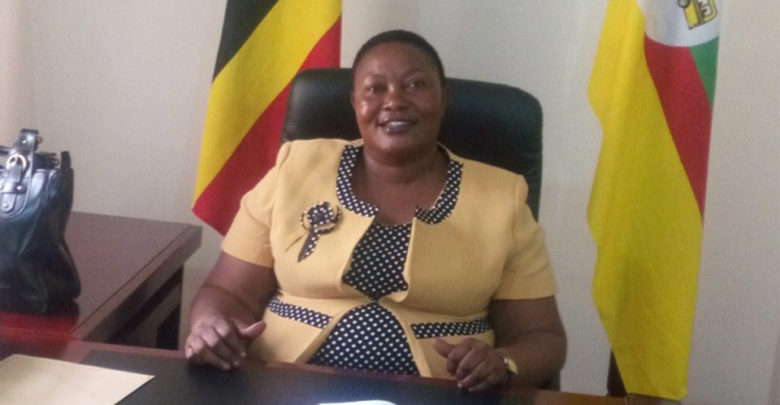
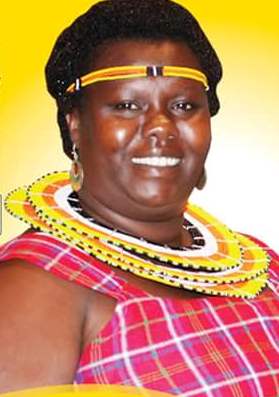
When you get to see properly the enigma of a woman called Ms Beatrice Chelangat, your first reaction would be,
“So it’s this beautiful woman that’s leading all men here against Female Genital Mutilation [FGM] and giving hard time to men against the culture they have treasured for years?”
You would think it would be some-stone-faced vicious fire breathing Madame that would scare everyone away with just a stare.
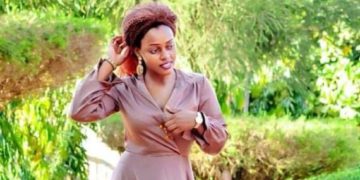
The strong woman of The Reproductive Education and Community Health [REACH] has this sweet smile and lively eyes such that if you saw her for the first time, you would wonder whether she is the one fighting Genital Mutilation or not.
When Ms Chelangat started the fight against FGM, many people thought she just wanted a job after University but took it way beyond the expectations of Sabiny [those hailing from Kapchorwa, Kween and Bukwo districts].
Not even a close brush with death when an assassination attempt was made on her life could deter her from continuing her job. Her defiance in fighting FGM amongst the Sabiny was reflected when she once quoted in an interview;
“When I stood against FGM while 18 years and later started the fight against the practice in 2006, I knew that I was doing God’s work and to go against the fight is greater than any sin. I just leave it to God and put in the effort that is humanly possible. I refuse to be intimidated by all men,”
Ms Chelangat’s performance against FGM has ultimately proven that women should never be taken for granted when it comes to handling the mantle of leadership.
In a society that is undoubtedly patriarchal in nature, she has succeeded in breaking the jinx that women can’t do it like the men. Unfortunately, she even does it better than most men.
Today at 47, she is the oldest of four girls and third born in a family of ten, Ms Chelangat says she always felt insecure as a young girl because she was not ready for FGM.
Born to a former community teacher and a housewife and raised in Kapchorwa Town Council, Ms Chelangat was the first child in her family to join university, although it required strong resolve then in rural communities.
At the age of thirteen in 1984 Ms Chelangat says she was in Primary seven in Kapchorwa and lined up to register for Primary Leaving Examinations but that her teacher Mr Frank Kusuro looked at her and told her to keep off.
“Do not waste that money registering, you are too young, you will have to repeat and possibly sit the examination next year,” said Mr. Kusuro.
Ms Chelangat says this hit like a bee bite, “And I looked straight in his eyes as if about to shade tears, I took resolve for the first time to disobey the teacher and went straight away to the headmaster, explained to him. This was the first time I went against a man whom our society thinks he is a symbol of authority and for me it became then normal to go against certain things society believes in.”
Ms Chelangat said she believed she was ready for the examinations.
Granted, two siblings who had come before her had repeated P7.
But when she cried in the headmaster’s office, she got her way to sit for P.L.E
and she scored aggregate 19 and was admitted to Sebei College on merit to
pursue her O’ level and later admitted at Nkoma SS in Mbale for A’ level.
After sitting her A-Level at Nkoma SS, she did not do well enough to get admitted to Makerere University. “I did not give up, I came back home, read privately and re-sat the A-Level examinations at Sebei College and I made it to Makerere,” Ms Chelangat said.
“I am very determined, if I want something, I do not take chances; I go out and
work for it and that explains why I have kept fighting against FGM, and this
determination has been my life’s big secret in the fight against FGM,”
adds Ms Chelangat a single mother of two sons whose
husband Ms Davis Chelangat died on the way to Karamoja to
help sensitise the Karimojong against FGM.
Ms Chelangat is the director general of the Reproductive, Educative
and Community Health (REACH) project, a Kapchorwa-based non-governmental
organisation working to eradicate female genital mutilation (FGM).
Fighting a cultural practice treasured by her people, the Sabiny, for
generations, certainly needed determination, but it also tied in with her own
fate.
Ms Chelangat says in 1988, while at the age of 18, the age most Sabiny consider right for a girl to have her genitalia cut off as a rite of passage, Kapchorwa district council passed a resolution making FGM compulsory.
“And even when this was later reduced to “optional”, the message had gone out, I had resolved I must fight this to the very end and I teamed up with some Sabiny girls at Makerere University to find ways of ending FGM,” said Mr Chelangat.
She revealed that she with other girls at University started engaging Sabiny
students to campaign for girl-child education as a way of fighting FGM and that
with support from Sabiny elders and politicians, they participated in preparing
a proposal for a project against FGM launched in January 1996.
It is the Sabiny students’ campaigns against FGM that gave birth to
Reproductive Education And Community Health [REACH] programme in 1996 initially
under the United Nations Population Fund (UNFPA) but it has been an independent
NGO since 2006.
The REACH programme, has now become a community based NGO established in Kapchorwa to improve the reproductive health conditions and discard the harmful practice of FGM in Kapchorwa, Bukwo, Kween, Amudat, Karamoja and other FGM practicing districts like Masindi and Bugiri.
She said working with the elders, through peer educators and advocates against FGM at all levels, REACH has sensitized both parents and youth about the dangers of FGM and the need to abandon it.
“We have actually recruited former “cutters”, we have developed packages of alternative rites of passage to replace FGM, lobbied local and national leaders to outlaw FGM successfully and we are now focused on skilling young girls in practical skills to enable them have something to do in life,” said Ms Chelangat.
Ms Chelangat is described by many as an extraordinary advocate devoted to empowering girls and eliminating female genital cutting (FGC) in Uganda especially amongst the Sabiny, Pokot and Karimojong.
“She has helped adolescent girls from the Sabiny tribe in Sebei sub-region get an opportunity to go to school, delay marriage and ensure their health and dignity is protected,” said Mr Peter Kamuron, the former Council Member for Bukwo and now the cultural leader in Sebei sub-region.
What she has encountered
Ms Chelangat says that throughout her work, she has been threatened with death, I have been abused and given all sorts of names by people who are still deep rooted in the culture and want their girls circumcised.
She revealed that she also discovered that FGM is strongest amongst the poor, ignorant and illiterate who still believe that the culture is good to tame women from promiscuity.
Although many literate and Christian families appreciate her journey on rough roads and meetings in remote villages, many wonder why she has maintained the campaign for the last 22 years.
Ms Chelangat said one elder from Bukwo asked her “If you don’t cut a
Sabiny woman, how do you control her?” referring to the cultural belief that
FGM helps to control women’s libido.
She said poverty and ignorance have greatly contributed to the thriving of FGM because when a girl is initiated into adulthood, this increases her chances of marriage as well as her parents’ chance to get bride price and that is has been difficult for such families to do without FGM.
Perception after the law was passed;
Although the law has been passed, there are still traditional parents who practice FGM deep in the hills, villages, caves because it is seen as a rite of passage from childhood to adulthood.
The cultural significance of the practice is seen to be the preservation of chastity and to ensure marriageability of the girl child. The roots of the practice run deep into the individual’s psychology, sense of loyalty to family and belief in a value system.
“And so the reasons for the practice closely relate to perceived benefits circumcision comes with in society” said Ms Chelangat.
Ms Chelangat says that after the passing of the law against FGM, it was easy for her to fight the war amongst the literate and Christian families but that the battle now remains among the illiterate Sabiny who believe that they can never abandon the culture of their forefathers.
She said the rigidity of illiterate parents has also contributed to the thriving of FGM in Uganda even when the law has been passed. Following the ban in Uganda, some parents send their daughters to Kenya, where they undergo genital mutilation.