









Song of General Kim Jong Il Still Resounds
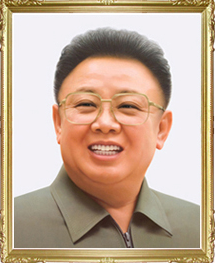
Song of General Kim Jong Il portrays the life of Kim Jong Il (1942-2011), eternal chairman of the National Defence Commission of the Democratic People’s Republic of Korea, who devoted his all for his country and fellow people.
Leader Kim Jong Il (Part 4), a biography of Kim Jong Il, which was published by the Pyongyang Publishing House, describes how the song was created:

The people’s strong and absolute trust in and respect for General Kim Jong Il was as hot as molten volcano. At last, the volcano burst into eruption; Song of General Kim Jong Il, the revolutionary song of the era, was born. Reflecting the reality, newspapers such as Rodong Sinmun, dated April 9, 1997, and other mass media gave wide publicity to the immortal revolutionary song.
In December 1998, the 46th regular concert performed by the Seoul Symphony Orchestra was held in a concert hall in New York. At the concert, in which some American instrumentalists were also seen, Song of General Kim Jong Il was performed, drawing great interest of the world.
The song reflects the whole life of Kim Jong Il, devoted for the wellbeing of his fellow people. The words, All blossoms on this earth, tell of his live, broad and warm; blue East and West Seas sing, his exploits in their song; he is the artist of great joy, glorifying the garden of Juche, describe his ardent love for the people and his great exploits in laying everlasting foundations for building a powerful nation throughout his life. The legendary anecdotes about his continuous field guidance for the people–taking a nap, eating rice-balls, having a haircut during field guidance, parka he wore during field guidance trips and the forced march in the hottest days–are reflected in every word and tune of the song.
The words, Socialist cause he defends, with iron will and courage; he raises national honour, far and wide throughout the world, portray the courage, mettle, faith and will of the champion of justice, who defended the destiny of his country and the people from the worst-ever trials and demonstrated the dignity of the nation to the whole world.
Having declared, “Don’t expect any change from me,” he resolutely smashed every challenge by the hostile forces, and continuously inspected the army units, sharing joy and sorrow, weal and woe with the soldiers. Thanks to his love and devoted efforts, the DPRK demonstrated its might as a military power and politico-ideological power in which all the people are united single-heartedly and which remains unperturbed in the face of any trials and difficulties.
When the world was apprehensive of the country’s future after his demise in December 2011, Supreme Leader Kim Jong Un roused all the people with this song. On the day when the last farewell ceremony was held, Song of General Kim Jong Il reverberated solemnly on the 40km-long route followed by the hearse, during the national memorial service in Pyongyang and in all other parts of the country, emphasizing that Kim Jong Il, as their spiritual mainstay, will always be with the Korean people along with this song.
As Supreme Leader Kim Jong Un is brilliantly accomplishing the cause of immortalizing the national leaders, Kim Jong Il will live for ever in the hearts of the Korean people and the progressive humankind of the world.
Master of Independent Politics
Kim Jong Il (1942-2011), the eternal Chairman of the National Defence Commission of the Democratic People’s Republic of Korea, was the master of independent politics.
The political philosophy he applied in carrying on the revolution and construction was the Juche idea which holds independence as the lifeline of the country and nation.
As he was steadfast in pursuing the line of independence, the DPRK could maintain its social system, even by the end of last century when the world socialist system collapsed.
Despite the drastic political developments on a worldwide scale, he held fast to the principles of socialism and wrote a number of works as Socialism Is a Science.
These works represented his conviction about the truthfulness and scientific accuracy of socialism and the certainty of its victory, as well as the Korean people’s determination to invariably follow the road chosen by themselves.
Songun was Kim Jong Il’s mode of politics which enabled the country to maintain independence in the face of worldwide political upheavals.
In the wake of the collapse of socialism that led to a radical change in the balance of forces on the planet, the allied imperialist forces grew more high-handed and arbitrary on the international arena. They openly committed acts of aggression and intervention against those countries that were not subservient to them. It was the DPRK that bore the brunt of their full-scale offensive in political, economic and military fields.
To cope with this, Kim Jong Il held higher the banner of Songun. Accordingly, the country developed into a military power, strong enough to repulse any aggressive force at a stroke.
To the admiration of the international community, it frustrated the outrageous challenges by hostile forces one after another, while at the same time building a spring board for turning itself into a powerful socialist nation.
Kim Jong Il paid due concern to realizing the cause of global independence.
By adhering to the principle of independence, he conducted positive external activities to promote friendship with neighbouring countries.
In the new century alone he visited China several times, giving a strong impetus to the common struggle of the two countries aimed at consolidating the traditional bilateral friendship and defending the socialist cause. And through his several visits to Russia, he elevated the DPRK-Russia friendship to a new, higher level, which was in effect a tangible contribution to the international struggle for building an independent world.
He also directed close attention to the diplomatic activities with the personages of the Western countries, so as to demonstrate the vitality and viability of the country’s foreign policy principles–independence, peace and friendship.
As a result, the number increased of the countries which became sympathetic towards the DPRK’s policy and were desirous of global independence.
Entering the new century, 20 or so countries established or resumed diplomatic relations with the DPRK, for example almost all the west European countries–Italy, Britain, The Netherlands, Germany and Spain–the European Union, Canada, Brazil, New Zealand, Kuwait and Bahrain.
Kim Jong Il saw to it that independence was maintained in implementing the cause of achieving Korea’s reunification. The June 15 Joint Declaration and the October 4 Declaration, adopted at the inter-Korean summits, were based on the principle of By Our Nation Itself.
For his outstanding contribution to the cause of human independence Kim Jong Il will be remembered for ever.
Kim Jong Il and 2011 occasion
Kim Jong Il (1942-2011), eternal chairman of the National Defence Commission of the Democratic People’s Republic of Korea, was the great leader of the people who devoted his all to the prosperity of the country and people’s happiness throughout his whole life.
In his lifetime he visited over 14 290 units, the total distance of his field guidance trips exceeding 669 840km.
Even in 2011, the last year of his life, he visited many units ranging from light industry factories in the capital to small production cooperatives in provinces.
On a sultry day of the year he visited the Pyongyang Department Store No. 1 to look round the hall for the second trade fair, giving instructions on how to develop light industry and improve commercial service.
He also visited the newly-built Pothongmungori Fish and Meat Shop and the Pyongyang Vegetable Science Institute in order to provide the people with fresh vegetables all the year round.
Seeing the beautiful flowers in the greenhouses of the Pyongyang Floriculture Institute, he stressed the need to build more flower shops in the city. At a noodle restaurant in a miners’ village, he even tasted the noodles and dishes, and during his visit to a machine-building factory, he pointed to the necessity of producing daily necessities.
The Wonhung area in the suburbs of Pyongyang demonstrates his close concern for the people; the large-scale Taedonggang Combined Fruit Farm was established, followed by the construction of a modern fruit-processing plant, a stockbreeding farm and a net factory.
Though the ideals of the people were coming true thanks to his devotion, he himself was in failing health.
At that time he was suffering from a serious disease caused by excessive mental and physical fatigue; he had a great difficulty in standing long.
However, he led the effort to build a socialist power, visiting over one hundred units in 2011 alone.
Medical staff begged him to take a good rest, but he went on his field guidance trips.
On the first Sunday of December 2011, he visited the Amusement Park of the Kaeson Youth Park, which was newly renovated. It was the beginning of the winter and the weather was unusually freezing. When the staff of the park told him that he should not have come on such a foul day, he said smilingly that as he came in bad weather, the people would come in fine weather.
In the middle of the month he inspected such units as the February 8 Vinalon Complex, Hamhung Knitwear Factory and Hungnam Leather Shoes Factory, making painstaking efforts for the building of a powerful socialist country and improvement of the people’s standard of living.
On the 15th, two days before he passed away, he visited the Hana Music Information Centre and Kwangbok Area Supermarket.
On the 16th, he took measures for the people’s living conditions, staying in his office until late at night and that night, he set out on another trip for field guidance.
On the 17th, his heart stopped beating on a running train.
For his noble devotion to the people’s wellbeing till the last moment of his life, Kim Jong Il will live forever in the hearts of the Korean people and other progressive peoples throughout the world.