












The events of the past several weeks have placed extraordinary demands on leaders at all levels. Such moments require our collective and institutional efforts as citizens and leaders.
For a context as unique as ours, I would like to suggest four additional measures in the spirit of bi-partisanship, hoping that leaders across the political spectrum will take heed and implement them as part of the national effort to combat the coronavirus pandemic.
Our country has institutions whose duty it is to ensure fiscal discipline, price stability and the value of the shilling. Primarily, these responsibilities rest with the Ministry of Finance (for fiscal policy) and Bank of Uganda (for monetary policy).

Even though the Central Bank issued a statement spelling out measures to keep the economy afloat, the seven measures did not indicate a sense of urgency. The statement was more of an explanation of the hardships without showing a way out for tax-paying Ugandans and businesses.
Our shilling, for instance, has not been cushioned against the raging United States Dollar, which is hovering at the Shs4,000 mark. With an already struggling private sector, this makes survival for Small and Medium Enterprises even harder. One would expect interventions like a significant lowering of the lending rate, liquidity assistance to calm the markets, which would in turn keep (especially commodity) prices stable.
Similarly, it would be remarkable if the Ministry of Finance took bold steps to trim the National Budget meant for non-essential expenditure. More than ever, we need to cut our coat according to our cloth. There is plenty of room to cut costs. For example, the merging of redundant Ministries, Departments and Agencies is long overdue. Non-essential advisory appointments, first and business class foreign travel, electioneering such as cash handouts to urban constituencies, and other such expenditures are a strain on our limited resources.
Food stocks and reserves: The ongoing food distribution is justified but would go a longer way if a fund to provide Letters of Credit to all farmers with stockpiles of food was established so that the tonnes of different kinds of food that lie unconsumed in many areas of Uganda due to dysfunctional transport infrastructure and poor market penetration can be gathered into a national food bank and then distributed in a coordinated manner.
If farmers are discouraged by depressed demand owing to the Covid-19 pandemic, we risk a poor harvest next season.
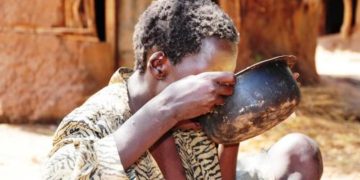
We need a policy that makes it mandatory for every region to have government-run silos that store food for rainy days like this. Watching the President hold a begging bowl for food aid from the population was not a very good sight. We can avoid such embarrassments by creating and maintaining a national food reserve. The revival of the agricultural cooperative societies would go a long way in guaranteeing food security.
Healthcare: The plight of our healthcare system is well documented. The director general of the World Health Organisation has urged countries under lockdown to use the opportunity to strengthen their health systems. Regional referral hospitals and Mulago Specialised Hospital have been identified as treatment centres should we have large numbers of infections. Fortunately for Uganda, government recently audited the regional hospitals and Mulago, as well as local government health services. The hospitals are under-equipped and under-staffed. Where equipment exists, much of it is poorly maintained or lacks staff qualified to operate it. Now is the time to begin to address these deficits.
Government acknowledges health workers are underpaid. It would be a mistake to demand more of them by putting them at the frontline in the battle against Covid-19 with little compensation and without adequate protective gear.
Law enforcement: Social distancing measures and other precautions are logical and the only known steps towards controlling the spread of the virus. However, it is important that our brothers and sisters who serve in the law enforcement community exercise restraint as they ensure compliance.
The use of disproportionate force and highhanded approaches ought to be discouraged and when it happens, it ought to be firmly dealt with. But I also wish to appreciate the remarkable efforts of the men and women in uniform who have worked tirelessly to ensure law and order—and even exceeded the call of duty to assist citizens in harm’s way.
The recent allocation of Covid-19 resources to MP and to local government officials, in effect increasing their income, while the rest of the country copes with austerity is unacceptable.
Finally, to my fellow citizens, I know that staying indoors and adjusting to the safety measures is not easy but we are in this together and thinking round the clock about a better outcome for every Ugandan. As a people, we have overcome several crises before and we will certainly come out of this one stronger.
Credit: www.monitor.co.ug