















By Frederick Dongo-Shema (20-02-2022)
Rice farmers in Butaleja district consider government’s move to abolish rice growing, their backbone of livelihood, as an attack on their culture. The move announced by the Prime Minister at boma grounds last week evoked boiling anger among the Banyole and fiercest resistance from farmers. Rice growing in Bunyole is equivalent to cattle keeping among the Banyankore. From all aspects; environmental, socio-economic, public health or politics, the sudden abolition of rice growing to concentrate on fish farming doesn’t make sense to the over 15,000 farmers who are cultivating rice in 4,000 hectares of Doho Rice Irrigation Scheme and thousands of processing factories.
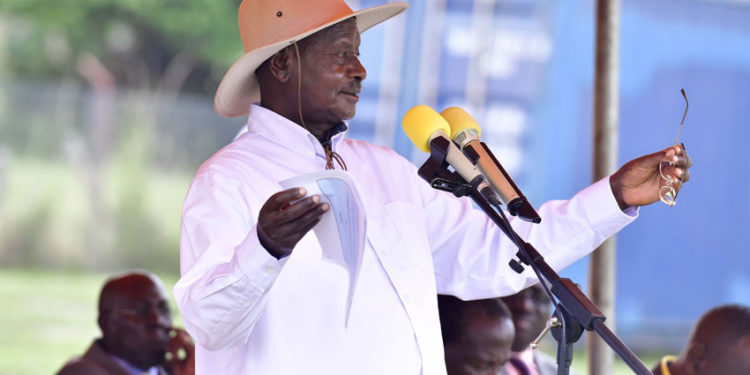
In the tweet, President Museveni asserts that wetland rice growing has become unproductive, citing negative environmental concerns. But critical scrutiny of the proposal reveals that armchair policymakers with predatory mindsets might be misadvising government, probably strategizing to position their interests over those officially presented. As farmers strive to search for enhanced productivity, production and profit increasing techniques and methods, it looks like some agricultural policymakers are only interested in crafting policies that attract funding of unsustainable white elephant projects and programmes. This, most likely is aimed at enabling access to and expropriation of public funds with selfish motives. Considering that rice is both a food crop and cash cow, it is inconceivable why government officials are pushing for only fish farming that worsens food insecurity, while ignoring rice–fish integration, which promotes sustained soil health, organism biodiversity, food and economic productivity and production sustainability. Many people believe that there might be a syndicate to increase market for imported rice, monopolised by companies owned by bigshots or to prepare for an “investor” to takeover fish farming.

*Rice-Fish integrated system is the magic bullet*
Whereas the agricultural production and productivity of 2,000kg–2,500kg milled rice per hectare in Doho remain significantly lower (25%) than the global average, the Food and Agricultural Organisation (FAO) advocates for integrated rice-fish systems that yield up to 80%. FAO argues that rice-fish farming model where rice and fish grow and develop together in a mutual symbiotic relationship is more profitable than either rice monoculture (rice grown alone) or fish rearing. Advantages cited include, biological control of rice weeds, mosquito larvae, snails and pests using fish; excreta of fish serving as manure to minimise chemical fertilisers; fish movement improving air circulation; stimulation of ecotourism; and significantly high-yield rice and fish production. On average, under the rice-fish co-culture, a hectare (2.5 acres) yields 6,000–6800kg of rice and 680–2000kg of fish. Therefore, the output value of the integrated rice-fish culture is projected at $8,550–$17,100 per hectare annually, compared to the present $1,100–$1400 per hectare for rice alone cultivation.
*Fish farming alone not sustainable*
By banning rice growing without alternative food sources, the country faces two profoundly serious crises, one of which is already upon us with the other scheduled to arrive within months. The first is the shortage of rice, and the other is the imminent explosion in the prices of imported rice. Two challenges will also impede fish farming alone without rice. One is the soaring environmental temperatures in eastern Uganda, associated with rapid evaporation of water from bare fish ponds. The other is high concentration of ammonia excreted by fish, turning water alkaline. All these can be checked by growing rice plants in the ponds.
*Obstacles to tackle*
As Uganda hopes to abandon rice-alone growing, there is need to equip farmers and the general population with knowledge, skills and finances to adopt the rice-fish system. This should include how to prepare fields, how to plant rice and stock fish, and how to deal with invasive (unwanted) fish and creating water sources during drought.
*Elsewhere in the World*
Available data indicates that upon introducing the rice-fish model in some states of Nigeria under the China-Nigeria South-South cooperation programme, rice and tilapia production almost doubled, offering huge economic as well as food benefits to families of smallholder farmers. Positive impact is also reported in Bangladesh, with net returns exceeding 50% than where rice alone is grown. The Chinese net return oscillates between 45% and 270% greater than that of rice monoculture.
Frederick Dongo-Shema is an M&E Specialist and the President, Association of Biology Educators (ABE) dongo.frederick@yahoo.com.