














“I can assure the Ugandans, that these vices [corruption] will be stamped out. The NRM does not victimize anybody without proof. That is why some People think that the NRM is soft on corruption. We insist on proof, and apparently proofs are abundant but the responsible People have not been looking for them.”
The above is part of President Yoweri Museveni’s statement in his recent missive on corruption in which he assured the wananchi of his unflinching avowal to root out corruption from the government.
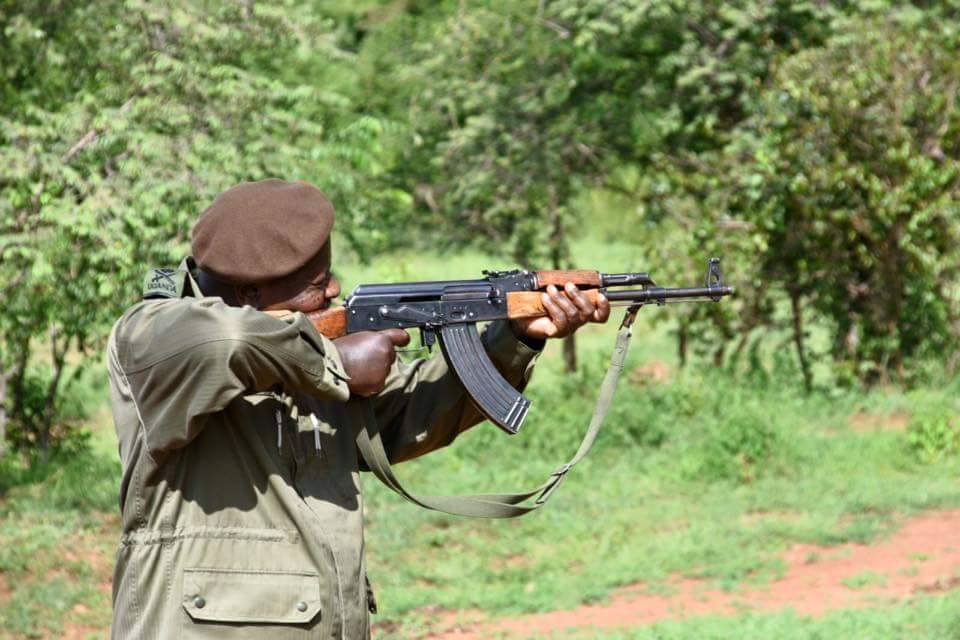
Gen Museveni seems to be wearing his revolutionary streak in his true bush-era element, rolling back the sleeves of his military camouflage, trigger-ready to aim his most cherished AK 47 rifle, which he baptized “Rwitabagomi”, at the thieves of public resources. Rwitabagomi loosely means “one which shoots down stubborn people” in Runyankore dialect.

Museveni’s anti-corruption marksmanship is loaded with lethal bullets in the gun chamber flagging: Zero tolerance to corruption. The days of the corrupt are finally ended. The corrupt no longer have anywhere to hide.
The bubble burst last month following the revelation by President Yoweri Museveni, during his state of the nation address, to the effect that he had bwiino (concrete evidence) against legislators and bureaucrats at the Finance ministry who were profiteering by inflating figures on the budget during the budgeting process.
The President said that he had been hearing of such rumours about humongous tax-payer money-sucking scams for quite long, but he chose to remain patient so as to gather sufficient evidence. Now that he has evidence, the politico-military guerilla has decided to pounce, and this time, pounce real hard.
As of writing this article, some members of parliament including Yusuf Mutembuli [Bunyole East], Paul Akamba [Busiki County] and Cissy Dionizia Namujju [Lwengo District woman representative], and Michael Mawanda [Igara East] were still remanded at Luzira Prison on charges of corruption. Investigations reveal that in the coming days and weeks, more legislators will follow suit including their cohorts at the finance ministry.
A search by police and other security agencies at the homes of the incarcerated MPs has left the public befuddled by astronomical sums of money stashed in their houses. This expose has triggered anger and debate with Ugandans wondering whether we live in the same country with the so-called ‘rich and powerful’ who would profiteer from the public purse.
Drawing blood?
As the scene of Museveni’s war against thieves [of public resources] dramatically unfolds, with wild whispers of who will survive, or not survive the guerilla’s bullets, hard questions continue to flood in as to whether this latest display of arrests will result into tangible outcomes, considering the record of plunderers of public resources walking away scot-free, or facing arrest, and being let loose to enjoy their kill.
The public confidence in the Government’s, and by inference, President Museveni’s fight against graft has been waning over the years in light of a litany of thieves who would only be parted on the back or be rewarded with promotions or shuffled to other agencies and departments of government.
Ugandans would want to see “real blood” [euphemism for serious action] on the President’s avowal to fight and defeat corruption.
According to a senior NRM official who declined to be named for fear of being ‘misunderstood’, the President has been busy fighting wars, stabilizing the economy, building the infrastructure base of the country; now that he is finished with all these, he now turns his gun on the war against corruption.
“This is the war which Gen Museveni will fight and win, because corruption is the biggest enemy of Uganda’s progress,” stated the party official, adding that Museveni will not let his legacy to be soiled by corruption. “It’s a surprise for most Ugandans that this time round Museveni has come out with blazing swords against the thieves, but this shouldn’t be a surprise because Museveni is in the last phase of the war to liberate Uganda.”
Col Edith Nakalema, the head of the State House Investors Protection Unit, avers that the corrupt are now panicking and living in fear and worry over the inevitable which is about to befall them. “The Revolution is cleansing itself, President Museveni agrees with the majority Ugandans [whom he calls patriots] that we must fight and stamp out the vice of corruption if we are to safeguard the gains of the Revolution, and this war is not going to spare anybody,” said Col Nakalema, who previously headed the State House Anti-Corruption Unit.
However, there are some observers who are quite impatient for real results.
“If anything is to be believed [about the President’s anti-corruption stance], let’s see the corrupt not only jailed, but their properties and all ill-gotten wealth and money confiscated and returned to the public purse for the benefit of Ugandans,” says Prof Mwambutsya Ndebesa, a Makerere University political-historian.
Prof Ndebesa’s view is shared by Prof Augustus Nuwagaba, a poverty alleviation expert, who opines that there must be a deliberate measure by government and President Museveni to make corruption a very risky enterprise. He draws parallels with countries such as Singapore, China, North Korea, and closer home in Rwanda where the corrupt are either executed or jailed for life after losing everything they have stolen.
“I want to state it here without fear of contradiction that we shall only believe Museveni’s posture against the alleged thieves when we see them go to jail, and their properties retained by the State to recover tax-payers’ money. This is not new to us; seeing people arrested, jailed and later get out to enjoy whisky, pork, sauna and beautiful young ladies,” Nuwagaba contends.
The NRM Secretary General Richard Todwong, who has been outspoken on corruption, is happy with the move of apprehending the corrupt including the legislators. “These corrupt people are a menace, they are looting with impunity, and they see that nothing is done against them,” he says, adding, “I have said it before that the thieves of public resources will lead to the collapse of our government and party from power; some people didn’t want to hear this as they tried to bully me to silence, but I remained steadfast in my outcry against the vice of corruption.”
About Museveni’s latest move
The latest move by President Museveni to pull the plug on the corrupt legislators and civil servants is seen by some observers as a vote-winning gimmick intended to draw support across the divide.
“Museveni doesn’t just wake up one morning and decides to do something; he thinks through his decisions aimed at specific objectives. Right now, he is thinking about the next election, and he has read the writings on the wall that people are fed up of thieves; people are boiling with anger and animosity against the corrupt, and they are baying for the blood of thieves,” says Godber Tumushabe of the Great Lakes Institute for Strategic Studies, a regional think tank.
Tumushabe further argues that Museveni is trying to rebuild the support of his NRM party which suffered heavy losses in the 2021 general elections especially in the Central region, Busoga and parts of Bukedi against Robert Kyagulanyi and his NUP.
“Maguful [late Tanzania president] employed a similar stance, and it worked for the CCM [ruling Tanzania party]. The wanachi heavily supported the opposition, and thus Magufuli adopted a no-nonsense style of leadership to redeem the image and support of the CCM,” he said, concluding: “By the time of Magufuli’s death, corruption had become taboo in Tanzania. Museveni is trying to re-invent himself.”
Brig Gen Henry Isoke, the head of the State House Anti-Corruption Unit (SHACU), counters that people shouldn’t politicize the fight against corruption, but rather every individual should join the Government and the President in the war against graft.
“The President is living true to his commitment of zero-tolerance to corruption. For us who are in the trenches of fighting and eradicating the monster of corruption, we salute the Fountain of Honour for taking decisive actions on the corrupt. Let’s not sugarcoat the corrupt,” countered Brig Gen Isoke.
On her part, the Government anti-corruption Czar Beti Olive Kamya says that she is happy that everybody is ganging up against corruption. “If we choose to keep quiet, we are the ones who will suffer, especially the ordinary citizens.
“Everyone should recognise and hate Corruption. We want to exhibit the face of corruption in every classroom, living room, place of worship, place of entertainment and bedroom, so that everybody can recognize it, despise it and hate it,” a statement attributed to the IGG gleaned from the Inspectorate’s website.
Counting the costs of corruption
A recent survey by the Inspectorate of Government highlights grim costs of corruption in Uganda. For instance, the survey reveals that Uganda loses Shs 9.144 trillion every year to official corruption which is 44 per cent of government revenue in 2019.
The research was commissioned in 2020 with support from the German Government, through the Deutsche Gesellschaft für Internationale Zusammenarbeit (GIZ) GmbH. The research was conducted by the Government Transparency Institute, which is an international and non-partisan think tank in good governance.
On Transparency International’s 2023 Corruption Perceptions Index, Uganda scored 26 on a scale from 0 (“highly corrupt) to 100 (“very clean”). When rankled by score, Uganda ranked 141st among the 180 countries in the Index, where the country ranked first is perceived to have the most honest public sector.