
















Todwong Emphasizes Importance of Grassroots Engagement
By The Public Lens
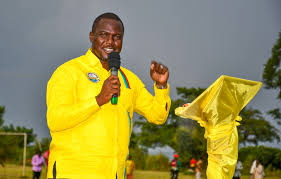
Rt Hon Richard Todwong, the National Resistance Movement (NRM) Secretary General, has emphasized the importance of leaders consulting with their constituents to ensure effective service delivery and accountability.

“It begins with us the leader. We have become more comfortable in our offices than in the field, hence losing touch with the people who need us most. This must change,” Todwong said.
Todwong made this call while addressing over 1,000 local leaders undergoing a two-week leadership transformation training at the National Leadership Institute (NALI) in Kyankwanzi District and Oliver Reginald Tambo School of Leadership and Pan African centre of excellence Kaweweta in Nakaseke District.
The training, organized by the Office of the Prime Minister (OPM) in collaboration with the Ministry of Local Government (MoLG) and the Patriotism Secretariat, aims to empower leaders with strategies to enhance their leadership capabilities and promote sustainable development within their communities.
Todwong urged leaders to make their homes and offices more accessible to the public, emphasizing that genuine interaction is crucial for understanding and addressing the needs of the community.
“What is good for you should also be good for the people you lead. Share your knowledge, and be the channel for positive change,” he added.
The Secretary-General highlighted the government’s commitment to infrastructure development, citing recent projects such as the signing of a new loan agreement for the construction of a bridge over the Laropi River.
“Our government has laid the groundwork; now it’s up to us, the leaders, to ensure that our people understand how to utilize these resources effectively,” Todwong said.
Todwong called for a shift in focus from individual success to collective well-being, urging leaders to think about solutions that benefit entire communities.
“Why are people still poor when there is peace, infrastructure, and road funds being allocated to all districts? The answer lies in our approach as leaders,” he said.
Todwong stressed the importance of engaging with the younger generation, noting that many young people do not fully understand the country’s history and the evolution of its political landscape.
“We need to adjust our messaging and approach to effectively communicate with and involve young people in the nation’s development,” he urged.
The leadership training is expected to have a significant impact on the participating districts, fostering a culture of effective governance that can lead to enhanced service delivery and improved quality of life for citizens.