













Uganda’s Education Reforms: A New Era Unfolds
By The PublicLens
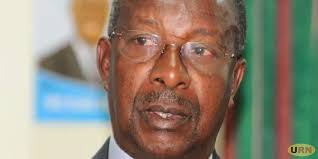
The Amanya Mushega-led Education Policy Review Commission is set to submit its final report by December, marking the culmination of four years of intensive work aimed at transforming Uganda’s education and sports sectors .

Chaired by Col (Rtd) Nuwe Amanya Mushega, the commission has confirmed its readiness to present its findings to the government, promising valuable insights into the sector ¹.
“We are now in the final stages and will hand over our report to the minister by December,” Mushega stated, highlighting the commission’s dedication to drafting a new macro policy framework for education and sports in Uganda ¹.
The commission was appointed in 2021 with an initial one-year mandate but faced challenges, including limited resources and COVID-19 disruptions, leading to extensions ¹.
Its terms of reference encompassed investigating policy, planning, funding, access, implementation, management, quality, institutional capacity, and legislation ¹.
Throughout their work, the commissioners gathered diverse views through public hearings, receiving over 230 memoranda and engaging with Ugandans nationwide ² ¹.
Mushega emphasized, “We began our field work in Busoga region and have since engaged with all the other greater districts… In our discussions, the opinions of a farmer or a cleaner were just as valuable as those of a professor ¹.”
The commission undertook benchmarking trips to countries like Kenya, Rwanda, Tanzania, Ethiopia, and Finland to create a comprehensive document reflecting international education systems ¹.
Mushega stressed that Uganda’s education system should learn from others, rather than operating in isolation ¹.
However, concerns surround the implementation of the commission’s recommendations, given the history of unimplemented proposals from the 1987 Kajubi Commission .
Dr. Yusuf Nsubuga described the 1992 Government White Paper as a “beautiful piece of art” that was never fully utilized .
The commission’s report is expected to reflect proposals for free and compulsory early childhood education, regionalized curriculum and assessment, and vocationalization of education starting from primary school ¹.
Other proposals include enhancing funding, management, inspection processes, and clarifying foundation bodies’ roles ¹.
Dr. Denis Mugimba, Ministry of Education spokesperson, cautioned that implementation will take time, involving discussions in cabinet and parliament, potentially lasting three to four years or longer.
Not all recommendations will be adopted automatically, with each undergoing thorough review.