











By GEOFREY SERUGO
Uwezo Uganda, an organization dedicated to ensuring that all children in Uganda are learning and realizing their full potential, has unveiled its ambitious four-year strategy and is seeking Shs 25.3 billion ($ 7 million) to implement it.
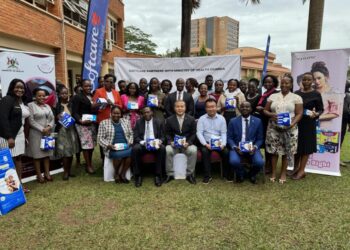
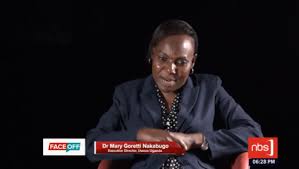
The announcement was made by Mary GorettiNakabugo, the executive director of Uwezo Uganda, during the official launch of the new strategy. Under this strategic plan, Uwezo Uganda aims to leverage its strengths in learning assessment, research, policy engagement and advocacy to spotlight the state of education in Uganda.

The organization will examine the social, cultural, economic and political factors that either support or hinder quality education. Uwezo also intends to work closely with a wide network of education stakeholders to influence practice and policy at both local and global levels.
Uganda has one of the youngest populations in the world, with the latest census showing that 60% of Ugandans are under the age of 25. However, education financing remains inadequate. Although the country has achieved high participation in primary education, public spending on education remains low by international standards.
In 2021, Uganda spent only 2.7% of its GDP on education far below the 4% minimum recommended by the Education 2030 Framework for Action. The education sector continues to face major challenges including low literacy and numeracy skills, limited life competencies, a shortage of teachers, and the absence of sustained funding for early childhood care and education even though relevant policies exist.
According to a recent Uwezo Uganda report, the quality of learning remains alarmingly low: 90% of Primary Two pupils cannot read and understand a simple text at their grade level, 23% of Primary Seven pupils still struggle to read and understand a Primary Two-level text and only 2% of children aged 13 to 17 demonstrated the ability to solve real-life problems.
“We want to deliberately and intentionally collaborate with other actors—including governments, civil society organizations, and researchers—to maximize our impact. We are mobilizing a network of evidence users to work according to shared guiding principles and apply evidence-based research to improve learning outcomes,” Nakabugo said.
She emphasized that Uwezo’s ultimate goal is for all children to be learning and achieving their full potential.
“We have been conducting learning assessments through research and policy engagement, and we are committed to turning this into real learning gains for every child.”
To implement this strategy over four years, Uwezo Uganda is seeking approximately $7 million, or $1.7 million annually. Nakabugo acknowledged that the plan is ambitious but believes the target is reasonable given the scale of the goals.
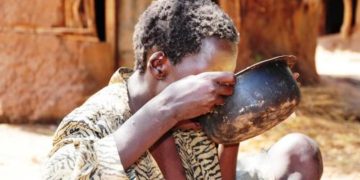
According to a recent report, 90% of P2 pupils cannot read and understand a simple text at their grade level
James Kabeketerya, Bunya East MP and chairperson of the Parliamentary Committee on Education and Sports, voiced his support for Uwezo’s efforts.
“We must equip learners not just with knowledge, but with skills, confidence and resilience. We are making steady progress, especially with the rollout of the new lower secondary school curriculum,” he said.
He emphasized the committee’s commitment to the Uwezo strategy, stating, “We are keen to execute our mandate, drawing on insights from Uwezo Uganda. We are committed to using evidence to inform legislation and highlight citizens’ priorities—especially in basic education.”
Kabeketerya also underscored the urgent need to prioritize funding for foundational education inputs: improving teacher quality and quantity, increasing capitation grants for public schools, and allocating resources to early childhood education.
“Much has been spent at other levels, but early childhood education continues to suffer from underfunding,” he said.
As Uganda moves toward its next general election, Kabeketerya sees an opportunity to elevate the conversation around education. He called for access to quality primary and early childhood education to be a key issue in party manifestos and public debates.
“This is the time for citizens to hold their leaders accountable. Prospective leaders must present clear plans for how they will support quality public education at all levels,” he said.
-Adopted from The Observer Media