














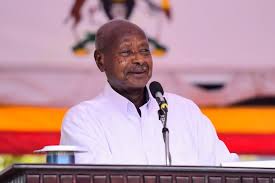
President Yoweri Kaguta Museveni has strongly cautioned Ugandans against embracing controversial views promoted by Pastor Joseph Sserwada, describing his recent teachings as a threat to both African cultural norms and established scientific principles.
Pastor Sserwada recently stirred national debate when he told his congregation that it is permissible for people to marry or have sexual relations with members of their own clan, asserting that the Bible does not restrict such unions.
He further claimed that mutual love should be the only condition for marriage, regardless of clan affiliation.

Reacting to these statements during an event in Mengo, President Museveni firmly refuted the pastor’s claims, calling them both culturally inappropriate and biologically dangerous.
“Human genetics is important, and it is part of our strength as a people. But that genetics is partly due to and rooted in our traditions,” the President stated.
He reminded the public of the long-standing cultural principle against intra-clan marriages, insisting that such traditions are supported by scientific reasoning.
“You are not allowed to marry somebody from your clan. You must cross and look into other clans. This is not just culture and tradition, but it is also biology and science, because when you marry people from your clan, you can produce children with defects. That inbreeding is what we call ‘Obutembane’ in Ankole,” Museveni explained.
His position was echoed by Katikkiro Charles Peter Mayiga, the Prime Minister of the Buganda Kingdom, who also publicly condemned Pastor Sserwada’s message.
Mayiga called on religious leaders to approach sensitive social matters like marriage with caution and cultural awareness.
He stressed the need for responsible preaching that strengthens—not undermines—community values.
Both President Museveni and Katikkiro Mayiga emphasized the importance of upholding traditional norms that safeguard family health, community integrity, and social cohesion.
They warned that misleading messages, particularly on deeply rooted cultural practices, risk confusing the public and damaging the moral fabric of society.
Their statements serve as a unified stance in defense of Uganda’s cultural identity and highlight the intersection between indigenous knowledge and modern science in guiding family and social systems.