
















Government has unveiled a bold new initiative to formally recognize and digitize customary land rights as part of sweeping land policy reforms.
This shift, which aims to secure tenure for millions of rural Ugandans, was announced during a high-level stakeholder meeting held at Esella Hotel in Kampala.
Speaking at the forum, Smith Twinamatsiko, Commissioner for Monitoring and Evaluation at the Ministry of Lands, Housing and Urban Development, stressed the need to prioritize customary landowners in the country’s evolving land governance structure.

“We cannot talk about land reform in Uganda without putting customary landowners at the center,” he said. “Any reform ignoring this reality risks deepening exclusion and conflict.”
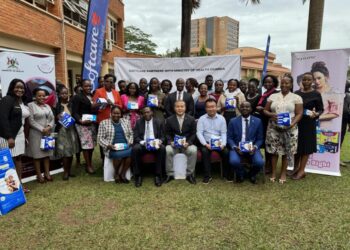
The meeting was convened by the Eastern and Southern Africa Small Scale Farmers Forum (ESAFF Uganda), alongside various partners, and brought together civil society actors, grassroots leaders, and land governance experts to assess current land challenges under Uganda’s Fourth National Development Plan (NDP IV).
While the 1995 Constitution and Land Act recognize customary land tenure, the lack of formal documentation has left millions, particularly women, vulnerable to land grabbing, evictions, and exploitation by investors and political elites.
The process of converting customary land to formal tenure such as freehold or leasehold has proven complicated, expensive, and largely inaccessible to rural populations.
Twinamatsiko revealed that the Ministry intends to integrate Customary Titles into the National Land Information System (NLIS), a digital registry aimed at improving transparency and tenure security.
He explained that this effort will be rooted in equity, cost-effectiveness, and community ownership, positioning Area Land Committees (ALCs) and local communities not just as stakeholders but as partners in reform.
He acknowledged widespread dissatisfaction with Uganda’s land administration, citing confusion and role conflict between institutions like the Uganda Land Commission (ULC) and District Land Boards (DLBs).
He assured attendees that the Ministry is reviewing these overlapping mandates to improve coordination and avoid administrative bottlenecks.
As part of its reforms, the Ministry is also investing in modern surveying equipment to speed up land demarcation, especially in underserved rural areas.
Additionally, it is decentralizing technical resources to district governments to ensure services are closer and more responsive to community needs.
However, challenges persist at the local level. Betty Acanit, Senior Land Management Officer for Amuria District, painted a dire picture of the institutional weaknesses within Area Land Committees and District Land Boards.
She noted that these bodies, which are central to land registration and dispute resolution, suffer from politicized appointments, inadequate training, and chronic underfunding.
“This means that many people making decisions about land in our communities don’t have the skills, knowledge, or fairness required to do their jobs properly,” she said.
She added, “Some are chosen based on who they know rather than what they know. Many have never received proper training or orientation.”
Acanit further lamented the lack of facilitation for ALCs. “They work without any facilitation, not even transport to visit the land they are supposed to inspect,” she said. “And very few are women, even though women are the most affected when land rights are ignored.”
She shared a troubling incident from Amuria District, where the ULC allegedly issued a title for land intended for a police station without informing the DLB or local leaders.
“The community was on board. The District Land Board was involved. Everyone thought it was a done deal, but then the ULC quietly issued a land title, and just like that, the district’s efforts were swept aside,” she said.
This institutional disarray poses serious risks to Uganda’s goal of issuing one million freehold land titles by 2030.
Critics warn that issuing titles without addressing customary realities could lead to land fragmentation, social division, and displacement of vulnerable populations—particularly youth and women.
Margaret Masudio, a board member of ESAFF Uganda from Adjumani District, highlighted the gendered disparities entrenched in the current system.
“Rural women are not looking for handouts; they want a seat at the table. They want to shape the policies that shape their lives,” she said.
She pointed to a stark contradiction: although women make up over 70% of Uganda’s agricultural workforce, they hold less than 10% of land titles.
Masudio also revealed that many rural women remain unaware of development frameworks like NDP IV, which outlines national priorities from 2020 to 2025.
Still, there are signs of hope. In districts such as Zombo, Arua, and Nebbi, more than twenty women recently obtained Certificates of Customary Ownership through initiatives supported by ESAFF Uganda and partners like Oxfam under the “Power of Voices” project.
These efforts have created safe spaces for women to engage with local government and advocate for inclusive planning.
Moses Onen, Coordinator of the Land Actors Platform under PELUM Uganda, emphasized the role of civil society in making policy relevant to local communities.
“The NDP IV is full of lofty goals, but without civil society translating policy into people’s language and educating communities, those goals will remain distant promises,” he warned.
He cited districts like Kasese and Nakapiripirit, where community education has empowered residents to resist illegal land grabs.
“There is no inclusive development without civil society,” Onen said. “If we want to transform Uganda through NDP IV, we must resource and embrace these partnerships.”
The consensus at the forum was clear: Uganda’s land reforms must be grounded in community needs, protect customary tenure, and prioritize transparency, accountability, and gender equity.
Only then can land governance become a true engine of inclusive national development.