













Amuru District has sounded an urgent call for Shs913.2 million in emergency funding to respond to a worsening cholera outbreak that has already claimed five lives and infected more than 200 people since early July.
The draft budget was formally presented on Tuesday during the district’s weekly task force meeting held at Bibia Health Center III in Atiak Sub-county, one of the overwhelmed frontline facilities currently handling a rising influx of cholera patients.
By July 27, district surveillance figures revealed 228 suspected cholera cases, with 205 identified as probable through Rapid Diagnostic Test (RDT) kits and 27 confirmed cases. All the reported infections stem from Lorikor East village in Elegu Town Council, located at the Uganda–South Sudan border.

Charles Otain, Amuru’s Chief Administrative Officer, explained that the draft budget emerged from a pressing lack of funds, prompting the district to involve health partners to help bridge the resource gap.
Otain stated that the requested funds would be channeled into critical interventions such as enhanced surveillance, risk communication, case management, and improvements in water, sanitation, and hygiene (WASH) in Elegu Town Council and at Bibia Health Center.
He acknowledged that while some partners had already offered support, the district plans to share the proposed response plan with the Ministry of Health Permanent Secretary to attract broader backing aimed at halting cholera transmission.
According to the budget breakdown, the largest allocation—Shs206 million—is earmarked for social mobilization efforts to educate communities about cholera prevention. This is followed by Shs142 million for case management, Shs136 million for WASH initiatives, and Shs124.4 million for surveillance.
Other components of the budget include Shs111.3 million for mental health and psychosocial support, Shs82 million for infection prevention and control (IPC), Shs56.7 million for coordination of the district task force, and Shs42.1 million for the district rapid response team.
Additional allocations include Shs24.3 million for laboratory operations, Shs13 million for risk communication, Shs9.4 million for logistics, and Shs4.8 million for data management.
Robert Onekalit, the Amuru District Surveillance Focal Point person, said the budget would help enhance the surveillance team’s capacity by funding the procurement of a phone desk, mobile phones for village health teams to report suspected cases, laptop computers with accessories, airtime, and allowances for alert desk staff.
Milton Steven Okello, the in-charge at Bibia Health Center III, raised alarm over the strain the outbreak is placing on the facility. He revealed that the center has treated more than 200 cholera patients, with 11 still in the isolation ward. Okello pointed out that the isolation space was originally designed for only two patients but is now accommodating six, while the general ward, meant for 11, is overstretched with all cholera admissions.
He further noted that despite the addition of eight new staff, the number remains insufficient due to the intensive care cholera patients require. Okello stressed, “Each patient at least requires a stationary health worker.”
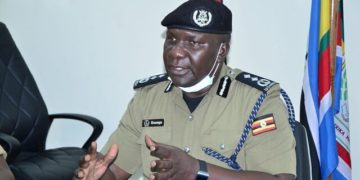
Amuru Resident District Commissioner Osborn Geoffrey Oceng, who also heads the district task force, emphasized that their current priority is to halt disease transmission by zoning and isolating hotspot areas.
During the task force meeting, district leaders issued several key directives to stem the spread of cholera. These included a ban on roadside food vending, the arrest of unauthorized drug shop operators treating cholera cases, strict enforcement against open defecation, and a prohibition on the use of shallow wells.
As Amuru faces an escalating health emergency, district leaders remain hopeful that with the proposed budget and coordinated response, the tide of infection can be turned, and lives protected from further devastation.