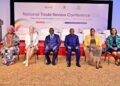
















African leaders and ministers used the platform of the second UNFCCC Climate Week to press the world to acknowledge and respond to the continent’s special needs in the fight against climate change.
The High-Level Ministerial meeting, convened by the COP29 Presidency, was dedicated to the urgent matter of Africa’s vulnerabilities and circumstances.
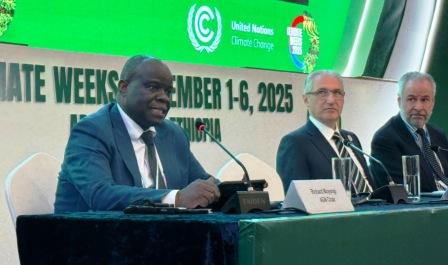
Chair of the African Group of Negotiators (AGN), Dr. Richard Muyungi, emphasized that Africa’s call for recognition is grounded in reality, not perception.

“Africa’s special needs and circumstances is not an illusion but a reality informed by the continent’s unique circumstances—being the lowest in terms of development index, highest in poverty levels and more likely unable to achieve Sustainable Development Goals (SDGs) by 2030 as compared to other regions,” Dr. Muyungi stated.
He explained that the continent’s specific challenges include limited resources and capacity, extreme climate vulnerabilities, historical and projected emissions responsibility, urgent adaptation and mitigation needs, and a long-term quest for sustainable development.
Dr. Muyungi insisted that the item is a just cause for Africa, which contributes minimally to global emissions yet suffers disproportionately from their impacts.
On the same occasion, COP29 President Mukhtar Babayev underscored Azerbaijan’s solidarity with Africa, drawing on its history of cooperation with the continent through the Non-Aligned Movement.
He reaffirmed his country’s commitment to ensuring that Africa’s priorities remain central in climate negotiations leading up to COP29.
Africa reiterated its firm support for the Paris Agreement, particularly Article 2, which focuses on strengthening the global response to climate change while advancing sustainable development and poverty eradication.
The continent’s position favors climate policies that recognize Africa’s development trajectory and safeguard the space required for a just and equitable transition to low-emission and climate-resilient growth.
The second UNFCCC Climate Week of 2025, held in Addis Ababa from 1–6 September under the theme “Dialogues for Ambition and Implementation,” provided the stage for these critical discussions.
The gathering came just ahead of the second Africa Climate Summit (ACS2), scheduled for 8–10 September 2025, where the issues raised are expected to gain even greater prominence.
Africa now looks to COP29 with clear expectations.
The continent seeks scaled-up climate finance to close the persistent funding gap for adaptation, with emphasis on grants rather than loans to avoid deepening debt burdens.
It demands technology transfer and capacity-building support to enable African countries to implement mitigation and adaptation measures effectively.
African leaders also call for fair representation in decision-making processes to ensure that global climate governance reflects the needs of the most vulnerable.
Above all, Africa expects COP29 to deliver outcomes that move beyond pledges to real, implementable actions that secure both climate justice and sustainable development for its people.