




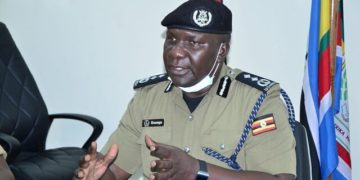











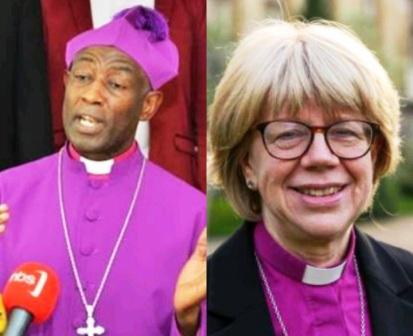
Uganda’s Church has dealt a historic blow to the centuries-old authority of Canterbury, rejecting the appointment of Rt. Rev. Sarah Mullaly, the Bishop of London, as the next Archbishop of Canterbury.
The move has widened a global rift between Africa’s conservative Anglican provinces and their increasingly liberal counterparts in the West, raising questions about the future unity of one of the world’s oldest Christian communions.
In a strongly worded statement dated October 3, 2025, Archbishop Stephen Kaziimba Mugalu of the Church of Uganda denounced Mullaly’s support for same-sex marriage and LGBTQ+ inclusion, calling her elevation “a departure from historic Anglican positions.”

“This is a grievous decision that deepens the tear in the fabric of the Anglican Communion,” Archbishop Kaziimba declared.
He warned that the Church of England had now “separated itself from the vast majority of the global Anglican Communion.”
The Ugandan Church’s decision effectively ends its recognition of the Archbishop of Canterbury’s global authority, declaring instead its allegiance to the Gafcon and Global South Fellowship of Anglicans, alliances representing conservative Anglican provinces across Africa, Asia, and Latin America.
“From this day forward, the Archbishop of Canterbury is reduced simply to the Primate of All England,” the statement read, signaling an unprecedented theological and diplomatic rupture with the Church of England.
Religious analysts say the split reflects deeper postcolonial dynamics, as African churches — once mission outposts of the British faith — assert spiritual and moral independence from their former colonial center.
The appointment of Rt. Rev. Sarah Mullaly, celebrated in Britain as a landmark for inclusivity and gender equality, has become a lightning rod for controversy in the Global South.
Her endorsement of LGBTQ+ blessings and same-sex marriage ceremonies has clashed sharply with African provinces that view such reforms as incompatible with Biblical teachings.
Uganda’s Archbishop Kaziimba reaffirmed that the Church of Uganda “will continue to proclaim the Christian faith faithfully and follow Biblical teaching,” emphasizing that it will not be swayed by liberal trends from the West.
For him, the move is not about rebellion, but about preservation — “a stand for Biblical truth in an age of compromise.”
The reaction underscores a growing North–South divide within global Christianity.
With nearly 40 million Anglicans in Africa, compared to fewer than one million active members in the United Kingdom, the moral and demographic center of Anglicanism has clearly shifted toward the Global South.
This imbalance is redefining the global church’s power structure.
By severing ties with Canterbury, Uganda and its allies are effectively challenging centuries of British-led ecclesiastical influence and calling for a new, multipolar Anglican order based on regional autonomy and Biblical fidelity.
The development mirrors broader geopolitical shifts in which nations and institutions of the Global South are increasingly asserting independence from Western norms — in politics, economics, and now, religion.
Uganda’s alignment with Gafcon and the Global South Fellowship signals a move toward collective self-governance, with African and Asian provinces seeking to shape global Anglican identity on their own moral terms.
“This is not just a theological moment,” said one analyst from the African Centre for Religion and Society in Nairobi. “It’s a geopolitical realignment within global Christianity.”
Meanwhile, Western leaders within the Church of England see the reforms as essential for modern relevance, inclusion, and justice.
But for African churches, the issue goes beyond policy — it strikes at the heart of cultural sovereignty and spiritual authenticity.
The rift has already sparked speculation that the Anglican Communion could soon split into parallel structures, with separate conferences, bishops, and funding networks emerging in Africa and the West.
If that happens, it would mark the most profound transformation in the church’s 500-year history — a shift from a London-centered faith to a global network of autonomous, Bible-centered communities.
As Archbishop Kaziimba and his counterparts rally around conservative alliances, the future of Anglican unity looks uncertain.
But one message from Kampala is unmistakable: the moral center of Anglicanism has moved — and it now beats strongest in Africa.