











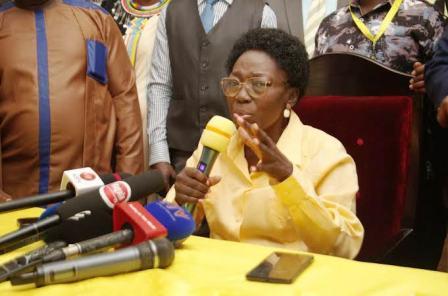
First Deputy Prime Minister and Kamuli Woman Member of Parliament, Rebecca Alitwala Kadaga, has delivered a strong rebuke to the Ugandan government over what she termed as the “unacceptable” state of the country’s public healthcare system.
Speaking at the Kamuli Independence Celebrations Kidney Health Camp organized by Becky’s Child Foundation, Kadaga expressed deep frustration that government hospitals were depending on foreign NGOs to provide equipment and sustain operations — a role, she said, that rightfully belongs to the state.
“I am not happy that our government hospital is supported by an NGO from Mexico. Really, an organization supporting a government facility where Ugandan taxpayers expect better services. I am going to make a serious follow-up in Parliament and Cabinet,” Kadaga said, drawing loud applause from residents gathered at the event.

She emphasized that the government must take the lead in financing, managing, and equipping hospitals rather than leaving these essential duties to charities. According to Kadaga, NGOs should serve only as partners and not as the primary providers of critical healthcare resources.
Kadaga vowed to “toughly raise, push, and advocate” for improved healthcare services across Uganda, saying that citizens deserve accessible, affordable, and quality medical care regardless of their social or economic status.
The outspoken leader, known for her advocacy on women’s rights and community health, used the platform to launch a major kidney screening and care campaign aimed at addressing the rising cases of kidney disease in the Busoga sub-region.
Kadaga revealed that she had mobilized support from her international network to establish five diagnostic and treatment centers across Busoga. The flagship Center of Excellence will be set up in Kamuli, with additional facilities planned for Iganga, Mayuge, Bugiri, Kaliro, and Jinja Regional Referral Hospital.
The initiative, she said, will help reduce the growing burden on Kampala’s specialized hospitals by bringing diagnostic services closer to the communities most affected.
“This program will make kidney care more accessible, especially for people who cannot afford to travel to Kampala for treatment. Early detection will save lives, cut costs, and ease the suffering of many families,” Kadaga explained.
Kidney disease has become an increasing health concern in Uganda, driven by poor diets, untreated infections, and limited access to diagnostic equipment. Experts estimate that thousands of Ugandans live with undiagnosed kidney conditions due to the lack of regular screening.
During the Kamuli health camp, Uganda Kidney Association President Dr. Joseph Gyagenda and Jinja Regional Referral Hospital Consultant Dr. Afizi Kibuuka encouraged the public to embrace early screening as a preventive measure.
They also called on healthcare providers to treat patients with dignity and compassion, stressing that good bedside conduct is as vital as medical treatment itself.
Dr. Kibuuka warned against prolonged use of cannulas in patients, noting that such practices can lead to serious complications, including heart and kidney damage.
Kamuli District Health Officer, Dr. James Waako, underscored the importance of strengthening rural health facilities with reliable screening machines and consistent drug supplies.
He noted that many rural patients cannot afford to travel long distances to seek specialized treatment, and that bringing diagnostic services to local health centers would dramatically improve outcomes.
The Executive Director of Becky’s Child Foundation, Rebecca Alitwala Mubeezi, commended Kadaga for her unwavering dedication to improving community health.
She described the Kamuli Kidney Health Camp as an “Independence gift” to the people of Busoga, celebrating Uganda’s 63rd Independence Anniversary with a focus on preventive health.
“Preventive care is the best investment in our people’s future,” Mubeezi said. “We are committed to organizing more outreach programs to help communities understand the value of early detection and lifestyle management.”
According to the Foundation, 560 people were screened during the previous month, and an additional 420 individuals underwent kidney health checks during the Independence week event. Participants received free consultations, medication, and advice on lifestyle changes to prevent kidney and cardiovascular diseases.
Public health experts say Kadaga’s campaign aligns with Uganda’s National Health Policy, which prioritizes decentralizing health services and improving preventive care at the community level.
However, they also note that persistent underfunding of public hospitals and overreliance on external aid continue to undermine progress.
Kadaga’s remarks have reignited national debate about the role of government in healthcare financing, with many Ugandans on social media applauding her outspokenness and calling for immediate reforms.
Her initiative to establish regional diagnostic centers marks a major step toward addressing one of the most pressing healthcare challenges in Busoga and beyond.
By championing stronger government accountability and access to specialized care, Kadaga is positioning herself not only as a defender of public health but also as a voice demanding justice for Ugandan taxpayers who deserve better services from their own institutions.
Her message was clear: the health of Ugandans must not depend on charity — it must be a government priority.