
















President Yoweri Kaguta Museveni has outlined a bold and comprehensive economic strategy anchored on value addition to Uganda’s vast mineral and petroleum resources, marking a defining shift in the country’s long-term development agenda.
While unveiling key elements of the National Resistance Movement (NRM) manifesto, Museveni reaffirmed that Uganda’s future prosperity lies in maximizing returns from its natural wealth through domestic processing, industrialization, and scientific innovation.
For decades, Uganda exported raw minerals such as gold, copper, and iron ore with little or no value addition. This model, Museveni said, deprived the country of billions in potential earnings and denied Ugandans thousands of high-paying industrial jobs. Recognizing this lost opportunity, his government instituted a strict ban on the export of unprocessed minerals—an action that has since become a cornerstone of Uganda’s new industrial policy.

“Uganda cannot continue being a supplier of raw materials to developed nations,” Museveni has repeatedly said. “We must process what we produce and sell finished products so that the value stays here, creating jobs and wealth for our people.”
The results of this policy are now visible. Uganda currently boasts ten gold refineries, three iron and steel plants, and four cement factories, alongside facilities for tin smelting, copper processing, ceramics, cobalt refinement, and rare earth mineral extraction. These industries have become powerful drivers of regional growth, foreign exchange earnings, and employment.
The government’s intensified mineral exploration campaigns have led to the discovery of gold deposits in Buhweju, Mubende, Namayingo, Bugiri, Amudat, and Zombo; uranium in Kabarole, Buhweju, and Sembabule; rare earth elements in Bugweri; graphite in Kitgum; base metals in Namisindwa and Amuru; wolfram in Kabale; and bentonite in Hoima.
According to the Ministry of Energy and Mineral Development, these discoveries are reshaping Uganda’s resource map and laying the foundation for a diversified mineral-based economy.
To ensure that these resources deliver tangible economic benefits, the NRM government has pledged to continue investing in the quantification of mineral deposits, giving investors confidence and facilitating long-term planning.
The Uganda National Mining Company is being capitalized to lead value addition partnerships, while new bankable projects are being developed to attract concessional financing.
Museveni’s government is also formalizing artisanal and small-scale mining through biometric registration and licensing, a move aimed at ensuring safety, traceability, and inclusion in the national economy.
The planned revival of Kilembe Mines, once a major copper producer, remains a top priority under this framework.
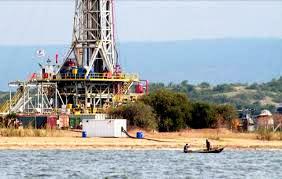
Parallel to the mineral sector, Uganda’s oil and gas industry is emerging as another pillar of transformation.
When commercial oil was first discovered, the government resisted international pressure for immediate production and instead focused on building institutional capacity and a scientific foundation.
This led to the establishment of the Petroleum Authority of Uganda (PAU), the Uganda National Oil Company (UNOC), and the Uganda Petroleum Institute Kigumba (UPIK)—institutions designed to ensure that Ugandans themselves play a central role in the petroleum value chain.
Several laws and regulations were enacted to guide the sector, including the Public Finance Management Act, which ringfences oil revenues for infrastructure development and shields them from misuse.
With production expected to begin soon, Uganda anticipates earning approximately USD 2 billion annually over the next 25 years. These funds are earmarked for investment in strategic infrastructure such as roads, energy, and industrial parks—key enablers of economic diversification.
The 1,443-kilometer East African Crude Oil Pipeline (EACOP) remains the most visible symbol of this transformation, connecting Uganda’s oil fields in Hoima to the Tanzanian port of Tanga.
The project has already created over 48,000 jobs, highlighting the government’s commitment to local content participation.
Downstream development is the next frontier. Uganda is constructing a 60,000-barrel-per-day refinery, along with strategic storage terminals, a refined products pipeline, and the Kabalega Petrochemical Industrial Park in Hoima.
These projects are expected to generate an estimated USD 5 billion annually while reducing reliance on imported petroleum products.
Plans are also underway for a natural gas pipeline from Tanzania to Uganda, opening new opportunities for industrial power generation and petrochemical manufacturing.
Energy and Mineral Development Minister Ruth Nankabirwa emphasized the importance of keeping value addition within Uganda’s borders. “Uganda’s mineral and oil wealth must be processed here, by Ugandans, for Ugandans,” she said at the 2025 Mineral Wealth Conference. “That is how we create sustainable jobs and real independence.”
Museveni’s message, echoed throughout the NRM’s manifesto, is clear: the era of exporting raw materials is over. The government envisions an industrial economy where Uganda not only extracts but also transforms its resources into finished goods that feed global value chains.
This policy shift aligns with Vision 2040, Uganda’s long-term development plan, and the broader African Union Agenda 2063, both of which prioritize industrialization and self-reliance.
With continued investment in exploration, infrastructure, and human capital, Museveni’s government hopes to cement Uganda’s position as a regional hub for mineral processing and petroleum-based manufacturing.
In his concluding remarks, Museveni reiterated that value addition is not just an economic strategy—it is a path toward sovereignty, dignity, and prosperity.
“We are not working for donors,” he said. “We are working for our people. The resources of Uganda must benefit Ugandans first. That is how we shall secure our future.”
Through this ambitious yet pragmatic approach, Uganda’s minerals, oil, and gas sectors are poised to become engines of inclusive growth, transforming the country from an exporter of raw materials into a producer of high-value industrial products for regional and global markets.