
















Uganda Records 6.3% Growth as Economy Shows Renewed Resilience
Uganda’s economy has expanded by 6.3% in the 2024/25 financial year, surpassing last year’s 6.1% growth and signaling strong recovery momentum across key sectors, according to the Bank of Uganda (BoU) State of the Economy Report released in September 2025.
The central bank attributes the robust performance to agricultural productivity and industrial expansion, supported by improved weather, stable power supply, and continued infrastructure investment.

Agriculture grew by 6.6%, driven by better harvests and high livestock output, while the industrial sector registered a 7.0% expansion, led by a remarkable 12.2% jump in construction activity across the country.
BoU Warns of Emerging Threats Despite Broad-Based Recovery
Despite the encouraging figures, the BoU cautioned that projected growth of between 6.0% and 6.5% in FY2025/26 could face vulnerabilities stemming from unpredictable weather, geopolitical instability, and election-related uncertainties.
The report emphasized that Uganda’s growth momentum will depend on maintaining macro-economic stability, fiscal discipline, and sustained reform implementation.
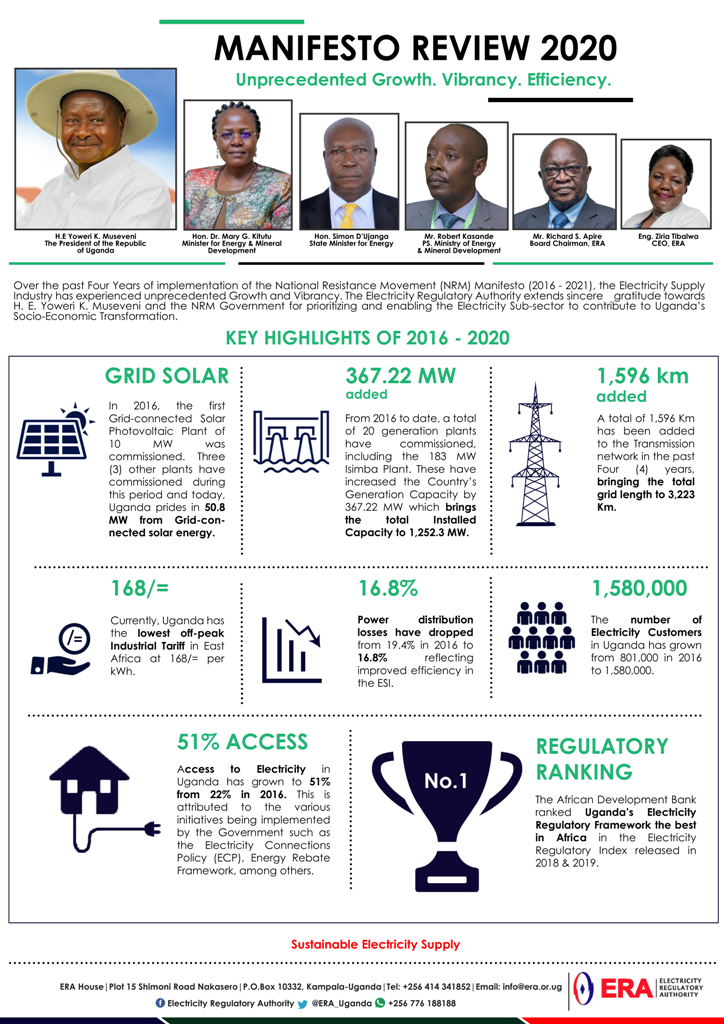
The agricultural sector continues to lead recovery efforts, with livestock production up 8.8% and fishing surging by 17.8%. Industrial output has also strengthened, buoyed by a 10.3% rise in electricity generation and 5.5% growth in manufacturing.
Inflation remained low and stable, averaging 3.5% over the past year. The August 2025 headline rate stood at 3.8%, while core inflation was 4.1%, underscoring the success of prudent monetary policies.
BoU Governor Michael Atingi-Ego credited this stability to deliberate policy restraint.
“Our cautious monetary stance, maintaining the Central Bank Rate at 9.75%, has shielded Ugandans’ incomes and savings while fostering investor confidence amidst global headwinds,” he stated.
He added that the monetary policy approach aligns with Uganda’s Tenfold Growth Strategy, which seeks to grow the economy from USD 61.3 billion to USD 500 billion by 2040.
Exports and Investments Drive External Stability
The report highlights a surge in Foreign Direct Investment (FDI), particularly in the oil and gas sector, which climbed to USD 3.615 billion, contributing to a financial account surplus of USD 4.465 billion.
Uganda’s exports rose 37.2% to USD 11.071 billion, with coffee and cocoa leading the charge. The improved trade performance narrowed the current account deficit by 12.2% to USD 3.721 billion.
However, the BoU expressed concern about a potential 1% U.S. remittance tax under the One Big Beautiful Act, set to take effect in January 2026, which could slow diaspora remittance inflows — a vital source of income for many households.
“We are vigilant about external shocks like falling coffee prices and reduced aid, ensuring reserves of USD 4.576 million safeguard our currency stability,” Atingi-Ego remarked.
 Finance Ministry Stresses Fiscal Discipline and Human Capital Investment
In his FY2025/26 Budget Strategy speech, Finance Minister Matia Kasaija reaffirmed government plans to sustain high growth while maintaining debt sustainability.
“Starting FY2025/26, the NRM government is committed to growing our economy from USD 50 billion to USD 500 billion by 2040, leveraging oil and agriculture,” Kasaija stated.
He reported that the fiscal deficit fell to 6.1% of GDP, below the projected 7.0%, due to improved domestic revenue collection, which rose 16.1% to UGX 29,871 billion.
Despite this progress, Uganda’s public debt reached 51.3% of GDP, with interest payments consuming 4.4% of the national output — signs of growing fiscal pressure.
“We are repurposing resources to prioritize human capital and infrastructure, ensuring sustainable growth for all Ugandans,” Kasaija assured.
He emphasized that the budget for FY2025/26 focuses on education, healthcare, and infrastructure, particularly in rural regions, to ensure inclusive development.
What the Growth Means for Ordinary Ugandans
For ordinary Ugandans — whether farmers in Masaka or traders in Kampala — the latest growth signals tangible benefits, but also conditions for sustainability.
The agricultural rebound offers better income prospects for the 70% of citizens dependent on subsistence farming, while industrial growth provides new employment opportunities in construction and light manufacturing.
Low inflation has kept basic goods and fuel prices stable, improving household purchasing power.
However, risks remain. Adverse weather, election-season spending, and external shocks could reverse recent gains. The pending U.S. remittance tax also poses a significant threat to families relying on diaspora support.
BoU Pushes for Financial Inclusion and Structural Reform
The central bank reaffirmed its commitment to financial inclusion, emphasizing the expansion of access to credit through digital platforms and targeted community programs.
The Wendi digital payment system and the Parish Development Model (PDM) have enabled more Ugandans, especially in rural areas, to access savings and microcredit services.
Nonetheless, high commercial lending rates averaging 19.1% and structural inefficiencies continue to constrain small enterprises.
Economic experts argue that Uganda’s future growth will depend on rural infrastructure, credit affordability, and climate adaptation to ensure all citizens benefit from the expanding economy.
“Our foundation is strong, but resilience through diversification and reform will determine our tenfold success,” Atingi-Ego concluded.
Background: Uganda’s Economic Transformation Journey
Uganda’s economic resilience has been tested by multiple shocks — from the COVID-19 pandemic to regional conflicts and global inflation spikes — yet the country continues to chart steady recovery.
Since 2020, the government has prioritized industrialization, oil sector investments, and agricultural modernization as key growth drivers.
The agriculture sector, which contributes 24% of GDP and employs over 70% of the population, is gradually shifting from subsistence farming to commercial production through mechanization and irrigation projects.
The industrial sector has seen steady gains through construction, manufacturing, and energy, while the services sector — especially financial technology, tourism, and telecommunications — remains a crucial engine of job creation.
Major infrastructure projects such as the Kampala–Jinja Expressway, ongoing Standard Gauge Railway preparations, and regional power interconnectors are expected to further enhance trade and mobility.
Still, Uganda faces persistent challenges, including youth unemployment, public debt pressures, and climate-related risks that threaten food and energy security.
Experts urge diversification of exports beyond traditional commodities like coffee and gold, increased investment in renewable energy, and more efficient use of oil revenues once production begins in 2026.
As the 2026 elections approach, economic analysts agree that preserving macroeconomic stability, investor confidence, and fiscal prudence will be key to safeguarding Uganda’s growth trajectory.
Uganda’s economy, while resilient, must now focus on inclusive reforms, rural transformation, and sustainable governance to translate impressive statistics into meaningful livelihoods.