















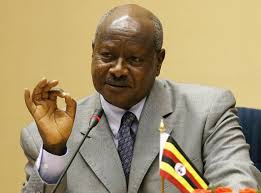
President Yoweri Kaguta Museveni has reaffirmed his unwavering resolve to ensure that Uganda’s emerging oil wealth serves as a foundation for national development rather than a source of wasteful consumption.
Speaking with characteristic firmness, the President warned that not a single shilling from Uganda’s oil revenues would be squandered on non-essential or luxury imports such as wigs, perfumes, and alcohol.
“We shall never allow this oil money to be used to import perfumes, alcohol, or dead people’s hair, which they call wigs — never!” Museveni declared, drawing laughter and applause from the audience.

Despite the humor, his tone carried unmistakable gravity. His remarks underscored a long-standing theme of his leadership — financial discipline, local production, and the need to protect Uganda from what economists term the “resource curse” that has crippled several other African nations endowed with oil wealth.
The President explained that Uganda’s oil revenues will be carefully invested in productive sectors that generate long-term economic growth.
Among his top priorities are modern railway systems, electricity generation, industrialization, scientific research, and technological innovation.
“Our priority is value creation, not consumption,” Museveni said. “The oil resources must be used to build durable capacity — infrastructure and industries that will keep serving our people long after the oil is gone.”
A New Phase for Uganda’s Oil Economy
Uganda’s oil journey is entering a critical stage. With commercial production expected to begin in the coming years, the East African nation stands at the threshold of joining the ranks of oil-producing countries.
The government has already launched multi-billion-dollar projects, including the East African Crude Oil Pipeline (EACOP) and the Hoima Industrial Park, both aimed at boosting economic activity and creating employment.
Yet, as Museveni noted, the challenge lies not in discovering oil, but in managing it responsibly. “Oil belongs to all Ugandans, not a few individuals,” he emphasized. “It must not be misused for personal pleasure or corrupt interests.”
The President’s remarks come at a time when concerns about accountability in Uganda’s extractive industries are growing. Experts have cautioned that without strong institutions, transparency, and public oversight, oil money could fuel inequality and corruption — a fate that has befallen several resource-rich African nations.
Learning from Africa’s Resource Curse
Economists often cite examples like Nigeria and Angola, where decades of oil exports enriched elites but left millions in poverty. Uganda, Museveni insists, will not walk that path.
“The difference will be in discipline and planning,” he said. “Our oil must help us build industries, modernize agriculture, and strengthen our science and technology base. That is how nations rise.”
Under Uganda’s Public Finance Management Act (PFMA) of 2015, all petroleum revenues are to be deposited into a Petroleum Fund managed by the Bank of Uganda.
Withdrawals are only permitted for infrastructure and development priorities listed in the National Development Plan. This legal safeguard, government officials argue, will ensure transparency and prevent misuse.
Dr. Joseph Muvawala, Executive Director of the National Planning Authority, has previously said that oil revenues should be treated as “capital for transformation,” not ordinary income. “The goal is to use oil as a catalyst for industrialization, not as a shortcut to consumption,” he noted in a recent policy brief.
A Call for a Mindset Shift
Beyond financial discipline, Museveni urged Ugandans to embrace a culture of production and innovation instead of dependency on imported luxury goods.
“Instead of importing wigs and alcohol,” he said, “we should be producing and exporting our own goods. That’s how nations grow rich — by creating, not by consuming what others produce.”
He lamented that Uganda spends millions of dollars annually importing items that could easily be produced locally, including cosmetics, beverages, textiles, and hair products. Such consumer habits, he said, weaken local industries and erode national pride.
Museveni’s tough rhetoric on self-reliance echoes his broader “Buy Uganda, Build Uganda” (BUBU) campaign, which encourages citizens to prioritize local goods and services.
Economists argue that with the right incentives, Uganda’s oil windfall could power industrial growth and reduce dependence on imports.
Mixed Public Reaction
The President’s remarks have sparked debate across the country. Supporters have praised his position as a necessary reminder that economic discipline and patriotism must guide Uganda’s oil journey.
Others, however, viewed his comments on wigs and alcohol as out of touch with modern lifestyles.
Nonetheless, Museveni’s message remains unmistakable: Uganda’s oil is not for extravagance but for transformation.
A Vision Beyond Oil
As the nation edges closer to oil production, Museveni continues to stress that oil should not define Uganda’s destiny, but rather accelerate its journey toward self-sustained prosperity.
“What we are building is not just an oil economy,” he said. “We are building a productive, knowledge-based economy that will outlive the oil itself.”
With this vow, the President once again positioned himself as the steward of Uganda’s economic future — determined to ensure that the country’s oil wealth fuels development, not decoration.
If his vision holds true, Uganda’s oil era could mark not the beginning of reckless consumption, but the dawn of disciplined prosperity.