
















After nearly two decades of waiting, Uganda’s long journey toward becoming an oil-producing nation has reached a decisive milestone.
A high-level government fact-finding mission led by Lucy Nakyobe, Head of Public Service and Secretary to Cabinet, has confirmed that the country’s first commercial oil is projected to flow by July 2026 — a target now backed by verifiable progress across major oil sites.
The two-day inspection, conducted between October 29 and 30, 2025, brought together a team of senior technocrats drawn from key ministries and regulatory agencies.

Among them were Energy Permanent Secretary Irene Batebe, ICT Permanent Secretary Amina Zawedde, and top executives from the Uganda National Oil Company (UNOC) and the Petroleum Authority of Uganda (PAU).
According to government officials, the mission was not a ceremonial tour but an evidence-driven inspection aimed at establishing factual readiness, identifying remaining bottlenecks, and confirming the country’s preparedness to deliver on its long-promised oil dream.
Inspecting the Nerve Centres of Uganda’s Oil Industry
The team visited the two pillars of Uganda’s petroleum development — the Kingfisher Development Area in Kikuube District, operated by China National Offshore Oil Corporation (CNOOC), and the Tilenga Project managed by TotalEnergies in Buliisa and Nwoya districts.
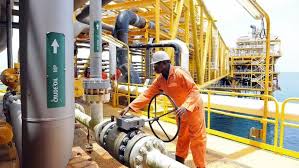
At Kingfisher, the PAU’s Executive Director Alex Nyombi briefed officials that the project was 90 percent complete, with 31 wells already drilled and the site expected to produce 40,000 barrels of oil per day once operational. The facility is scheduled to be ready for commissioning by December 2025.
Tilenga, which is double Kingfisher’s size, represents Uganda’s flagship onshore production hub. Once all 420 wells are drilled and operational, it is expected to produce 190,000 barrels daily, making it the largest contributor to Uganda’s total projected output.
Public anxiety
During the mission, Nakyobe said her visit was prompted by persistent public anxiety and skepticism about the government’s repeated assurances regarding the oil start date.
“The question that has been on everyone’s lips is simple — when exactly will Uganda’s first oil come out?” she asked.
She noted that for many years, government officials had been telling the public that oil production would start “next year,” yet that year never seemed to arrive.
“Ugandans are tired of waiting,” she told the assembled officials. “We must now give the country a factual, evidence-based timeline grounded in the reality on the ground.”
In response, the technical teams provided detailed progress reports confirming that all core components of the oil value chain — from drilling operations to the East African Crude Oil Pipeline (EACOP), Kabalega International Airport, and the network of oil access roads — are nearing completion.
They assured Nakyobe that all indicators now point to a realistic production start date of July 2026, effectively bringing Uganda’s oil dream within sight.
$7.5 Billion in Investment and Expanding Infrastructure
Energy Permanent Secretary Irene Batebe told the mission that Uganda’s oil sector has already attracted $7.5 billion (UGX 28.6 trillion) in foreign direct investment, money that has transformed the economic landscape of the Albertine region.
“This investment has not only built infrastructure and created jobs but has also strengthened our institutional frameworks and regulatory systems,” she said. “It has positioned Uganda as one of the most structured and transparent oil sectors in Africa.”
She added that the development of oil-related infrastructure has also accelerated national growth, including the construction of 11 new road networks, new industrial parks, and the Kabalega International Airport, which will facilitate cargo and logistics for oil exports and regional trade.
Progress, Challenges, and Institutional Capacity
While optimism is rising, PAU’s Executive Director Alex Nyombi acknowledged that the journey has not been without difficulties.
He cited challenges such as the relocation of affected communities, environmental concerns raised by civil society groups, and logistical delays caused by the COVID-19 pandemic and global supply chain disruptions.
At UNOC, the leadership reported an equally pressing issue — a significant human resource deficit. The Chief Executive Officer disclosed that the company currently operates with a 48 percent personnel shortage, employing only 251 staff out of the required establishment.
Despite this shortfall, UNOC officials highlighted major milestones, including progress in local content participation, industrial development, and logistics readiness.
Nakyobe Praises Progress and Military Support
Following the tour, Nakyobe praised the Ministry of Energy, PAU, and UNOC for their professionalism and technical diligence, noting that what she witnessed on-site was “undeniable proof that Uganda’s oil era is finally within reach.”
She further commended UPDF officers deployed at the oil sites for their outstanding role in environmental protection, waste management, and site security, describing their discipline and innovation as a “model of patriotic service.”
Rekindled Optimism and a Turning Point
The findings from the fact-finding mission have reignited optimism among government agencies, investors, and local communities.
For the first time, a credible and evidence-based timeline has been confirmed — positioning Uganda to join the ranks of Africa’s oil producers by mid-2026.
If successful, the development will mark the beginning of a transformative economic chapter, expected to deliver billions in export revenue, thousands of new jobs, and increased fiscal space for national development.
Background: Uganda’s Oil Journey — From Discovery to Development
Uganda’s petroleum story began in 2006, when commercially viable oil reserves were discovered in the Albertine Graben, near Lake Albert, by Hardman Resources and Tullow Oil.
The discovery, estimated at 6.5 billion barrels, placed Uganda among Africa’s top emerging oil frontiers.
The government later invited new partners, leading to production sharing agreements with TotalEnergies, CNOOC, and UNOC.
However, the journey toward actual production has been protracted, slowed by debates over refinery plans, pipeline routing, environmental assessments, and protracted negotiations with investors.
The decision to construct the 1,443-kilometre East African Crude Oil Pipeline (EACOP) through Tanzania was finalized in 2021, following years of feasibility studies and financing arrangements.
Once operational, the pipeline will transport crude oil from Hoima District to the Tanga Port on the Indian Ocean for export.
Parallel to the upstream projects, the government also launched construction of the Kabalega Industrial Park and the Hoima-based refinery, both integral to building an integrated petroleum value chain.
Regional Context: Uganda Among Africa’s New Oil Frontiers
Uganda’s entry into oil production places it within a competitive East African energy landscape. Kenya, which discovered oil in Turkana in 2012, has faced delays in commercialization due to infrastructural and financial hurdles. Tanzania, though endowed with vast natural gas reserves, is yet to achieve large-scale crude production.
Further afield, Nigeria and Angola remain Africa’s leading oil producers, though both nations have struggled with volatility, mismanagement, and declining output — lessons Uganda seeks to avoid through a strong regulatory framework and transparency commitments.
Regional analysts believe Uganda’s approach — prioritizing institutional capacity, local participation, and gradual development — could serve as a model for sustainable resource management in East Africa.
A New Dawn for Uganda
As Uganda edges closer to its first oil flow in July 2026, the milestone represents more than an economic event; it symbolizes the culmination of vision, persistence, and institutional reform.
For the government, the message is clear — Uganda’s oil story is finally shifting from promise to production.
As Lucy Nakyobe’s team concluded their inspection, the tone across the sector was one of cautious confidence.
The countdown has begun, and for the first time, the world is watching Uganda’s oil promise transform into a defining economic reality.