



President Yoweri Kaguta Museveni has urged Ugandans to evaluate the National Resistance Movement (NRM) based on its four-decade track record, arguing that the party’s legacy is built on visible achievements rather than unfulfilled promises.
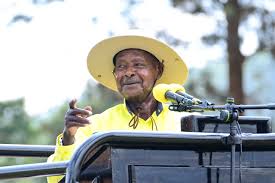
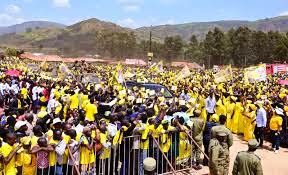
The President made the remarks on Tuesday, 25th November 2025, while addressing thousands of supporters gathered at Rushebeya playground in Rushebeya Sub-County, Rukiga District, during his campaign tour of Western Uganda.
He reminded citizens that the NRM’s claim to continued leadership is grounded in practical, measurable contributions to peace, infrastructure, and socioeconomic transformation.

“If you support NRM, you’re on the right path because NRM talks about the visible contributions it has made to Uganda,” President Museveni said.
Peace as the Foundation of Uganda’s Transformation
President Museveni placed stability at the forefront of what he termed the “seven contributions of NRM,” emphasizing that national peace remains the bedrock of the country’s progress.
“What is important is to tell you the seven contributions of NRM, starting with peace. Uganda is peaceful because of NRM,” he said.
He compared Uganda’s stable environment to the persistent insecurity in neighboring countries, especially the Democratic Republic of Congo (DRC), where communities continue to suffer conflict.
“Yesterday in Kisoro, people spoke about the suffering their neighbours in the DRC continue to face due to insecurity. Ugandans today enjoy stability because of the peace built over the years,” he added.
He stressed that peace has enabled development, attracted investment, and fostered economic growth across sectors.
Transforming Western Uganda’s Electrification Landscape
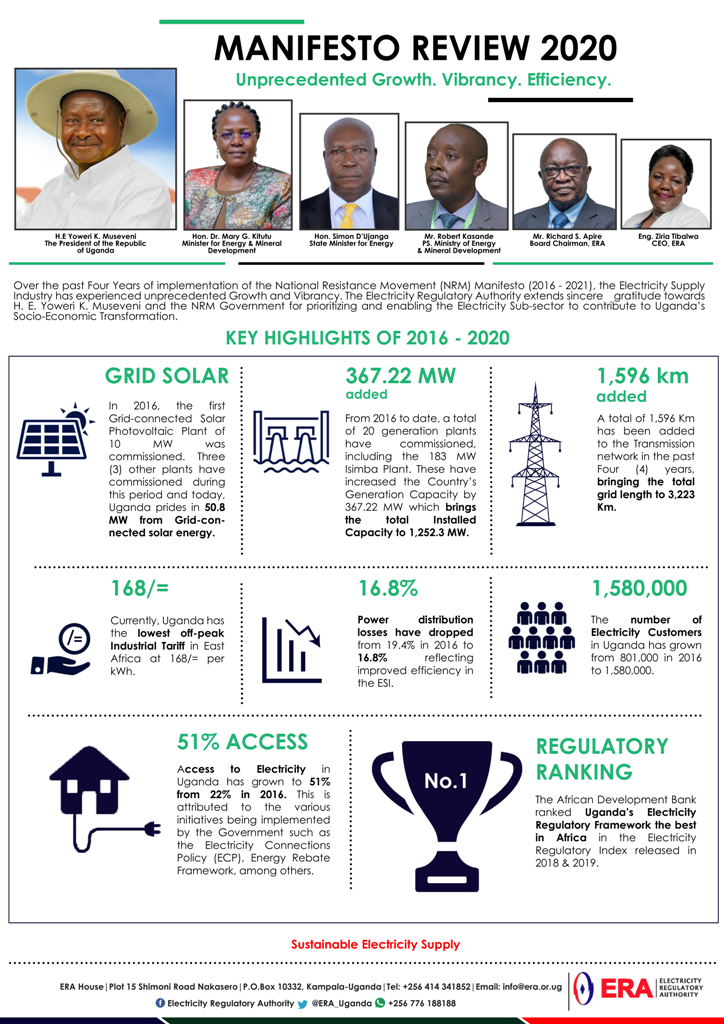
President Museveni recalled the state of electricity supply before the NRM came to power in 1986.
“When the NRM came into power, this side of Kabale had no electricity from Jinja. The power line stopped in Kasese, and Kabale relied on a small dam at Kariba,” he explained.
He noted with pride that today nearly the entire region is connected to the national grid, with Rukiga having four of its six sub-counties fully electrified.
“Plans are underway to electrify Bukinda and Mparo sub-counties in the next term,” he said.
Improving Water Access in Rukiga
The President expressed satisfaction with Rukiga’s rising rural safe water coverage, which currently stands at 83 percent.
He attributed the progress to gravity flow schemes, solar-powered irrigation, rainwater harvesting systems, and continuous sanitation improvements.
He commended local leaders for working with government to expand water access to even the most remote communities.
Strengthening Uganda’s Road Network
President Museveni highlighted the NRM’s road infrastructure achievements, particularly the roads linking major regions and international borders.
“We worked on the road network right from Kampala to Kabale up to the Katuna border. We also did the Kabale–Kisoro road, then the road from Mbarara–Rukungiri–Kanungu up to Kihiihi,” he said.
He announced that new works would soon begin on the long-awaited Muhanga–Rwamucucu road, which will connect Kamwezi, Rubale, and Rukungiri before joining the Kanungu road.
The announcement sparked excitement among residents, many of whom consider road improvement a major priority for Rukiga.
Balancing Public Expectations and Resource Limitations
In a moment of candor, the President asked Ugandans to appreciate the importance of prioritization in national planning.
“I need you to help me with one thing—prioritization of resources, and to do one thing at a time, not everything at once,” he said.
He defended the government’s decision to increase salaries for science teachers ahead of arts teachers.
“We increased the salaries of science teachers because we need them urgently. We need all teachers, but we have to prioritize what benefits everybody before returning to the arts teachers. But the arts teachers want the salaries now-now,” he said.
Drawing comparisons with military management, he noted that the UPDF puts equipment and welfare first.
“In the UPDF, we prioritize equipment and the welfare of soldiers, not salary. They don’t have good houses; they still sleep in grass-thatched homes. In other countries, they prioritize salary first – that is why they can’t defend themselves,” he added.
Environmental Protection and New Irrigation Projects
President Museveni thanked Rukiga residents for preserving wetlands and upholding environmental conservation.
“I thank you for not destroying the environment and keeping the swampy areas intact,” he said.
He announced a new government-backed irrigation project to be established in the swamp, aimed at raising agricultural productivity.
“I’m going to start a big project on this swamp to enable you to start irrigation and get good yields like Dr. Muranga of Bushenyi,” he said.
He highlighted Dr. Muranga’s impressive harvests—53 tons of bananas per acre each year—as a demonstration of what irrigation can achieve compared to the current average of 5 tons.
Clarifying the Difference Between Development and Household Wealth
President Museveni reiterated a longstanding message on wealth creation.
“Development is for everyone—like roads, schools, hospitals. Wealth is personal and private,” he said.
He reminded supporters that the NRM’s wealth-creation philosophy dates back to the 1960s in the cattle corridor.
He cited Nakaseke farmer George Matongo, who produces 900 litres of milk daily and earns over Shs 21 million monthly despite living far from a tarmac road.
“That is why we tell you to create wealth, and the tarmac road will find you,” he said.
Expanding the 4-Acre Model and Wealth Creation Success Stories
The President revisited the 4-Acre Model, a strategy introduced in the 1996 NRM manifesto to help smallholders maximize their land.
He explained how families can earn steady income through enterprises such as coffee, fruits, zero-grazing, food crops, poultry, piggery, and fish farming.
He extensively praised Joseph Basangwa of JEKA Farm in Kamuli, whose poultry business has become one of the country’s wealth creation success stories.
Basangwa produces 200 trays of eggs daily and earns Shs 20 million per day, amounting to Shs 600 million per month and Shs 7.2 billion annually.
“Somebody who had no job is now employing 300 people. Wealth creates jobs,” President Museveni said.
Scaling Up PDM to Lift More Households Out of Poverty
President Museveni encouraged residents to fully embrace the Parish Development Model (PDM).
Rukiga District has so far received Shs 9.2 billion in PDM funds.
A total of 9,163 households—representing 99.46 percent of the money—have benefited.
“Those remaining households must also get out of poverty. Even those already in the money economy should expand,” he said.
Jobs Through Production, Not Government Alone
The President emphasized that the true drivers of employment are agriculture, manufacturing, services, and ICT.
“Uganda has a population of 50 million people, yet government jobs are only 480,000,” he said.
He pointed to industrial parks such as Sino-Mbale, which now hosts 75 factories and employs thousands of Ugandans.
Strengthening Free Education and Skills Training
President Museveni expressed concern that illegal school fees were undermining free education in government schools.
“When I saw this, I launched the Presidential Skilling Hubs where youths train for free in carpentry, welding, tailoring, hairdressing, baking, leather work, and other practical skills,” he said.
He reaffirmed plans to recruit 5,000 new teachers to help reduce the pressure on schools.
Oil Discovery and Future Economic Transformation
The President highlighted the significance of Uganda’s oil discovery, crediting the NRM government for the breakthrough.
“Europeans were here for many years, but never discovered the country’s oil. It was during the NRM government that Uganda identified its commercially viable petroleum resources,” he said.
He assured citizens that oil development would accelerate Uganda’s economic growth in the coming years.
Local and National Leaders Rally Behind President Museveni
Speaker of Parliament, Rt. Hon. Anita Among, encouraged Rukiga residents to vote overwhelmingly for the President.
“We appeal to the people of Rukiga to vote for President Museveni 100%. On voting day, go and vote for the old man with a hat—and also vote for everyone with the bus,” she said.
She thanked him for restoring peace, strengthening development, and improving livelihoods.
Former Prime Minister Dr. Ruhakana Rugunda praised the President’s lifelong commitment to Uganda.
“He has offered all his life and energy to serve this country. He is the only candidate Ugandans should entrust with leadership,” he said.
He attributed improved life expectancy—from 43 years in 1986 to 68 years today—to NRM-led health reforms.
Rukiga District Leaders Present Their Memorandum
Rukiga NRM Chairperson Mr. Frank Besigye Kyerere welcomed the President and highlighted the district’s loyalty.
He reminded him that in the previous elections, he secured 81.8 percent of the district’s vote.
“We expect at least 90% voter turnout, and we highly believe that more than 90% of these votes will be for His Excellency Yoweri Kaguta Museveni,” he said.
He listed key district achievements including peace, water access, wealth creation programs such as PDM and Emyooga, and the creation of Rukiga District itself.
He presented requests including the construction of a district hospital, a technical school, and the tarmacking of key roads such as Muhanga–Rwamucucu–Kisiizi and Rutobo–Kamwezi–Kyogo–Muhanga.