










A Grand Reception in the Heart of Ankole
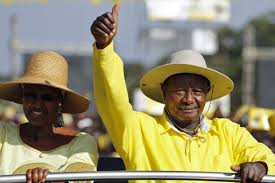
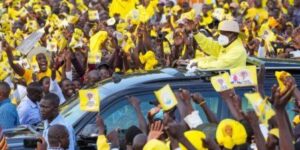
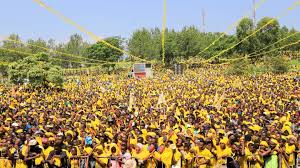
President Yoweri Kaguta Museveni received a heroic welcome as thousands of residents filled Booma Grounds in Mbarara City, reinforcing the region’s reputation as an NRM stronghold.
The President, accompanied by First Lady and Minister of Education and Sports, Maama Janet Museveni, continued his campaign trail in the Ankole Sub-region as excitement swept across the grounds.
The rally brought together supporters from both Mbarara District and Mbarara City, marking a unified show of political solidarity.
Historical Background: Ankole’s Central Role in NRM’s Rise
Political historians often point to the wider Ankole Sub-region as one of the Movement’s strongest ideological and operational foundations during the 1981–1986 Bush War.
The region produced early mobilisers and logistical networks that supported the NRA guerrilla force.
Dr. Francis Ssenyonga, a political historian at Makerere University, says, “Ankole is not just another NRM stronghold—it is part of the Movement’s birth narrative, and that legacy has translated into long-term loyalty.”
He argues that this historical connection continues to influence voting patterns in Mbarara and surrounding districts, where the party consistently registers high margins.
Museveni Recalls Uganda’s Pre-NRM Turmoil
President Museveni reminded supporters of the turbulent political chapters the country endured in 1972, 1979 and 1985.
He said the first contribution of the NRM was restoring peace, and noted that the country today enjoys stability “from border to border.”
He said this peace emerged because the NRM rejected “sectarian politics based on religion, tribe, gender and other divisions,” allowing for the establishment of strong national institutions such as the army, police and judiciary.
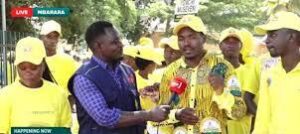
Peace Narrative Remains a Strong Electoral Tool
Political analyst Sarah Tamale from the Centre for Governance Studies points out that Museveni’s emphasis on peace remains one of the NRM’s most powerful campaign messages.
She says, “For many older Ugandans, memories of the turbulent years are still vivid. The peace narrative consistently resonates because it taps into lived experience.”
She explains that for younger voters—many born after 1990—the peace message is more abstract, but still associated with opportunity, especially in regions with growing urban economies like Mbarara.
Development Gains: Roads, Electricity and the Social Sector
President Museveni said the second NRM contribution is development built on economic and social infrastructure.
He highlighted improvements in Uganda’s national road network and announced government plans to construct the Biharwe–Bwizibwera road.
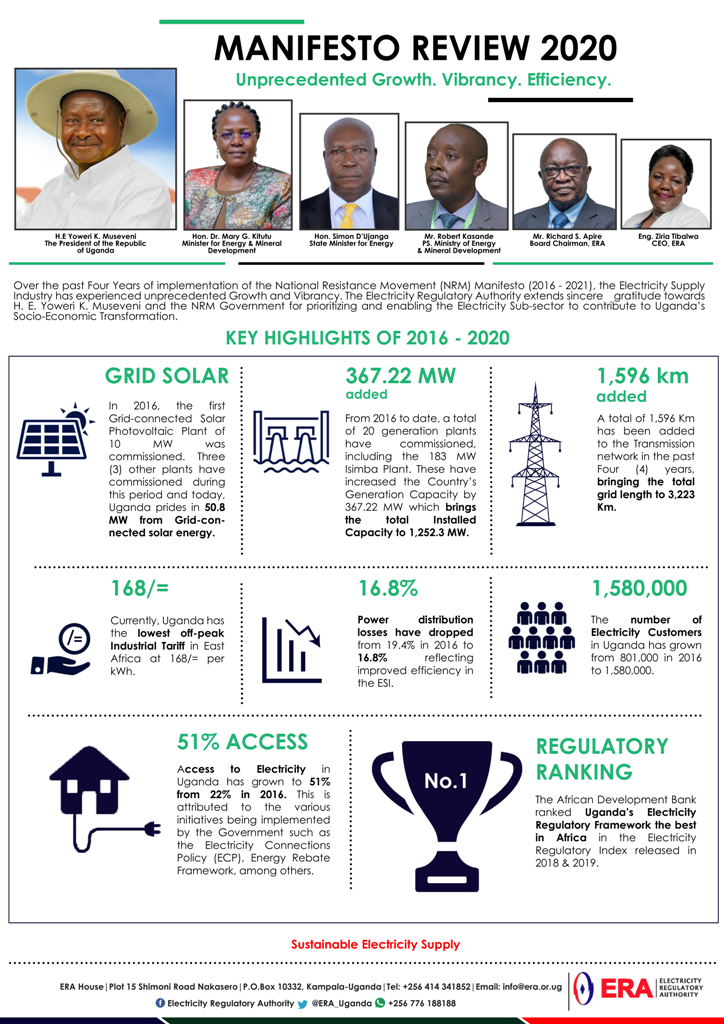
He emphasized that electricity access has expanded significantly and is now “almost everywhere,” enabling rural participation in economic transformation.
Expert Insight: Development as an Electoral Promise
Urban planner and policy researcher Dr. Kenneth Mweteise notes that “infrastructure remains a cornerstone of modern political persuasion.”
He adds that rural voters increasingly tie road construction, electricity access and water systems to their economic prospects.
He says, “The NRM has invested heavily in development as a political language. Roads and electricity are not just projects—they are signals of state visibility.”
From Development to Wealth: The Four-Acre Model
President Museveni urged citizens to go beyond appreciating development and focus on wealth creation.
He cited the example of George Matongo of Ngoma, explaining that the farmer earns Shs21 million per month through dairy farming despite living far from tarmac and electricity.
He encouraged small landholders to adopt the four-acre model, explaining how coffee, fruits, zero-grazing dairy and food crops can be planned on limited land.
He added that poultry, piggery and fish farming can be pursued in backyards to boost income.
Why the Wealth-Creation Agenda Matters
Agricultural economist Dr. Annet Katusiime says the wealth-creation message is tailored for regions like Ankole, where agriculture remains dominant.
She says, “Museveni’s four-acre example fits well with the socioeconomic structure of Ankole. It appeals to farmers who see land as their primary economic asset.”
She adds that the emphasis on household income is likely to remain a major pillar of the NRM’s 2026 messaging.
Urban Wealth and Skilling
President Museveni told urban residents that prosperity does not depend solely on land ownership.
He said skilling centres provide training in trades such as welding, bakery, tailoring, stonework and hairdressing.
He emphasized that about 30 percent of Ugandans remain outside the money economy and must be integrated.
Job Creation: The Fourth NRM Contribution
President Museveni listed job creation as the fourth contribution of the NRM.
He said employment opportunities stem from commercial agriculture, ICT, industry and services.
He urged residents to maintain their support for NRM flagbearers in the upcoming elections.
Maama Janet Calls for 99.9% Support in Mbarara
Maama Janet Museveni thanked residents for the overwhelming turnout.
She said, “Today the people of Mbarara have spoken to the whole of Uganda without saying anything. You have made a big statement.”
She urged grassroots mobilisation.
She said, “I want to request you to continue doing grassroots mobilisation house to house and aim at getting 99.9% in Mbarara in the coming election for the NRM.”
She warned supporters not to assume that large crowds automatically translate into votes.
She said, “Look for more votes and encourage them to come on the voting day and vote for the NRM.”
Local Leaders Speak Out
Mbarara District NRM Chairperson Atuheise Prosper thanked the President for uniting Ugandans and rejecting sectarian politics.
He appreciated development programmes such as the Parish Development Model.
Mbarara City NRM Chairperson Wilson Tumwine thanked the President for approving the upgrade of Nyakisharara Airfield to an international airport.
He requested the construction of a stadium in Mbarara City.
Why Opposition Struggles in Ankole
Political sociologist Dr. Moses Kato explains that the opposition historically finds it difficult to penetrate Ankole.
He says, “The opposition struggles in regions where the ruling party’s liberation narrative and development record are deeply embedded in community memory.”
He adds that opposition parties often lack strong grassroots structures in Ankole, making the NRM’s organisational machinery far more effective during campaigns.
A Region Reinforced in Loyalty
The Mbarara rally showcased not only the NRM’s current popularity in Ankole but also the political strategy guiding the 2026 campaign.
Experts agree that the mixture of peace messaging, development achievements, and wealth creation will form the backbone of Museveni’s national campaign.
As the election season intensifies, the Ankole Sub-region appears poised to once again play a pivotal role in shaping Uganda’s political direction.