















The police in Bugiri District have launched a formal investigation into a tragic road accident that claimed ten lives and left three other passengers with serious injuries.
The crash occurred early Tuesday morning at Busowa Town Council along the busy Busia Highway, a corridor known for heavy traffic flow and frequent transport activity.
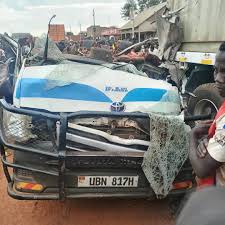
The accident involved a Toyota Hiace omnibus, registration number UBN 817H, which was heading toward Iganga, and a stationary trailer, registration number UA 647BA/UA 430AA, which had been parked by the roadside.

Preliminary police findings show that the driver of the Toyota Hiace attempted to overtake an unidentified vehicle but suddenly faced an oncoming car.
In a quick attempt to avoid a head-on collision, the driver swerved sharply to the left.
The sudden manoeuvre caused the driver to lose control of the vehicle.
The Hiace then rammed directly into the stationary trailer, leading to a devastating impact.
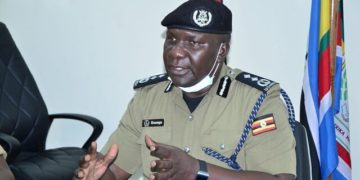
According to Michael Kananura, spokesperson for the Traffic and Road Safety Directorate, the crash killed ten people instantly, including the driver of the Hiace.
Kananura added that three survivors were rushed to hospital in critical condition.
He confirmed that all the victims were passengers aboard the Toyota omnibus at the time of the accident.
The traffic police team, supported by residents of Busowa Town Council, responded to the scene to assist the injured, secure the area, and transport the bodies of the deceased to the mortuary for post-mortem examination.
Investigations into the incident are ongoing as police work to fully establish the sequence of events and contributing factors.
Kananura attributed the tragic crash to human error.
He stressed that reckless driving remains one of the leading causes of serious accidents on Uganda’s highways.
“We urge all motorists to desist from reckless road behaviour, including speeding and unsafe overtaking, which continue to be major causes of crashes on our roads. Drivers are reminded to exercise maximum caution and prioritise safety at all times,” Kananura said.
The Bugiri crash has once again drawn national attention to Uganda’s broader road safety challenges, prompting renewed calls for stricter enforcement, better infrastructure, and improved driver discipline.
Background: Understanding Uganda’s Road Safety Trends
Uganda continues to grapple with high rates of road crashes, injuries, and deaths, despite repeated government and police interventions.
Over the past two decades, the number of vehicles on Uganda’s roads has risen sharply as the economy and population have grown.
This expansion has not always been matched with adequate improvements in road quality, traffic management systems, or nationwide driver training.
Human error remains the biggest contributor to road crashes in the country.
Common risk factors include speeding, dangerous overtaking, distracted driving, and driving under fatigue, all of which routinely feature in police accident reports.
Public transport vehicles such as taxis, buses, and boda-bodas are often involved in crashes because of intense competition for passengers and occasional disregard for traffic rules.
The government and the Uganda Police Force have introduced several initiatives to curb this trend.
Highway operations such as “Fika Salama,” random driver checks, and enforcement of roadworthiness inspections have been key components of these safety efforts.
Infrastructure gaps continue to contribute to road hazards.
Many highways still have narrow lanes, poor lighting, or worn surfaces, while rural roads often suffer from limited maintenance, especially during rainy weather.
In major towns, rising traffic congestion has increased the likelihood of collisions, particularly where road designs do not accommodate pedestrians and cyclists.
Authorities have invested in public education campaigns on safe road use, including awareness programs on child pedestrian protection and boda-boda rider training.
However, challenges remain substantial.
Understaffed traffic departments, inadequate vehicle inspection systems, and a rapidly growing population of inexperienced motorcycle riders continue to strain the road safety framework.
Uganda’s road safety landscape therefore reflects a mix of progress and persistent vulnerabilities.
The government maintains that reducing traffic crashes will require a combination of disciplined driving, strict enforcement, improved infrastructure, and sustained public awareness.
The Bugiri crash, though under investigation, stands as another reminder of the urgent need to address these deeply rooted road safety issues.