
















A Vote of Confidence in Uganda’s Economic Direction
The World Bank has issued a strong endorsement of Uganda’s economic performance, highlighting robust growth and a steady post-shock recovery anchored in agriculture, exports, and macroeconomic stability.
The commendation is contained in the Bank’s latest *Uganda Economic Update*, which provides an assessment of recent trends and medium-term prospects for the country.

Strong Growth Outlook Places Uganda Among Africa’s Top Performers
According to the report, Uganda’s economy is projected to expand by 6.3 percent in the 2024/25 financial year.
This growth rate positions Uganda among the fastest-growing economies in Sub-Saharan Africa.
The Bank attributes this performance to a broad-based recovery across key productive sectors.
Agriculture, Tourism and Exports Drive the Recovery
The World Bank notes that growth is being supported by improved performance in agriculture, tourism, and exports.
Particular emphasis is placed on coffee and gold exports, which have emerged as major foreign exchange earners.
Coffee exports alone are now generating about USD 2 billion annually.
This performance has been boosted by reforms implemented under the government’s Coffee Roadmap, which aims to improve productivity, quality, and market access.
Inflation and Reserves Signal Macroeconomic Stability
The report indicates that inflation has remained low at around 3.5 percent.
This level is below the Bank of Uganda’s medium-term target.
The World Bank attributes the low inflation to tight monetary policy and relatively stable food supplies.
Foreign exchange reserves have also strengthened, rising to USD 4.3 billion.
This level of reserves is sufficient to cover three months of imports, providing an important buffer against external shocks.
Agro-Industrialisation Emerges as a Key Growth Engine
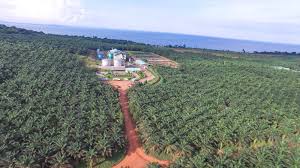
The World Bank observes that agro-industrialisation is increasingly becoming a major driver of economic growth.
The report notes that agriculture is gradually shifting from subsistence production to value addition through processing and organised farmer groups.
Small and medium-sized agro-processing enterprises are highlighted for their role in creating jobs.
These enterprises have also helped raise household incomes at the community level.
Strategic Public Spending Supports Development Goals
The update points to increased government spending on infrastructure and social services.
This rise in expenditure has pushed the fiscal deficit to 6.1 percent of GDP.
However, the World Bank describes this spending as strategic rather than wasteful.
The report also highlights improved domestic revenue mobilisation.
Tax revenue increased by 16 percent, supported by the rollout of digital systems at the Uganda Revenue Authority.
Oil Production Expected to Accelerate Growth
Looking ahead, the World Bank expects Uganda’s growth to accelerate further once oil production begins.
The Tilenga and Kingfisher oil projects are reported to be more than 60 percent complete.
With oil coming on stream, economic growth could rise to nearly 10 percent by the 2026/27 financial year.
Call for More Investment in Modern Agriculture
Despite the positive outlook, the World Bank advises Uganda to invest more in irrigation, mechanisation, and climate-smart agriculture.
The Bank also urges the government to attract greater private sector investment into agribusiness.
These measures are seen as critical for sustaining growth and building resilience against climate shocks.
Government Welcomes Validation of Its Policies
Finance Minister Matia Kasaija welcomed the report, saying it shows government policies are delivering results.
His remarks reflect official confidence that ongoing reforms are yielding tangible economic gains.
Long-Term Prospects Remain Positive Despite Risks
The World Bank acknowledges that Uganda continues to face challenges, including climate change and global economic uncertainty.
Nevertheless, the report concludes that Uganda remains on track for sustained long-term growth.
The Bank stresses that maintaining the current reform momentum will be essential to fully realise this potential.