








Four Decades after Liberation, Focus Shifts from Survival to Prosperity
Forty years after the National Resistance Movement took power promising fundamental change, Uganda’s national conversation has increasingly shifted from political stability to household income, productivity, and long-term prosperity.
The 40th NRM Liberation anniversary provided a platform not only to commemorate the past but also to take stock of how far the country has moved in transforming ordinary Ugandans from subsistence living to participation in the money economy.
It was against this historical and developmental backdrop that President Yoweri Kaguta Museveni declared that 70 percent of Ugandans are now engaged in the money economy.
Museveni Attributes Progress to NRM’s Wealth Creation Strategy
President Yoweri Kaguta Museveni said that 70 percent of Ugandans are now participating in the money economy.
He attributed this milestone to four decades of National Resistance Movement leadership and a deliberate series of state-led wealth creation programmes designed to lift households out of subsistence livelihoods.
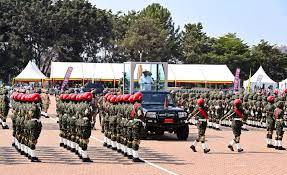
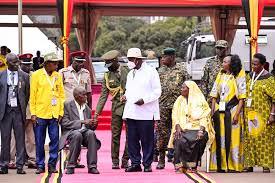
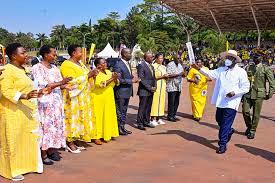
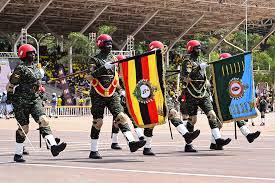
The President made the remarks while addressing the nation at the 40th Liberation Day celebrations held at the Kololo National Ceremonial Grounds on January 26, 2026.
Liberation Day Held in the Wake of Electoral Victory
The celebrations were held under the theme “Tribute to the Patriots who ushered in a fundamental change.”
The event came just days after President Museveni secured another term in office in the recently concluded presidential elections.
He was declared winner with 71 percent of the vote.
Gratitude for God and the Electoral Process
In his address, President Museveni thanked God and Ugandans for the successful conclusion of the electoral process.
“I thank God for having seen us through this big exercise of elections.”
“Secondly, I salute all Ugandans for participating in the elections.”
“I thank all the NRM members for supporting the NRM and its flag bearers,” he said.
Victory Tempered by Concern Over Low Turnout
The President described the election outcome as a major political victory.
However, he expressed concern over what he termed as low voter turnout among NRM supporters.
According to President Museveni, although he received about eight million votes, internal party data suggested that many more supporters were eligible to vote.
“We are celebrating a big victory in politics.”
“I got eight million votes, but ten million of my supporters of NRM did not turn up to vote,” he said.
He said the situation was partly linked to challenges encountered during the party’s registration exercise and the national voters’ register verification process.
Discrepancies in the Voters’ Register
President Museveni explained that the NRM had registered about 21 million supporters.
He said that 18 million of those supporters were ready to vote.
However, only eight million initially appeared on the Electoral Commission register.
He said that although the party later ensured that at least 14 million supporters were registered in time, many still failed to cast their ballots.
“But I got eight million votes.”
“So where are the rest of the votes?”
“That means some of our people did not turn up to vote,” he said.
Intimidation and Indiscipline Blamed
Gen. Museveni attributed the low turnout to intimidation by opposition supporters and indiscipline within sections of the NRM leadership.
“I hear the opposition wasting time talking nonsense.”
“They are lucky because not all of my supporters turned up.”
“If they had all turned up, there would be no opposition in Uganda,” President Museveni said.
Failure of Law Enforcement Questioned
The President alleged that some NRM supporters were threatened and attacked during the campaign period.
He said law enforcement agencies failed to act decisively.
“People were threatening our supporters, telling them, ‘you are the reason why Museveni is still leading us.’”
“You have no right to say that.”
“Why would the police hear this and do nothing?” he asked.
Economy Growing Fast, Oil to Accelerate Growth
Turning to the economy, President Museveni said Uganda was currently growing at about seven percent annually.
He projected even faster growth once oil production begins.
“The economy is moving very fast, growing at seven percent now, and with the oil, we are going to go into double digits.”
“This year, your oil will start flowing,” he said.
He added that Uganda had resisted external attempts to control its petroleum resources.
Poverty Rooted in Subsistence Production
Despite the strong growth, President Museveni acknowledged that a significant segment of the population remained trapped in subsistence production.
“These are the ones who are still in poverty,” President Museveni said.
He traced the challenge back to colonial economic structures that excluded Africans from meaningful participation in the money economy.
From Colonial Marginalisation to NRM Intervention
At independence in 1962, President Museveni said only about nine percent of Ugandans were involved in the money economy.
He said progress after independence was slow and uneven.
He noted that it was only after the NRM took power that structured wealth creation programmes were introduced.
Early Wealth Creation Efforts
The President cited Entandikwa as one of the early initiatives that provided micro-credit to small-scale entrepreneurs.
However, he said the impact remained limited.
By 2013, he said only about 32 percent of households were in the money economy.
He said 68 percent were still producing mainly for subsistence.
Operation Wealth Creation Expands Reach
This situation, President Museveni explained, prompted the launch of Operation Wealth Creation.
Under OWC, the Uganda People’s Defence Forces distributed seedlings and agricultural inputs across the country.
“When we checked in 2019, 61 percent of Ugandans were in the money economy, while 39 percent were still in the subsistence economy,” President Museveni said.
Parish Development Model Introduced
Concerns later emerged over what the President described as “beegabira bokka.”
He said elite capture of government programmes undermined progress.
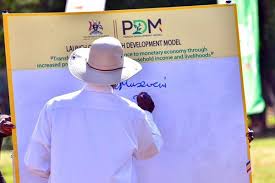
This led to the introduction of the Parish Development Model.
PDM was designed to channel funds directly to communities at the parish level.
70 Percent Now in the Money Economy
According to President Museveni, the proportion of Ugandans in the money economy has now risen to 70 percent.
He said about 30 percent still remain outside.
“We don’t want a country of 70 percent rich people while 30 percent are poor,” he said.
Warning Against Misuse of PDM Funds
The President issued a stern warning against misuse of PDM funds.
He cited cases where parish officials and committees diverted money for personal gain.
In some areas, he said, resources had been monopolised by parish chiefs and focal persons.
Proper PDM Structures Emphasised
“That’s not how the PDM is supposed to be.”
“PDM needs a general meeting of the whole parish with everybody above 18 years.”
“And the general meeting should elect a committee,” he said.
Tough Measures Announced
President Museveni said the government would amend PDM guidelines.
He said funding would be increased, especially in urban areas.
“We may have to put 300 or 400 million shillings per parish in towns because the homes there are many,” he said.
He added that rural households could be fully covered within three years if funds are properly utilised.
Arrests and Accountability
The President warned that parish chiefs who violate PDM rules would be arrested.
He said officials in Buwambo, Maracha, and Iganga had already been apprehended.
He said individuals who improperly formed committees would be barred from leadership.
He added that those who extorted money would be prosecuted.
Broader Wealth Creation Support
Beyond PDM, President Museveni said government would continue supporting boda boda riders.
He said ghetto youth would also be supported.
He said cultural and religious leaders would benefit.
He said unemployed university graduates would not be left out.
He said political leaders at the parish level would also be facilitated.
Wealth Creation as Top Priority
The President said the goal was to ensure all Ugandans are involved in wealth creation.
“This will be emphasis number one,” President Museveni said.
Social Services to Follow Income Growth
He said once household incomes improve, government would intensify investment in education.
He said health would also be prioritised.
He said curative health challenges would receive special attention.
He noted that preventive programmes such as immunisation were already performing well.
Infrastructure and Roads
Infrastructure development will remain a priority.
The President specifically mentioned rural road maintenance.
“We don’t want any unrepaired roads, whether tarmac or marram,” he said.
Judiciary and Anti-Corruption Drive
On governance, President Museveni said the fight against corruption would extend to the judiciary.
He praised Chief Justice Dr Flavian Zeija.
“We don’t want corruption in the courts.”
“The new Chief Justice is very active on that,” he said.
Rejecting Claims of No Progress
The President dismissed criticism from sections of the media and opposition.
“You have been hearing people say that the NRM has done nothing in the last 40 years,” President Museveni said.
He cited a headline that read “No change for 40 years.”
Five Phases of Transformation
To counter the claims, President Museveni outlined five phases of economic recovery since 1986.
These included minimum economic recovery.
They included expansion of the small colonial economy.
They included diversification and value addition.
They included transition to a knowledge economy.
Showcasing Uganda’s Modern Economy
The President presented video footage highlighting four key sectors.
These were commercial agriculture.
They were manufacturing.
They were services.
They were ICT.
Evidence of Local Production
“That’s why somebody told me that when you go to the supermarkets now, 65 percent of the products are made in Uganda.”
“In the past, it was 100 percent imported,” President Museveni said.
Reflecting on the Amin Era
The President recalled the 1972 expulsion of Asians by Idi Amin.
“At that time, there were only about 4,000 properties owned by Asians in the whole of Uganda.”
“Now we have millions of properties owned by Ugandans,” he said.
Progress in Industrialisation
On industrialisation, President Museveni cited Kiira Motors.
He said locally assembled vehicles had completed a return journey to South Africa.
Minister Babalanda Commends the Journey
The Minister for the Presidency, Hon. Babirye Milly Babalanda, congratulated President Museveni.
She described the 40-year journey of the NRM as transformative.
“Today’s commemoration is a reflection on four decades that have profoundly reshaped the destiny of our nation,” Hon. Babalanda said.
She thanked God for the President’s leadership and resilience.
Call for Unity After Elections
She said the election victory reflected public confidence in the NRM.
“Now that the elections are behind us, we face the greater responsibility of building Uganda.”
“Let us move forward in unity, mutual respect, and shared national purpose,” she said.
Honouring National Heroes
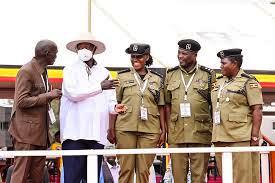
During the ceremony, the government awarded national medals to 33 Ugandans.
The medals recognised contributions to the liberation struggle and national development.
Remembering January 26, 1986
January 26 marks the day NRA fighters captured Kampala in 1986.
The victory ended the rule of the UNLA junta led by Gen Tito Okello Lutwa.
President Museveni was later sworn in as Uganda’s ninth President.
High-Level Attendance
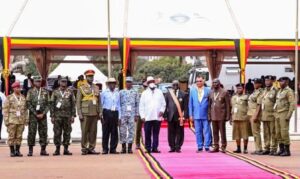
The event was attended by the Vice President Jessica Alupo, the Speaker of Parliament Anita Among, the Chief Justice Flavian Zeija, the Deputy Speaker Thomas Tayebwa, the Prime Minister Robinah Nabbanja, senior NRM leaders, ministers, service chiefs, diplomats, plus religious and cultural leaders.
The event was also attended by former national leaders, including Edward Kiwanuka Ssekandi, Ruhakana Rugunda, Amama Mbabazi, and Kintu Musoke.