
















From Independence to Alliance
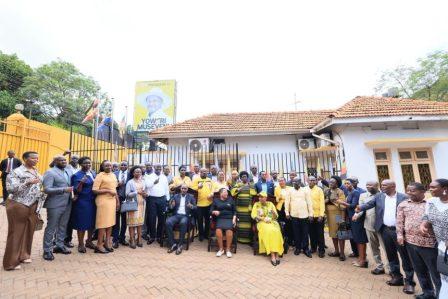
A subtle but politically significant shift is unfolding in Kampala, where more than 30 independent Members of Parliament-elect have taken steps that could redefine the balance of power in Uganda’s legislature.
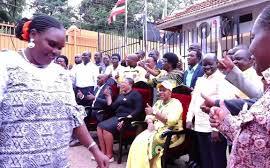
The legislators convened at the headquarters of the ruling National Resistance Movement, signaling a willingness to move from political independence toward structured collaboration.

Their objective was clear; they want to formalize cooperation through Memoranda of Understanding that would guide how they work with the ruling party in the upcoming 12th Parliament.
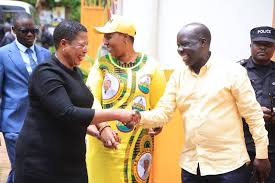
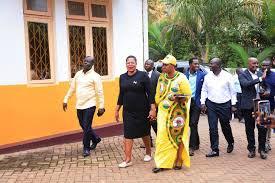
The engagement was spearheaded by Anita Annet Among, who also serves as the NRM Second National Vice Chairperson (Female).
She welcomed the MPs and framed the discussions as an opportunity to build unity around national priorities.
Among emphasized that cooperation is not about erasing political identity, but about strengthening effectiveness in governance.
She noted that structured collaboration would enable the independent legislators to play a more meaningful role in Parliament.
Behind the move lies a mix of political strategy and practical necessity. Independent MPs often face challenges navigating parliamentary systems that are heavily influenced by party structures.
Access to committee positions, leadership roles, and coordinated legislative agendas can be limited without formal alliances. The proposed agreements are intended to address these gaps.
According to Among, the arrangement will provide a clear framework for participation in committee work and leadership structures. It will also ensure a coordinated approach to key national issues.
This is not the first time independent legislators have leaned toward the ruling party.
In previous parliamentary terms, smaller groups of independents have informally aligned with the National Resistance Movement to secure influence and resources.
What makes the current development different is its scale and level of organisation.
More than 30 MPs moving in a coordinated manner signals a broader shift rather than isolated decisions.
The incoming Parliament is expected to include over 70 independent MPs. This makes them one of the largest blocs outside formal party structures.
If a significant portion of this group aligns with the NRM, it could substantially reinforce the ruling party’s legislative strength.
Such cooperation would make it easier for the government to pass bills and advance its policy agenda.
Memoranda of Understanding are increasingly being used as tools to formalise political cooperation.
They do not necessarily require MPs to join a party. Instead, they outline areas of collaboration, shared priorities, and mutual expectations.
In this case, the MOUs are expected to define how independent MPs will engage with the NRM on legislative business.
Sources indicate that the details of these agreements will be further discussed during a planned retreat in April.
Rt. Hon. Among struck a welcoming tone during the meeting. She highlighted the importance of unity in driving national development.
She also underscored the need for a coordinated approach to legislative work.
Her message suggested that cooperation is essential in a Parliament where numbers and organisation often determine influence.
Political analysts view the development as both strategic and pragmatic.
They argue that in a system where party structures dominate, independents often find it difficult to operate effectively on their own.
By entering into formal cooperation, they can amplify their impact while still maintaining their independent status.
At the same time, analysts note that such arrangements are not unusual in Uganda’s political landscape.
They reflect the realities of governance, where collaboration is often necessary to achieve legislative goals.
As Uganda prepares for the 12th Parliament, the emerging alliance could shape how business is conducted.
It may lead to smoother passage of government programs. It could also reduce friction between independent MPs and the ruling party.
However, it raises questions about how “independent” these legislators will remain in practice.
For the MPs involved, the decision represents a careful balancing act.
They must navigate the benefits of cooperation while preserving the independence that got them elected.
For the ruling party, it is an opportunity to consolidate influence without formal party expansion.
And for Ugandans, it is a development that could quietly but significantly shape the direction of national governance in the years ahead.