













On a hill that Uganda’s own traffic authorities have long labelled a death trap, a school bus carrying 107 young pupils descended into the dark and did not make it down — setting off a national reckoning over whether any child should ever board a school trip bus again
The Hill That Has Killed Before
Chekwatit Hill does not appear on any tourist map.

It sits on a steep stretch of road in Kawowo Sub-county, in Uganda’s Kapchorwa District in the Sebei sub-region of eastern Uganda, descending sharply through the highlands that also give the region its most famous attraction — the magnificent triple-tiered Sipi Falls.
Traffic authorities and police have long regarded Chekwatit Hill as one of Uganda’s major road accident black spots, with a history of fatal crashes that predates Thursday’s tragedy by many years.
Just weeks before Thursday’s disaster, a student and teacher lost their lives when a bus carrying pupils was struck by a train in Mukono District. Earlier in the month, 14 people died in a head-on collision involving a bus and a trailer along the Kampala-Gulu Highway.
The road through Chekwatit has claimed lives before. It will almost certainly claim lives again, unless something fundamental changes about how Uganda treats the relationship between its vehicles, its roads, and the most vulnerable passengers they carry.
On the evening of Thursday, July 16, 2026, it claimed twenty-one of them at once — twenty of them children.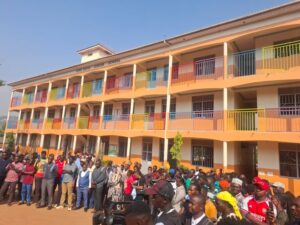
A Three-Day Trip That Ended in Darkness
King David Junior School is a private primary school located in Ndejje, Makindye Division, in Kampala.
It has an enrollment of approximately 936 pupils — a sizeable institution by any standard, and one whose proprietor, Tadeo Ssekadde, was evidently committed to enriching his pupils’ education beyond the classroom walls.
The school had organised a three-day educational tour to Sipi Falls in Kapchorwa District, for which parents paid Shs230,000 per child.
A total of 217 pupils participated in the tour, travelling in four trucks and one bus.
The bus — an Isuzu vehicle, registration number UA 108BQ — was carrying 107 pupils at the time of the accident, a figure that itself raises immediate questions about the capacity and suitability of the vehicle for transporting such a large number of children.
The pupils had completed their visit to Sipi Falls and were making their return journey to Kampala when, at approximately 8:00pm local time, as the bus descended the steep gradient of Chekwatit Hill, the driver lost control.
“While returning from the tour, the driver reportedly lost control of the vehicle, which veered off the road, struck a large stone along the roadside, and overturned,” Traffic and Road Safety Police spokesperson Michael Kananura confirmed.
Preliminary investigations suggest the bus developed a mechanical fault before the crash. Eyewitnesses told investigators the vehicle had made several stopovers before the accident occurred.
Early investigations also suggest the bus developed a mechanical fault before the driver lost control on the hill, a stretch of road that has previously been the scene of multiple serious accidents.
The bus struck a large roadside rock and overturned. Scores of passengers were thrown from the vehicle. Numerous others were trapped inside the wreckage.
The Death Toll Climbs Through the Night
The first official confirmation of fatalities came within hours of the crash.
Following the fatal road traffic crash that occurred at Chekwatit Village, Kimawa Parish, Kawowo Sub-county, Kapchorwa District, a total of 21 people, comprising 20 pupils and one adult, were confirmed dead. The crash involved an Isuzu bus, registration number UA 108BQ, belonging to King David Junior School, Ndejje, Makindye Division, Kampala.
Among those confirmed dead was Tadeo Ssekadde — the founder and director of King David Junior School — who had accompanied his pupils on the trip and died alongside the children he had built his school to serve.
The death toll continued to rise through the night. Two more pupils succumbed to their injuries at around 4:30am while receiving treatment at Kapchorwa General Hospital, raising the confirmed death toll from 19 to 21.
Nine critically injured pupils were admitted to Mbale Regional Referral Hospital, while 16 others received treatment at Kaserem Health Centre. Three more were admitted to Bulambuli Health Centre IV, with the remaining injured taken to Kapchorwa Hospital.
Over 70 individuals sustained injuries in total and were attended to at multiple healthcare centres across the region.
Community Responds in the Dark
In the immediate aftermath of the crash, it was not government machinery that saved lives — it was ordinary people.
Kapchorwa Resident District Commissioner Stanley Bayole paid tribute to the local community following the tragedy. “The response from the community has been overwhelming. People brought bedding, offered transport and joined rescue efforts without hesitation. This is a strong sign of humanity and solidarity during a very difficult moment,” Bayole said.
Kapchorwa District Health Officer Dr. Siraji Masai said medical personnel and volunteers had been mobilised to handle the large number of casualties. “Our medical teams, together with volunteers, are attending to the injured pupils. Four of the critically injured victims have already been referred to Mbale Regional Referral Hospital for specialised management,” Dr. Masai said.
Footage shared from the scene showed the bus extensively damaged, with community members working by torchlight to reach children who were still trapped inside the wreckage.
The bodies of the deceased were taken to Kapchorwa Mortuary pending identification by relatives and postmortem examinations — a process that would extend across the following days as distraught families made the journey to the eastern highlands to confirm the worst.
Government Responds: A School Closed, a System Questioned
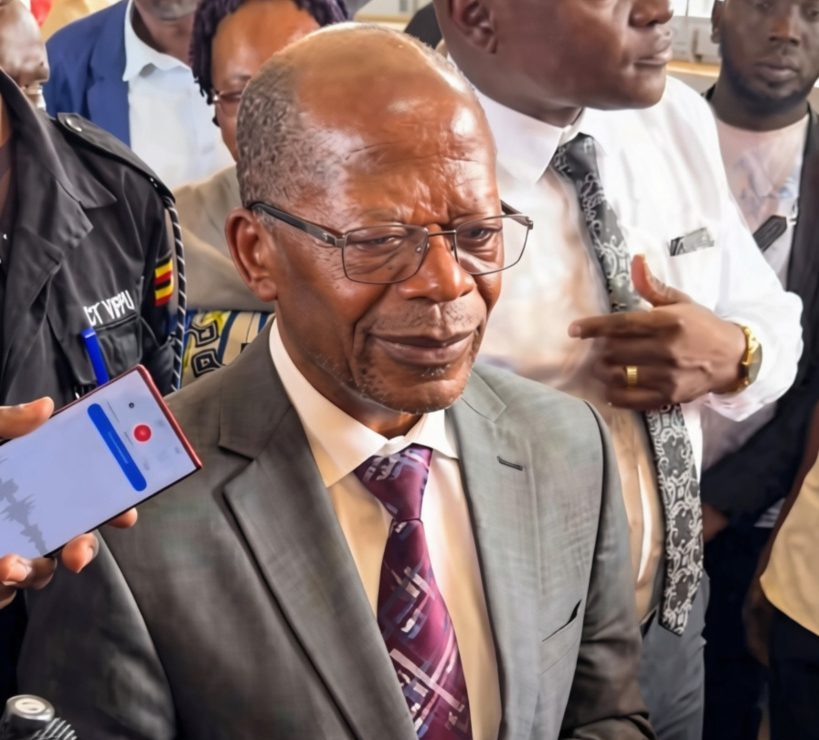
The Acting Minister for Education and Sports, Dr. John Chrysostom Muyingo, travelled to King David Junior School in Ndejje on Friday to condole with bereaved families and to announce the government’s immediate response.
His first decision was to close the school.
“We have agreed to close the school for the next two weeks to allow the pupils, parents, and staff to undergo counselling following this tragic accident that claimed the lives of our beloved children,” Dr. Muyingo said.
The two-week closure was designed to give the school community — nearly a thousand children, their parents, and an entire staff body — time to process the grief, receive trauma counselling, and begin whatever slow process of recovery a tragedy of this scale permits.
Dr. Muyingo also directed local leaders, including the Resident District Commissioner of Makindye-Ssabagabo and the Mayor of Makindye Ssabagabo Municipality, to constitute a committee to thoroughly investigate the circumstances surrounding the accident and recommend measures to improve the safety of learners during school travel.
The second and more sweeping decision affected every school in the country.
The Ministry of Education and Sports suspended all school tours across Uganda with immediate effect, following what Dr. Muyingo described as a series of fatal road accidents involving learners during educational trips.
He said the suspension would remain in force until further notice as the government reviews and strengthens safety measures governing school travel, and urged all schools to strictly comply with the directive while the review is underway.
Minister of Local Government Balaam Ateenyi Barugahara, who was on an official tour of eastern Uganda at the time of the crash, visited the scene and confirmed the death toll. “Sadly, 20 children and one adult, who happens to be the founder and director,” he said, confirming what the numbers already made clear — that this was not merely an accident statistic but a devastating personal and institutional loss.
A Road Safety Crisis With Deep Roots
The Kapchorwa crash did not happen in isolation.
Uganda records thousands of road fatalities annually, with traffic authorities consistently citing speeding, poorly maintained vehicles, and hazardous road conditions as the primary contributing factors.
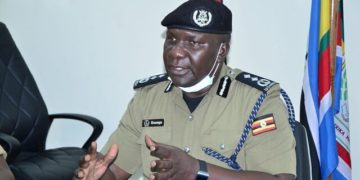
Sipi Region Police spokesperson Fredmark Chesang urged motorists, particularly operators of passenger service vehicles, to ensure their vehicles are mechanically roadworthy before undertaking long journeys, noting that Chekwatit Hill remains one of the most dangerous stretches of road in the Sebei sub-region.
The particular vulnerability of school children in this crisis is not incidental — it reflects a pattern in which the vehicles used to transport pupils on educational tours are frequently insufficiently inspected, inappropriately loaded, or operated by drivers whose fitness for long mountain routes has not been verified.
The fact that a single bus was carrying 107 children on a mountain road at night — on a descent that traffic authorities already knew to be dangerous — is a detail that demands more than counselling and a two-week school closure in response.
It demands a structural answer.
Sipi Falls: Beauty Shadowed by Grief
Sipi Falls, the destination that drew the pupils of King David Junior School to Kapchorwa, is one of Uganda’s most celebrated natural attractions.
The falls cascade in three dramatic tiers from the slopes of Mount Elgon, drawing thousands of domestic and international visitors every year with their breathtaking scenery, hiking trails, and coffee farm tours.
For the 217 pupils who made the journey, it was meant to be an adventure — a break from classrooms, a chance to see their country’s natural beauty, and a memory they would carry through their lives.
For twenty of them, Sipi Falls is now the last beautiful thing they ever saw.
For the parents who sent their children on that bus with Shs230,000 and a bag packed for three days, the question that will never fully leave them is the simplest and most unbearable one: who was responsible for making sure that bus was safe to bring their children home?
A Nation Grieves — and Must Now Act
The Uganda Police Force issued its formal condolences to the bereaved families, the management of King David Junior School, and all those affected by the crash.
“The Uganda Police Force extends its deepest condolences to the bereaved families, the management of King David Junior School, and all those affected by this tragic incident,” spokesperson Michael Kananura said.
Condolences, however, are not policy.
The suspension of all school tours is a necessary immediate measure. But the harder work lies in what comes after — in whether the investigation committee ordered by Dr. Muyingo produces actionable recommendations, whether those recommendations are implemented with the seriousness this tragedy demands, and whether the long-identified danger of Chekwatit Hill is finally addressed with engineering solutions rather than warning signs.
Uganda has been here before — standing at the wreckage of a preventable disaster, promising that things will change, and then watching the momentum of grief fade into administrative routine until the next crash.
Twenty children went to see a waterfall.
They never came home.
That fact should be enough to make sure this time is different.