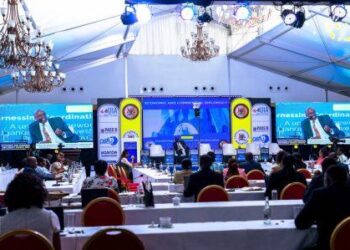














A ballroom at the Mövenpick Jumeirah Beach Hotel in Dubai does not, on the face of it, look like a place to talk about village SACCOs and fish ponds back in Busoga.
But that is exactly where Hon. Babirye Milly Babalanda, Uganda’s Minister for the Presidency, chose to make her pitch on Friday, 26 September.
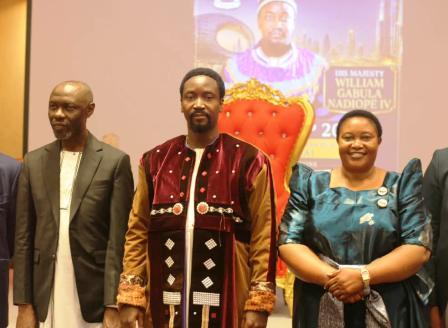
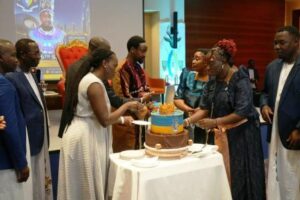
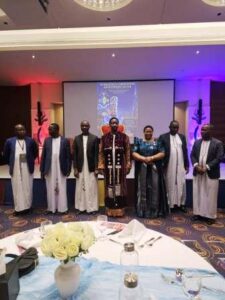
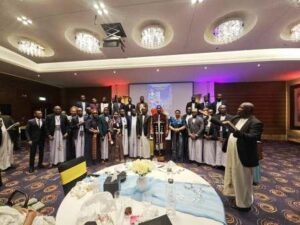
The occasion was the 12th Coronation Anniversary of His Majesty William Wilberforce Gabula Nadiope IV, the Kyabazinga of Busoga, celebrated far from the kingdom’s home soil among Basoga living in the United Arab Emirates and the wider Gulf.

It was a night meant for drumming, royal praise names and nostalgia, and Babalanda used it to press a more practical case: that the diaspora’s money, skills and networks belong, at least in part, back home.
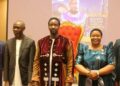
His Majesty the Kyabazinga was present alongside Government of Uganda dignitaries, members of the Basoga community across the UAE and the Gulf, and a wider circle of the Basoga diaspora who made the trip to Dubai for the celebration.
A Kingdom a Decade in the Making
Nadiope IV’s reign is not a young one by Busoga’s modern standards.
He was installed as Kyabazinga at the kingdom’s headquarters in Bugembe, Jinja, in September 2014, succeeding the late Henry Wako Muloki, and this year marks twelve years on a throne whose main anniversary celebrations were held in Mayuge District, the home district of his wife, Queen Jovia Mutesi Nadiope.
Busoga’s own Kyabazinga affairs minister, Ms Yudaya Babirye, has credited his reign with ending years of factional fighting over the throne and with delivering the kingdom’s first purpose-built royal palace, at Igenge Hill in Jinja, alongside a revived Busoga Lukiiko, the kingdom’s traditional parliament.
The Dubai gathering was, in effect, a satellite celebration of that same milestone, organised for a diaspora too far from Jinja or Mayuge to attend in person but unwilling to let the anniversary pass unmarked.
For the Minister, it also doubled as a chance to bring Kampala’s message directly to a community it rarely reaches in person.
Greetings From State House
Babalanda opened by conveying greetings from H.E. President Yoweri Kaguta Museveni, the First Lady and Minister of Education and Sports, Maama Janet Kataaha Museveni, the Secretary to the Office of the President, Hajji Yunus Kakande, and the wider staff of the Office of the President.
From there, her address turned to a theme she has repeated in other diaspora engagements: that distance from Busoga need not mean distance from its language, history, traditions and values.
She urged Basoga living abroad to preserve those cultural ties deliberately, rather than let geography erode them over time.
“Life abroad should provide an opportunity to acquire knowledge, skills and experience that can be used to create opportunities and contribute to development back home,” the Minister said.
It is a message aimed squarely at a community whose numbers in the Gulf have grown rapidly over the past decade, and whose money already moves home in large volumes even without any formal investment push.
A Diaspora the Gulf Now Depends On
The UAE alone is now home to an estimated 150,000 Ugandans, the largest concentration of any Middle Eastern country, according to Uganda’s Ministry of Foreign Affairs, most settled in Dubai and Abu Dhabi and the remaining scattered across Sharjah, Ajman and the other emirates.
Many work in blue-collar roles as domestic staff, security guards or hospitality workers, though the community also includes teachers, bankers and administrators building professional careers in the Gulf.
Their financial footprint back home is far from small: Ugandans in the UAE remitted roughly $300 million in 2023 alone, and Gulf-based Ugandans as a whole now account for close to 40 percent of Uganda’s total diaspora remittances, which crossed Shs6.5 trillion in the past year, according to Uganda’s Senior Presidential Adviser on Diaspora Affairs, Mr Muhammad Bagonza.
Nationally, Bank of Uganda data put total remittance inflows at about $2.5 billion in 2025, equal to roughly 3.8 percent of GDP, with the money moving through more than 16 million individual transactions and overwhelmingly spent on food, school fees, healthcare and other household needs rather than investment.
It is precisely that gap — money that sustains families but rarely seeds businesses — that Babalanda’s Dubai remarks were aimed at closing.
From Remittances to Real Enterprises
The Minister called for greater unity among Basoga from every corner of the kingdom, urging diaspora members to support one another and build networks capable of channelling investment, knowledge exchange and skills development back to communities in Busoga and Uganda.
She encouraged Ugandans working in the Gulf to use their time abroad productively, acquiring professional skills, expanding their knowledge and building valuable networks, while saving and investing responsibly rather than only spending.
She pointed specifically to agriculture, tourism, manufacturing, technology and real estate as sectors where diaspora members could direct their resources and expertise.
She said the knowledge, professional experience, capital and international networks Basoga acquire abroad could lift household incomes, strengthen communities and contribute to the wider national economy once channelled into productive activity.
She further encouraged the diaspora to explore partnerships, direct investment and knowledge transfer with individuals, institutions and businesses in Uganda, rather than treating remittances as the only link between life abroad and life back home.
Ambassadors Without Portfolios
Babalanda reminded her audience that they carry an informal diplomatic role whether they seek it or not, describing Basoga abroad as ambassadors of both Uganda and Busoga.
She urged them to uphold discipline, integrity, hard work and respect, values she said reflect positively on their communities and their country wherever they are living.
At the same time, she cautioned that exposure to life abroad should not come at the cost of cultural identity or a weakening of responsibility toward families and communities at home.
Instead, she encouraged the diaspora to let their international exposure broaden their perspective while keeping their roots firmly intact.
She encouraged them to strengthen their own community networks in the Gulf and beyond, and to use those networks to identify opportunities for skills development, investment, mentorship and knowledge sharing that support development initiatives across Busoga and other parts of Uganda.
Government’s Pledge to the Diaspora
Babalanda reaffirmed government’s commitment to working with cultural institutions, communities and Ugandans abroad to promote unity, preserve the country’s cultural heritage and support socio-economic transformation.
She closed by urging the Basoga diaspora to remain connected to their homeland and to play an active role in its development, leveraging their skills, experience, networks and resources to create opportunities and support communities across Uganda.
The Dubai engagement, organisers said, was intended to do double duty: honouring twelve years of Nadiope IV’s reign as Kyabazinga, while positioning the Basoga diaspora as a working link between Uganda and the wider global community through cultural preservation, skills exchange, investment and development partnerships.