
















Uganda’s long-term economic trajectory came into sharp focus on Sunday as President Yoweri Kaguta Museveni reaffirmed that the country’s economy has expanded twentyfold under the National Resistance Movement (NRM) and is now on course to hit USD 66 billion by June next year.
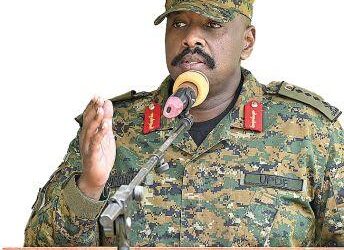
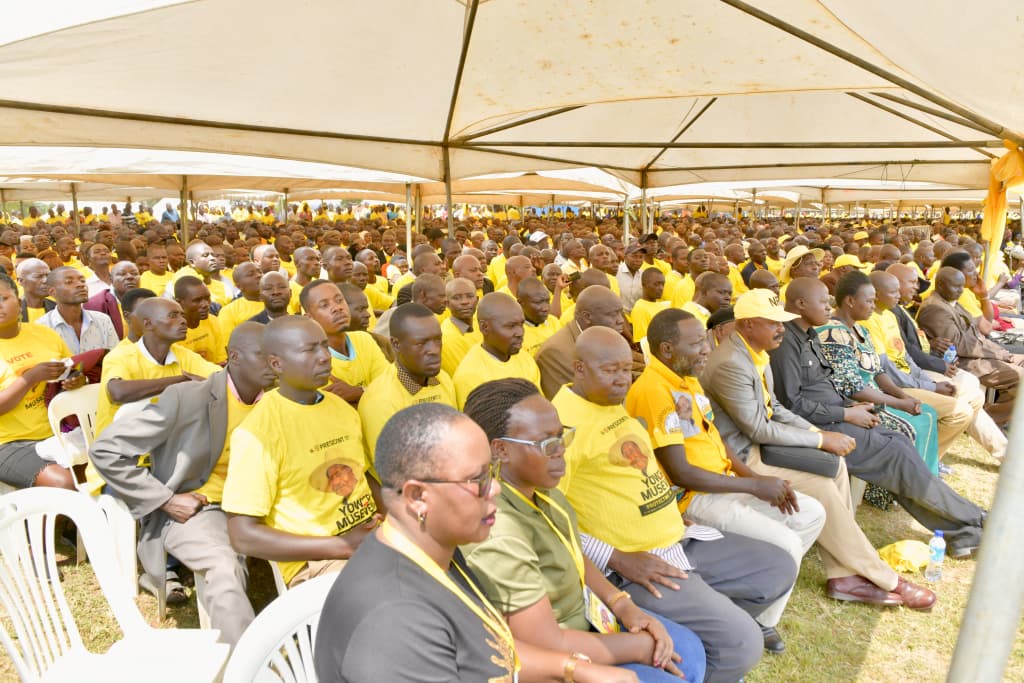
The President delivered this projection while addressing NRM leaders from the Bugisu sub-region in Mbale, placing Uganda’s economic milestones within a broader historical and regional context.
Museveni noted that when the NRM took over leadership in 1986, Uganda’s Gross Domestic Product stood at just USD 3.9 billion, a figure that reflected years of political turmoil and economic collapse.

He said the economic turnaround since then is the result of targeted government investments in industrialisation, transport networks, electricity generation, and macroeconomic stability.
“The size of Uganda’s economy has grown from 3.9 billion dollars to what will be about 66 billion dollars by June next year,” Museveni said.
“That means the economy has grown more than 20 times. That is real progress.”
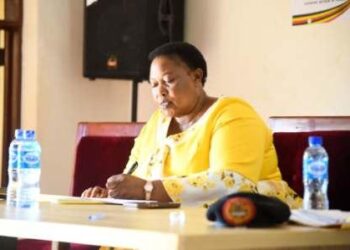
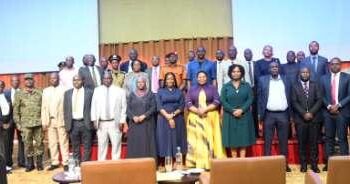
The meeting, convened by Rt. Hon. Anita Among, the NRM 2nd National Vice Chairperson (Female), and Rt. Hon. Richard Todwong, the Party Secretary General, brought together hundreds of NRM village chairpersons, LC leaders, and party flag bearers from all levels of political administration.
Among explained that the gathering sought to “strengthen and empower party structures to sensitise communities about the government’s planned service delivery as outlined in the NRM Manifesto.”
Museveni, who officiated as Chief Guest, urged leaders to maintain strict oversight over government projects, arguing that disciplined supervision is essential for sustainable development.
“I want you, the leaders, to monitor government projects closely and promote leaders who are committed to development,” he said.
Industrial Expansion Identified as the Backbone of Growth
The President highlighted industrial growth as one of the strongest engines powering Uganda’s economic transformation, pointing to multiple new industrial hubs that have emerged in regions such as Kamuli, Matugga, Mukono, and Jinja.
He said the once-limited manufacturing sector now employs tens of thousands of workers and is producing goods that Uganda previously imported at high cost.
“In 1996, Kamuli had only about 2,000 people working in industries. Today, the factories there employ more than 44,000 people,” Museveni said.
“These are factories producing things that used to come from outside. Now everything is coming from here.”
He further cited the progress in vehicle manufacturing at the Jinja-based Kiira Motors Corporation, saying Uganda’s move into automotive production disrupted long-standing import patterns.
“I told the Japanese: we buy many vehicles from you, come and assemble them here so we save on transport. They refused. But when we started making our own vehicles, they came running,” he said.
Energy Infrastructure Framed as a Pillar for Industrialisation
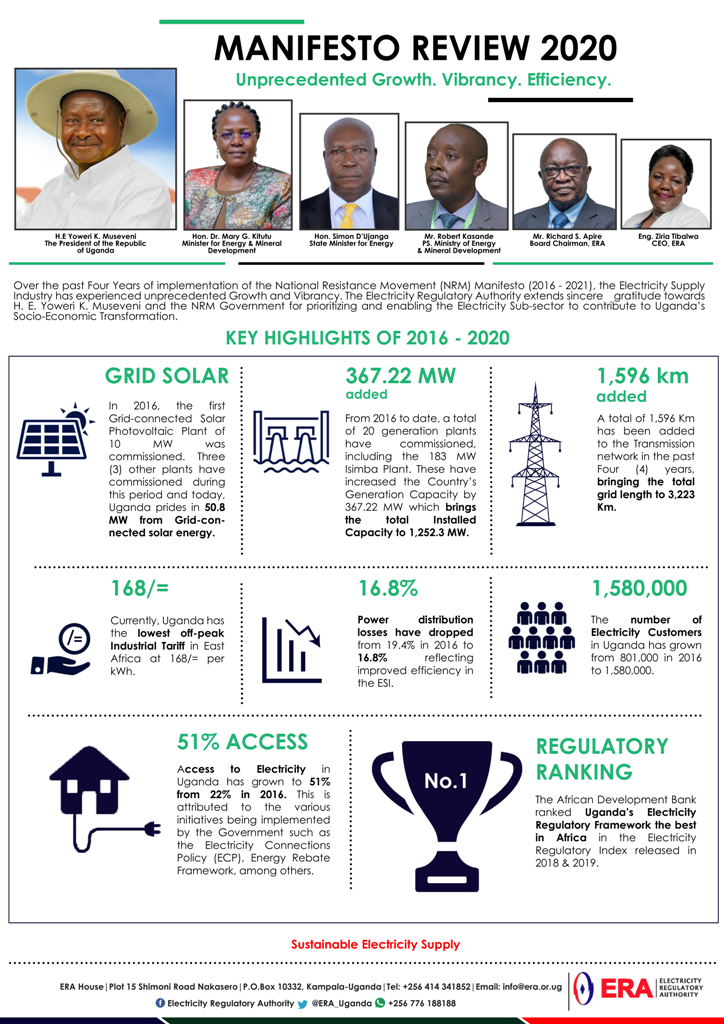
Museveni also credited major energy projects—most notably the 640MW Karuma Hydropower Plant—as central to Uganda’s industrial boom.
“Without electricity, we wouldn’t have these factories,” he said.
“Karuma alone is producing four times what the old dam was producing. You build a dam once, and for 50 years it will support industries and jobs.”
He cautioned leaders against pushing for recurrent expenditures such as salary increases before the country completes foundational infrastructure.
“If you increase salaries before building the infrastructure, you will never build the infrastructure,” he warned.
Value Addition Linked Directly to Household Income
Turning to agriculture, Museveni urged leaders to encourage farmers to embrace value addition, which he described as the surest path to household wealth.
“Farmers cannot get meaningful profits by selling raw materials,” he said. “You must add value. That is how you get wealth at the household level.”
He also stressed that national economic growth must translate into improved livelihoods through programmes like the Parish Development Model (PDM), NAADS, and Operation Wealth Creation.
Call for Unity Amid External and Internal Distractors
Museveni urged NRM leaders to remain focused on service delivery despite criticism from local opportunists and foreign actors whom he said oppose Uganda’s progress.
“Some people distort facts and mislead the public,” Museveni said.
“But we in the NRM have the correct strategy. That is how we defeated many groups even when we were only 27 fighters. We know what we are doing.”
Senior leaders at the event pledged to intensify grassroots mobilisation ahead of upcoming elections, with several vowing to deliver above 95% electoral support for the NRM.
Todwong Calls on Local Leaders to Model Discipline and Productivity
In his remarks, NRM Secretary General Richard Todwong appealed to LC1 leaders and flag bearers to exhibit exemplary conduct and strengthen party mobilisation at the village level.
He reminded leaders that President Museveni has frequently described a good leader as a “social doctor”—one who must diagnose the needs of households by engaging with families directly.
“Every LC1 must know the households within their area and understand the social and economic issues affecting the people,” Todwong said. “Leadership begins at home.”
He encouraged village chairpersons to uphold discipline, unity, and productivity in their homes.
“Your home should reflect productivity, hospitality and peace. When your home shows these values, the neighbours will learn from you,” he said.
Todwong further urged leaders to rally behind NRM candidates, warning that weak mobilisation at the grassroots could undermine both local leaders and party flag bearers.
“By voting for all our flagbearers, you help secure your own votes,” he said.
He dedicated all party flag bearers to President Museveni and appealed to district leaders to work collectively.
“We are going to support you so that you can take NRM to the next level,” he said.