













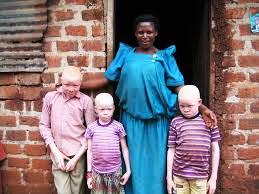
A Renewed National Commitment Amid Rising Awareness
Uganda has renewed its pledge to safeguard the dignity, protection, and social inclusion of persons with albinism, reaffirming national efforts to eliminate discrimination and improve access to health, education, and social services.
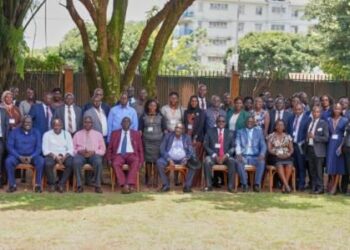
This renewed commitment was emphasized during the official opening of the review of the National Action Plan for Persons with Albinism 2020–2025, held in Kampala, where government officials, civil society representatives, and disability rights advocates convened to assess progress and identify new strategies.

Patrick Menya, a Senior Gerontologist representing the Commissioner for Disability at the Ministry of Gender, Labour, and Social Development, assured stakeholders of government support for persons with albinism.
“The National Action Plan 2020–2025 was developed to advance the rights of persons with albinism, based on the principles of equality, non-discrimination, inclusion, and active participation,” Menya said.

Understanding Albinism: A Genetic Condition, Not a Curse
Albinism is a rare, non-contagious genetic condition caused by the absence or significant reduction of melanin, the pigment responsible for skin, hair, and eye color.
This lack of melanin occurs due to mutations in genes responsible for pigment production.
Albinism affects people of all ethnic backgrounds, and in East Africa, the prevalence is higher than the global average.
People with albinism often experience reduced or absent pigmentation, high sensitivity to sunlight, vision challenges, and a higher lifetime risk of skin cancer.
Dr. Miriam Katende, a dermatology specialist at Mulago National Referral Hospital, explained that albinism is widely misunderstood across communities.
“Albinism is not caused by curses or witchcraft,” she said. “It is purely a genetic condition, and individuals with albinism can live completely healthy lives if they receive proper skin and eye care.”
How Albinism Is Inherited: Understanding the Recessive Gene
Albinism is inherited in an autosomal recessive manner.
Both parents must carry the gene mutation for a child to be born with the condition.
Parents who carry the gene usually have normal pigmentation and may not know they are carriers.
When two carriers have a child, there is a 25 percent chance the child will have albinism, a 50 percent chance the child will be a carrier, and a 25 percent chance the child will not carry the gene at all.
Genetic counselor Dr. Isaac Lumala from Nakasero Hospital emphasized the importance of public awareness about genetic inheritance.
“When families understand how recessive genes work, they are better prepared to support children with albinism and avoid harmful stigma,” he said.

How Carriers Are Tested
Carrier testing is conducted through genetic screening, which analyzes blood samples to detect mutations associated with albinism.
Genetic counseling is recommended before and after testing to help families understand inheritance patterns and available reproductive choices.
Although genetic testing is still developing in some areas, it is available through specialized labs in major hospitals.
Dr. Lumala added that more investment in genetic testing infrastructure would greatly benefit families.
“Carrier testing is not just a medical tool,” he said. “It is also a social support mechanism that reduces misconceptions and helps families plan responsibly.”

Caring for Persons With Albinism: Health and Social Support
Caring for a person with albinism includes both medical protection and social inclusion.
Experts recommend the daily use of sunscreen with high SPF, protective clothing, regular eye examinations, and early treatment of skin lesions.
Schools are encouraged to provide accessible learning environments, including seating arrangements that support students with low vision.
Psychologist Sarah Asiimwe, who works with families of children with albinism, emphasized the emotional burden that many affected individuals face.
“Children with albinism often struggle with self-esteem due to stigma,” she said. “Providing emotional support, acceptance, and safe learning environments is just as important as medical care.”
Strengthening Protection Through Policy and Advocacy
During the meeting, civil society groups praised the government for taking steps toward mainstreaming disability rights into national programs but urged greater collaboration.
Olive Namutebi, Executive Director of the Albinism Umbrella, commended ongoing government initiatives but encouraged stronger partnerships.
“We acknowledge the government’s efforts to support persons with disabilities,” Namutebi said. “However, we need to strengthen collaboration among civil society organizations, government agencies, ministries, and departments to further improve the wellbeing of persons with albinism.”
She stressed that community engagement and continued funding remain critical for long-term success.
Preventing Stigma and Strengthening Community Education
Addressing stigma requires consistent public education and community involvement.
Families are encouraged to reject myths, protect affected children, ensure school attendance, and report cases of discrimination.
Cultural leaders and religious institutions also play a major role in shaping positive attitudes.
According to disability-rights researcher Dr. Benon Nuwamanya, community sensitization must remain at the core of national policy.
“When society understands that albinism is simply a genetic variation, harmful beliefs disappear,” he said. “Education is the most powerful tool we have for transforming attitudes.”

Moving Forward: Toward the Next Phase of Protection
The ongoing review of the National Action Plan seeks to update and strengthen measures beyond 2025, focusing on inclusive education, healthcare access, economic empowerment, and protection from violence.
Government officials reaffirmed their readiness to work with partners to ensure the full inclusion of persons with albinism in all sectors of society.
The meeting concluded with a shared commitment to strengthening legal protections, expanding community awareness, and promoting dignity and equality for all persons with albinism in Uganda.