














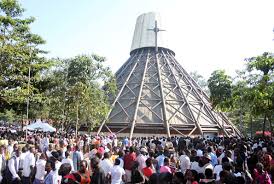
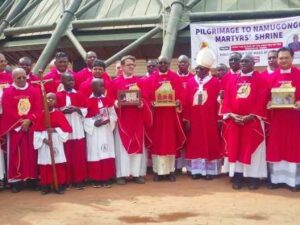
A quiet sense of reverence filled Namugongo Shrine as a group of 36 missionaries gathered to honor one of the most defining moments in Uganda’s Christian history.
The delegation, drawn from different parts of the world, came not just as visitors but as pilgrims seeking to connect with the enduring legacy of the Uganda Martyrs.
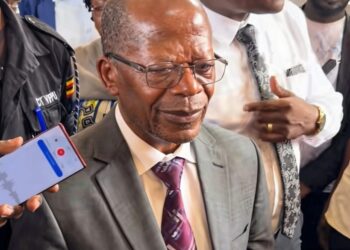
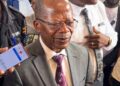
They were led by Stanley Lubongo, the Superior General of the Missionaries of Africa from Zambia, who described the journey as both spiritual and deeply personal.

Fr. Lubongo explained that the group had travelled across countries with a shared mission of strengthening and sustaining the Christian faith.
He expressed gratitude to Ugandans for preserving their religious heritage and for continuing to honor those who died for their beliefs.
“Thank you for keeping the faith in God alive and for continuing to honor the martyrs who died for what they believed in,” he said.
He assured the faithful that the experience at Namugongo would not remain in Uganda alone but would be shared widely across their home countries.
“When we return, we shall share what we have seen and experienced here,” he added.
He also promised that their next visit would not take decades, saying it “will not take another 60 years for us to return.”
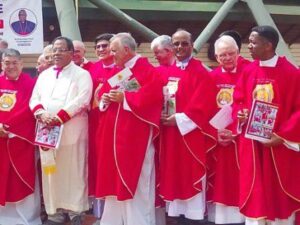
Fr. Lubongo spoke with optimism about the future of the Church, pointing to the visible presence of young people as a sign of hope and continuity.
He commended Ugandans for their hospitality, noting that the warmth shown to the visitors reflected the strength of the country’s Christian community.
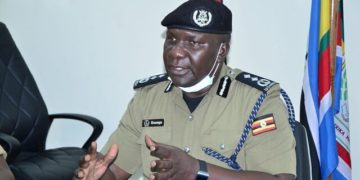
The mass was led by Paul Ssemogerere, who welcomed the missionaries and emphasized the enduring importance of the Uganda Martyrs.
He urged Christians to deeply understand the meaning behind the sacrifices made by the martyrs, saying their story should strengthen personal faith.
“The Uganda Martyrs sacrificed their lives for their faith, and their example should inspire us to believe more strongly,” he said.
He also called on believers to support missionaries through prayer and to recognize their role in spreading the Gospel worldwide.
The Rector of the shrine, Vincent Lubega, expressed appreciation for the visit, describing it as uplifting for the local faithful.
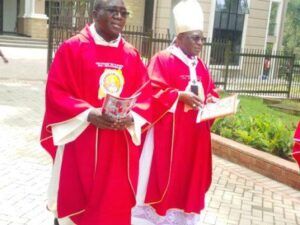
He noted that such moments reinforce the spiritual significance of Namugongo as a global center of Christian pilgrimage.
Behind the prayers and reflections lies a painful history that dates back to the late 19th century during the reign of Kabaka Mwanga II.
At the time, Buganda was experiencing rapid social and religious change, with the introduction of Christianity by missionaries creating new beliefs that sometimes conflicted with traditional authority.
Young converts, many of whom served in the royal court, began to adopt Christian teachings that challenged certain cultural practices and expectations.
Tensions escalated when these converts refused to renounce their faith or comply with orders that went against their religious convictions.
Kabaka Mwanga II, viewing this defiance as both a threat to his authority and a disruption to established norms, ordered the execution of those who remained steadfast in their beliefs.
Between 1885 and 1887, dozens of young men—later known as the Uganda Martyrs—were arrested, tortured, and killed.
Some were beheaded, while others were burned alive at Namugongo in one of the most brutal episodes of religious persecution in the region’s history.
Despite the suffering, the martyrs reportedly remained resolute, choosing death rather than abandoning their faith.
Their courage and unwavering belief left a lasting impression that would shape the spread of Christianity in Uganda.
Today, the significance of the Uganda Martyrs resonates deeply among Christians across the country.
Their story is seen not just as a historical event but as a powerful testimony of faith, sacrifice, and conviction.
Every year, millions of pilgrims travel to Namugongo to commemorate their lives, especially during Uganda Martyrs Day.
For many believers, the martyrs symbolize the cost of true faith and the importance of standing firm in one’s beliefs even in the face of persecution.
Their legacy has contributed to making Uganda one of the strongest centers of Christianity in Africa today.
The visit by the missionaries therefore served as a bridge between past and present, connecting global believers to a uniquely Ugandan story of faith.
As prayers were offered and hymns filled the shrine, the message remained clear that the sacrifice of the martyrs continues to inspire generations.
For those gathered, the visit was not only a remembrance of history but also a renewal of commitment to live out the same faith that once cost others their lives.