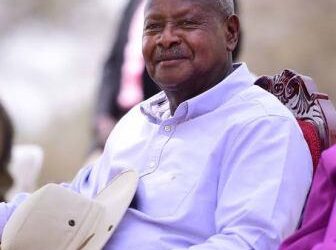















President Yoweri Kaguta Museveni has renewed his push for the rapid realization of the East African Regional Federation, describing it as a strategic imperative for Africa’s long-term security, economic strength and global relevance.
He said deeper regional integration remains the most practical pathway for expanding markets, strengthening collective defense and positioning East Africa as a competitive force in a rapidly changing world.
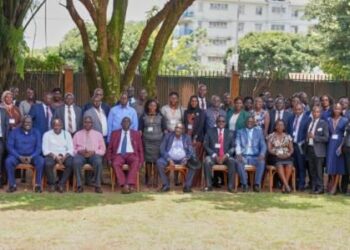
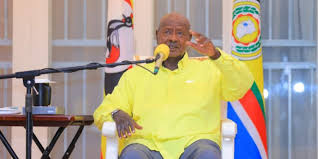
The President made the remarks during a wide-ranging media interaction with journalists from the Bunyoro Sub-region at Nakasero State Lodge.


He warned that Africa’s current global vulnerability stems largely from technological and structural fragmentation.
He explained that other continents have consolidated power across four critical security dimensions—air, space, sea and land—while Africa remains divided into small, exposed entities.
He said this imbalance leaves African countries vulnerable to external pressure and limits their capacity to defend economic and strategic interests.
The President recalled that the revival of the East African Community by himself and other regional leaders was deliberately designed to establish a strong regional anchor.
He said the intention was to create a “centre of gravity” for security, economic integration and political stability in the region.
He added that this foundation was meant to support broader African unity and complete the historic mission of continental liberation.
He challenged the Gen Z generation to understand and align themselves with this long-term vision of African self-reliance and unity.
He urged young people to view regional federation not as a political slogan but as a strategic necessity for their future prosperity and security.
Turning to governance and land management, President Museveni cautioned elected leaders at all levels—from LC I to LC V—against abandoning their constitutional responsibilities.
He said many land conflicts persist because political leaders fail to enforce existing laws designed to protect citizens.
He reminded leaders that the Constituent Assembly settled Uganda’s land question by clearly defining land tenure systems.
He noted that the same constitutional framework outlawed illegal evictions and placed regulation of land premiums firmly under government authority.
He said most land disputes arise not from gaps in the law but from failure by leaders to implement and defend those legal protections.
The President also issued a stern warning to civil servants who misuse privileged government information to facilitate land fraud.
He said individuals who exploit insider knowledge for personal gain, especially in land matters, must be arrested and prosecuted.
His remarks followed complaints from Bunyoro leaders about individuals allegedly sponsoring land conflicts in mineral-rich areas using advance knowledge of underground resources.
He described such actions as criminal and destructive to social stability.
He revealed that government plans to gazette mineral-rich areas to prevent speculative land grabbing and future conflicts.
On regional security, President Museveni addressed concerns about cross-border threats on Lake Albert.
He pledged to instruct the Chief of Defence Forces, General Muhoozi Kainerugaba, to take firm action against Congolese aggressors accused of causing insecurity in the lake region.
He emphasized that safeguarding Uganda’s territorial waters and fishing communities remains a national priority.
Politically, the President challenged his opponents in the presidential race to present clear alternatives.
He said those contesting for leadership must explain their positions on East African integration, market expansion and the ideological meaning of patriotism.
He argued that leadership should be grounded in coherent strategy rather than slogans.
On education, President Museveni reaffirmed that free universal education in government schools is central to Uganda’s long-term development.
He said universal access to education is the foundation for building a strong national human resource base.
He warned that charging fees in public schools undermines this national objective.
He urged all education stakeholders to support free universal education without conditions.
He said broad academic empowerment produces both qualitative and quantitative benefits for national transformation.
Turning to the oil and gas sector, the President disclosed plans to expand national oil exploitation beyond current levels.
He said only about 40 percent of Uganda’s oil potential in the Albertine Graben is currently under active development.
He noted that more than 60 percent of known oil reserves in the region remain untapped.
He added that other parts of the country have also been confirmed to contain commercially viable oil resources.
He stressed that oil revenues will be invested strictly in durable, strategic and sovereign projects.
He said oil money will not be used for short-term consumption but for long-term national transformation.
Addressing the fishing sector, President Museveni said illegal fishing practices and uncontrolled access to lakes have severely damaged fish stocks.
He explained that decades of unregulated fishing have weakened a once-thriving industry.
He outlined proposed reforms, including regulating fishing populations on water bodies.
He proposed the introduction of fishing holidays to allow natural restocking of fish stocks.
He called for a ban on fishing in breeding areas.
He also emphasized restoring indigenous fishing communities as custodians of the sector.
He said sustainable fisheries management is essential for food security, employment and ecological balance.
President Museveni concluded by reaffirming the National Resistance Movement’s commitment to peace, development and wealth creation.
He said these pillars remain the foundation of Uganda’s socio-economic transformation.
The interaction marked the conclusion of President Yoweri Kaguta Museveni’s media engagement with journalists from the Bunyoro Sub-region at Nakasero State Lodge.