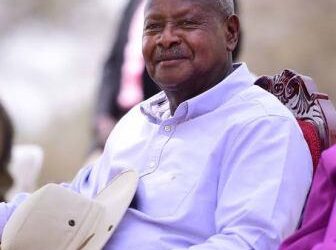













Uganda’s fast-growing informal beauty industry has received a major boost after President Yoweri Kaguta Museveni pledged an Shs85 billion revolving fund to support salon operators nationwide as part of the government’s broader wealth-creation agenda.
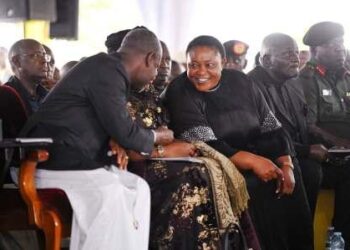
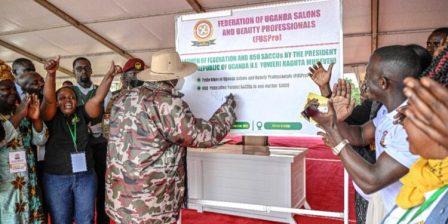
The pledge was made during a national event at Kololo Ceremonial Grounds, where President Museveni officiated at the launch of the Federation of Uganda Salon Operators and Beauty Professionals.
The President said the initiative is intended to strengthen small-scale entrepreneurs whose services have become increasingly important in a rapidly urbanising society.

President Museveni congratulated salon operators for the essential role they play in everyday life, particularly as more Ugandans move to towns and cities and adopt busier lifestyles.
He noted that personal care services have become a necessity rather than a luxury in modern society.

The President used the occasion to reflect on Uganda’s colonial past, recalling how African identity and standards of beauty were deliberately undermined.
He said Africans were made to believe they were not beautiful and were pressured to imitate Europeans in appearance and culture.
He told the gathering that this mentality has since been defeated.
He said Africans have reclaimed confidence in their natural beauty, which is now appreciated in its diversity, especially across the Great Lakes region.
President Museveni welcomed the emergence of locally developed beauty products by salon operators.
He described the move as a strong step towards economic independence and self-reliance.
On financing, the President explained that government support will be channelled through a revolving fund model.
He said the plan is to allocate Shs100 million annually to each Savings and Credit Cooperative Organisation (SACCO) serving salon operators.
He noted that with about 850 SACCOs across the country, the total annual allocation would amount to approximately Shs85 billion.
The President said the revolving fund approach has already proven effective under the Parish Development Model.
He explained that beneficiaries borrow the money, invest it in productive activities and repay it with minimal interest, allowing the fund to benefit many people over time.
President Museveni said salon operators have a different business cycle compared to crop farmers under the PDM.
He suggested that instead of a two-year repayment period, salon operators could be given loans for one year.
He said they could use the money, grow their businesses and return it with a small interest.
The Deputy Speaker of Parliament, Rt. Hon. Thomas Tayebwa, thanked President Museveni for consistently prioritising the needs of ordinary Ugandans.
He said many leaders often overlook the poor and informal workers.
He also commended Gen. Salim Saleh and Operation Wealth Creation for being among the first government structures to engage and support salon operators.
Rt. Hon. Tayebwa raised concerns that funds allocated to support the salon industry and other informal groups are often provided for in the national budget but not released.
He specifically pointed to delays by institutions such as the Microfinance Support Centre.
The Minister of State for Youth and Children Affairs, Hon. Balaam Barugahara, said the informal sector extends beyond salon operators.
He noted that it includes tailors, artisans and many other small-scale entrepreneurs operating across the country.
He urged young people to continue supporting President Museveni.
He said the President’s leadership remains central to lifting Ugandans out of poverty.
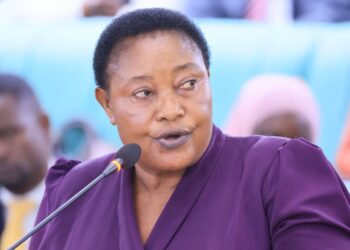
The Chairperson of the Federation of Uganda Salon Operators and Beauty Professionals, Kamanyire Celestine, thanked the President for recognising and prioritising grassroots entrepreneurs.
He requested the President to formally launch the federation’s 850 SACCOs nationwide.
He also asked government to grant the federation a formal operational mandate.
He appealed for financial support of at least Shs100 million per SACCO.
He noted that each SACCO has more than 50 members.
Kamanyire further appealed for the establishment of a common user facility to support salon operators with shared equipment and services.
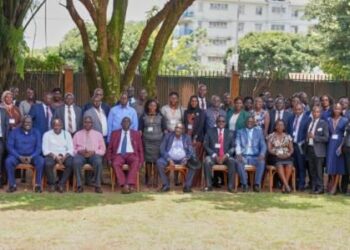
The event marked a significant step in formalising and financing Uganda’s informal beauty sector as part of the government’s wider strategy to expand access to capital, promote self-employment and grow household incomes.