










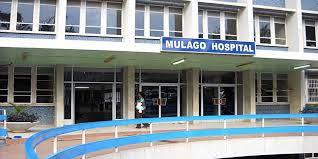
A patient’s journey through trauma to recovery at Uganda’s premier referral hospital, where care transcends medicine.
In the early hours of a recent morning, after a serious accident which left me injured and in shock, I arrived at Mulago National Referral Hospital — weary, in pain, and uncertain of what lay ahead.
What followed in the ensuing hours and days was not just medical care, but a profound demonstration of professional skill, compassion, and dedication that reaffirmed my faith in Uganda’s healthcare system.
My experience is but one story among countless others, yet it serves as a powerful testimony to the important role Mulago plays not just as a clinical institution, but as a pillar of national resilience, hope, and service.

Frontline Response: Emergency to Recovery
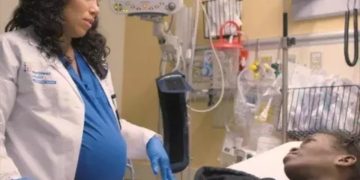
When I arrived at Mulago in serious condition, battered by the accident, I encountered the frontline emergency team — doctors, nurses, anesthetists, and support staff — who acted with urgency and precision.
Pain management, imaging, and clinical evaluations were conducted without delay, reflecting a system that understands the urgency of trauma medicine.
At that moment, Mulago did not feel like an overstretched public hospital, but rather a well-coordinated center of emergency excellence.
Within minutes of arrival, I was attended to by a triage nurse who calmly assessed my injuries, administered pain medication, and coordinated my transfer to the theatre for emergency management before the surgery.
Here I was put under complete anesthesia and when I woke up found that my broken hand had been put under plaster and my deep wounds stitched.
I was then immediately transferred to ward 3b where I remained for some days udergoig a series of medical tests such as heart scan, blood analysis plus numerous others as I waited for my appointed day for the main surgery where my broken bones would be joined using a metallic plate and screws.
Here all patients and their attendants are on a daily basis provided with a well prepared breakfast of soyabean porridge and lunch of either rice or posho with beans.
During my stay on bed 17 in ward 3b at Mulago what was apparent was not just the clinical skill of the medical team, the dedication of other staff including cleaners but their ability to communicate clearly, reassure both patient and relatives, and work seamlessly under pressure — qualities that are often missing in less-resourced settings.

Patient Voices and Community Trust
While in Mulago, across bedsides and waiting rooms, I encountered stories that echoed mine — stories of care that saved lives, restored function, and brought comfort in moments of deepest vulnerability.
One caregiver shared, “When my son was brought here after a motorbike crash, we feared the worst. But here, we saw hope.”
Another patient’s relative reflected, “We know the challenges, but here, our people are treated with respect and skill.”
These testimonials, far from isolated, underscore a collective trust that Mulago has cultivated over decades of service.
This sentiment is reflected across the hospital, where caregivers often walk miles metaphorically and literally to ensure patients are comfortable, informed, and respected.
Patients travel from all regions — from Gulu and Lira to Mbale and Mbarara — seeking care in units where expertise and experience intersect.

Then finally the day came for my main surgery
On this day I was confronted with where real compassion Meets Competence.
I was taken into surgery under the care of a team of five doctors, each assigned to play a critical role in the operation so as to execute real professionalism, coordination, and precision to save my life.
The presence of multiple specialists underscored Mulago’s strength as a referral hospital capable of handling complex trauma cases.
One among the team, Mubiru Joseph, the lead consultant explained, “We treat every patient like family. It’s not just about medicine; it’s about dignity and empathy.”
Prior to the operation I witnessed the doctors deploy intra operative X-rays and multiple monitoring equipment, and also noticed that they prepared something called video assisted laryngoscope in anticipation of difficult airway intubation.
Before I was put under complete anesthesia noticed every member of the surgical team working seamlessly, reflecting years of training, discipline, and commitment to patient outcomes.
When I later regained full awareness, I knew I had been placed in capable hands.

Post-Operation Care and Human Compassion
Following surgery, I was transferred to ward 3 b where nurses and doctors closely monitored my recovery.
Here in the post surgical ward, I met physicians and nurses whose commitment went beyond duty.
They checked on me consistently, explained procedures in accessible terms, and coordinated my postoperative care with organized precision.
Pain control, wound care, medication, and routine checks were done consistently and attentively.
Beyond the clinical procedures, what stood out was the humanity of the staff.
They listened, reassured, encouraged, and treated me with dignity at a time when I was physically and emotionally vulnerable.
In moments of discomfort, a simple word of reassurance from a nurse made a significant difference.

Discharge, But Not Abandonment
After steady improvement, I was officially discharged from Mulago National Referral Hospital.
However, discharge did not mean the end of care.
The medical team developed a structured follow-up plan to monitor my healing progress.
I continue to return to the hospital for regular reviews, where doctors assess bone healing, mobility, and overall recovery.
This continuity of care demonstrates Mulago’s commitment to long-term patient outcomes, not just emergency intervention.
Monitoring Recovery from Home
Even while am at home, Dr. Mubiru Joseph the lead consultant has gone an extra mile beyond his normal duty and kept me under complete medical surveillance both online and by direct phone calls using his airtime day and night to monitor my full recovery.
When I inquired wondering as to why he has taken all the trouble he replied, ”I don’t do it for you because you are special in any way but, I normally follow up and monitor recovery of all patients who go through my hands because to me they are a family.”
Each hospital visit reassures me that my healing process is on track and that complications are being prevented early.
This approach reflects modern patient-centered care, where recovery extends beyond hospital walls.
It also reflects the discipline and accountability of Mulago’s clinical systems.
My recovery stands as a living testimony to the dedication of Mulago medical team.
It is easy to criticize public institutions, but lived experiences like mine reveal a different, often untold story.
Today, as I continue healing from multiple injuries and a fractured radius bone, I carry more than physical scars, I carry gratitude, I carry respect and a renewed confidence in Uganda’s public healthcare system.
Mulago is more than a hospital. It is where science meets sacrifice. It is where pain meets professionalism. It is where Ugandans, regardless of background, are given a fighting chance at life and recovery.
My journey from accident to healing stands as proof that within Mulago’s walls are men and women who truly embody the calling of medicine.
And for that, the nation owes them recognition, support, and respect.