







Uganda’s economic performance has gained renewed national attention following President Yoweri Kaguta Museveni’s announcement that the country is registering annual growth of about seven percent, with expectations of even faster expansion once commercial oil production begins.
The President said the current growth trajectory reflects decades of relative stability, economic recovery, and deliberate structural reforms implemented under the leadership of the National Resistance Movement.
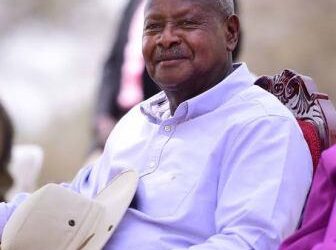
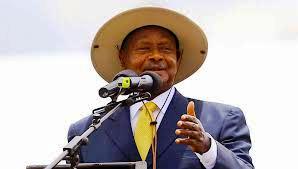
President Museveni made the remarks while presiding over the 40th Liberation Day celebrations at Kololo National Ceremonial Grounds on January 26, 2026.
He told the nation that the economy’s upward trend is set to accelerate significantly with the commencement of oil exports, which he confirmed would begin later in the year.
“The economy is moving very fast, growing at seven percent now, and with the oil, we are going to go into double digits. This year, your oil will start flowing,” President Museveni said, adding that Uganda had successfully safeguarded its petroleum resources from external control.
The national celebrations were held under the theme “Tribute to the Patriots who ushered in a fundamental change,” underscoring the historical significance of the liberation struggle.
The event came only days after President Museveni was declared winner of the recently concluded presidential election, in which he secured 71 percent of the vote.

In his address, the President expressed gratitude for the peaceful conduct of the electoral process and the participation of citizens across the country.
“I thank God for having seen us through this big exercise of elections. Secondly, I salute all Ugandans for participating in the elections. I thank all the NRM members for supporting the NRM and its flag bearers,” he said.
While celebrating the electoral victory as a major political milestone, President Museveni raised concerns about what he described as low voter turnout among supporters of the ruling party.
He disclosed that internal NRM assessments showed that a significant number of eligible supporters did not cast their ballots.
“I got eight million votes, but ten million of my supporters of NRM did not turn up to vote,” he said, attributing the situation partly to intimidation by opposition supporters and indiscipline within some sections of the party leadership.
Shifting focus back to economic transformation, President Museveni noted that Uganda’s growth has gone hand in hand with increased participation in the money economy.
He revealed that about 70 percent of Ugandans are now engaged in income-generating monetary activities, compared to only nine percent at the time of independence in 1962.
“This transformation did not come by accident,” he said, explaining that the progress was the result of deliberate government interventions aimed at moving households away from subsistence production.
The President recalled that by 2013, only 32 percent of households were participating in the money economy, a situation that prompted the introduction of Operation Wealth Creation.
He said the programme, implemented with the support of the Uganda People’s Defence Forces, focused on distributing agricultural inputs nationwide to boost productivity.
According to the President, participation in the money economy had risen to 61 percent by 2019, but persistent challenges, including elite capture of benefits, required a new approach.
He said this led to the introduction of the Parish Development Model, which channels resources directly to communities at the parish level.
“Now we are at 70 percent in the money economy, and about 30 percent are still outside,” President Museveni said. “We don’t want a country of 70 percent rich people while 30 percent are poor.”
The President warned against the misuse of Parish Development Model funds, citing reports of diversion by some parish officials and committee members.
He said government would respond by tightening guidelines, increasing funding allocations—particularly for urban parishes—and enforcing stricter accountability mechanisms.
Beyond the Parish Development Model, President Museveni said government would continue targeted support to boda boda riders, ghetto youth, unemployed graduates, cultural and religious leaders, and grassroots political structures.
He emphasized that wealth creation would remain the central focus of government policy.
The President added that once household incomes improve, the state would intensify investment in social services such as education and health, as well as infrastructure development, especially road maintenance.
On governance and accountability, President Museveni said the fight against corruption would be broadened to include the judiciary.
He praised the new Chief Justice, Dr Flavian Zeija, for taking a firm stance against judicial corruption.
Responding to critics who argue that Uganda has not changed over the past four decades, President Museveni outlined what he described as five distinct phases of recovery and transformation since 1986.
He said these phases have culminated in the country’s current transition toward a knowledge-based economy.
The President highlighted gains in commercial agriculture, manufacturing, services, and information and communications technology.
He noted that about 65 percent of goods sold in Ugandan supermarkets are now locally produced, reflecting growing industrial capacity.
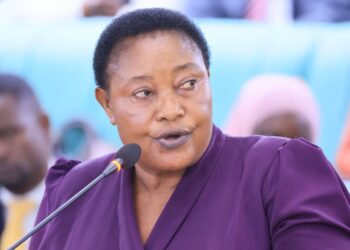
The Minister for the Presidency, Hon. Babirye Milly Babalanda, congratulated President Museveni on his re-election during the ceremony.
She described the four-decade journey of the NRM as transformative and indicative of sustained public confidence in its leadership.
During the event, 33 distinguished Ugandans received national medals in recognition of their contribution to the liberation struggle and national development.
January 26 commemorates the day in 1986 when National Resistance Army fighters captured Kampala.
The victory ended years of political instability and marked the beginning of the NRM government under President Museveni.