
















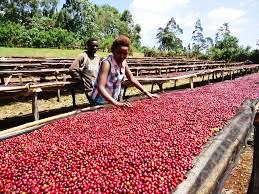
Saudi Arabia has formally expressed interest in investing in Uganda’s expanding coffee industry, signalling a potential boost to bilateral economic relations and agro-industrial development.
The development emerged during a high-level meeting between officials from the Kingdom and Yoweri Kaguta Museveni at State House in Entebbe.
The engagement, described as investment-focused, sought to deepen economic cooperation and unlock new commercial opportunities between the two nations, which have maintained longstanding diplomatic ties.


The Saudi delegation, led by Ali O Alswayeh, conveyed appreciation to the President for granting them an audience and reiterated the Kingdom’s readiness to expand its investment footprint in Uganda.
The delegation identified agriculture as a strategic area of interest, with particular emphasis on coffee value addition as a priority sector aligned with Saudi Arabia’s broader food security and international investment agenda.
President Museveni welcomed the delegation and commended Saudi Arabia for recognising Uganda’s largely untapped investment potential, particularly in agro-processing and industrial development.
He observed that despite years of cordial relations between the two countries, economic engagement has not yet reached its full potential.
“We have been working together for a long time, but we have not fully engaged to maximise our investment opportunities,” the President noted.
Discussions during the meeting also centred on the Value at Source Coffee Project (VASP), an ambitious agro-industrial initiative spearheaded by Nonda Coffee.
The VASP project is designed to reposition Uganda from a traditional exporter of raw coffee beans to a competitive exporter of branded, high-value finished coffee products.

Uganda, one of Africa’s leading coffee producers, has historically relied on exporting unprocessed beans, thereby missing out on higher earnings associated with roasting, branding, and retailing finished products.
The proposed transformation is anchored on the development of the Luwero Coffee Park, an integrated industrial complex planned for Luwero District.
The facility is projected to process 42,000 metric tons of coffee annually and generate an estimated USD 850 million in annual revenue.
The Luwero Coffee Park is expected to handle the entire coffee value chain, including cleaning, grading, roasting, grinding, production of soluble and specialty coffee, packaging, branding, and export of finished products.
By consolidating these processes within Uganda, the project aims to significantly increase export earnings while positioning the country as a premium coffee brand on the global market.
The initiative is projected to create approximately 1,500 direct jobs within the industrial complex.
It is also expected to generate around 3,000 indirect employment opportunities in logistics, retail, and auxiliary services linked to the coffee value chain.
In addition, more than 100,000 coffee farming households are expected to be integrated into a structured supply chain, offering improved market access, price stability, and quality control mechanisms.
The Saudi market is viewed as a strategic gateway to the broader Middle East, one of the fastest-growing coffee consumption regions globally.
Strengthening trade ties with Saudi Arabia could therefore open up sustainable downstream markets for premium Ugandan coffee and enhance long-term bilateral trade flows.
The meeting underscored a shared commitment to investment-led growth, private sector development, and value addition as key drivers of economic transformation.
President Museveni has consistently emphasised value addition as a cornerstone of Uganda’s development strategy.
He has repeatedly argued that exporting finished goods rather than raw materials is essential to increasing export revenues, creating quality jobs, and accelerating industrialisation across the country.
The renewed engagement with Saudi Arabia signals growing international confidence in Uganda’s agro-industrial ambitions and reflects a broader push to reposition the country within global value chains through strategic partnerships and targeted investment.